PHOTOS: The First Annual Damba Festival Comes to North America — And It Was Magnificent
In a landmark celebration of faith, identity, and community solidarity, Ghanaians from across North America gathered to honour a centuries-old tradition rooted in the chieftaincy and Islamic heritage of northern Ghana — proving that culture does not diminish with distance, but deepens with intention.

Written by: Miss Juliet Opoku, MACP, RP (Q), BScN, RN, CDE, CBE, MHFA Vice President, Ghanaian Canadian Association of Ontario (GCAO)
Published by GhanaianNewsCanada | Special Community Feature | 2026
TORONTO / NORTH AMERICA — Something historic unfolded in North America recently — a celebration that was equal parts spiritual reflection, cultural restoration, and community homecoming. The First Annual Damba Festival in North America brought together Ghanaian families, elders, youth, cultural leaders, and diplomatic representatives in a powerful affirmation of identity. What emerged was more than a festival. It was a living, breathing declaration that the heritage of northern Ghana is not merely preserved in memory — it is actively carried, celebrated, and handed to the next generation.
For a diaspora community that navigates daily questions of identity, belonging, and cultural continuity, the festival arrived at exactly the right moment. As the drums sounded, as dancers moved in traditional northern Ghanaian attire, as elders shared wisdom with youth who had never set foot in the Savannah Region, the message was clear: migration does not sever culture. It carries it to new soil — where, if tended with intention and pride, it takes root and grows stronger.
The Meaning of Damba — A Sacred Tradition From Northern Ghana
The Damba Festival originates from northern Ghana, where it has been celebrated for centuries among the Dagomba and other northern ethnic groups. It is a festival of remarkable depth — one that sits at the intersection of Islamic faith and African traditional leadership, bringing together two profound systems of meaning in a celebration that honours both simultaneously.

At its spiritual core, Damba commemorates the birth and naming of the Prophet Muhammad — a moment of reverence and gratitude observed by Muslim communities across northern Ghana and beyond. Alongside this Islamic dimension, the festival also celebrates the royal history and chieftaincy traditions of the north: the strength and continuity of traditional governance, the wisdom of ancestral leadership, and the bonds of community that these institutions have sustained across generations.


Through drumming, storytelling, dance, traditional attire, and communal food, Damba expresses a cultural identity that is simultaneously devout and joyful, reverent and celebratory. It is a festival where faith and tradition are not in tension — they are in harmony. And it is this rich, layered identity that the First Annual Damba Festival in North America brought to life for a diaspora audience, many of whom were experiencing the full cultural expression of this heritage for the very first time.
A Historic First — The Festival Takes Root in North America
The decision to bring Damba to North America for the first time was itself an act of cultural courage — a recognition that diaspora communities deserve more than nostalgia for the traditions of home. They deserve to live those traditions, to practise them, to pass them forward. The result was a festival that transformed its venue into a vibrant reflection of northern Ghanaian heritage: rich with music, royal symbolism, intergenerational dance, and the aromatic warmth of traditional cuisine.


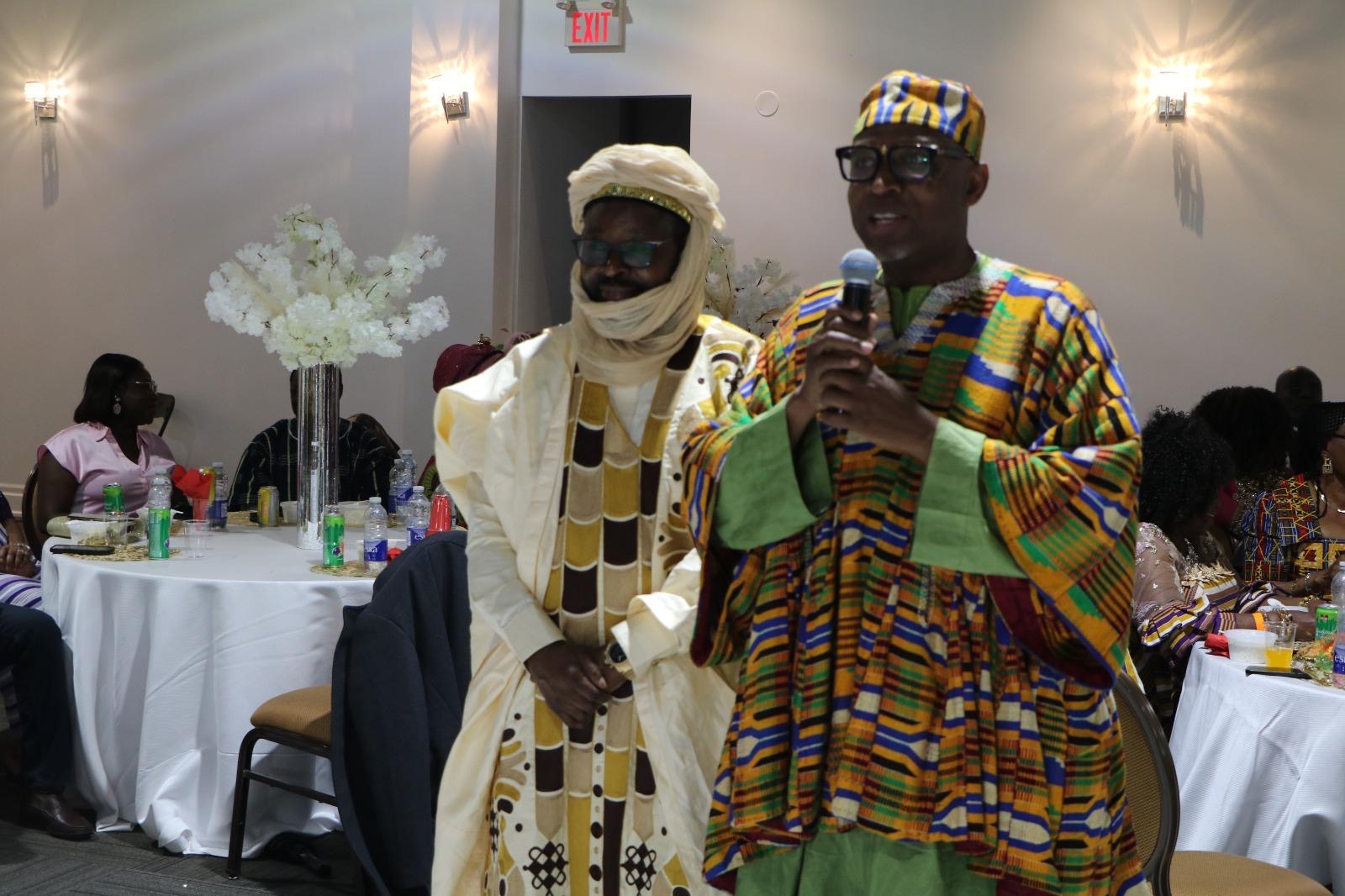

What distinguished this inaugural celebration was not just the beauty of the cultural performances — though those were extraordinary — but the depth of intention behind every element. This was not a performance of culture for an outside audience. It was a community practising its own heritage, on its own terms, for itself and for its children. The restoration of that sense of ownership and agency is one of the most powerful things a cultural festival can achieve.
Distinguished Guests and Institutional Support
The festival’s significance was underscored by the quality and range of institutional support it attracted. The Consulate General of Ghana was represented by Mr. K. Taylor and his team — a presence that signalled the importance the Ghanaian government places on maintaining meaningful cultural ties with its diaspora communities. Their participation was a formal acknowledgement that what happens in the diaspora matters to Ghana, and that cultural preservation abroad is a diplomatic as well as a communal priority.
The Ghanaian Canadian Association of Ontario (GCAO) was represented by President Mr. Emmanuel Duodu and Vice President Miss Juliet Opoku, whose address delivered a message of inclusion, unity, cultural pride, and the collective responsibility of the diaspora to preserve its heritage for those who come after.
Asanteman Toronto brought strong traditional leadership representation through Nana Kofi Gyamfi (Asantefuohene of Toronto and Safwihene), Nana Ahenkora Adarkwa (Okyeame), Nana Poakwa (Adontenhen-Asumanya Twafuohene), and Nana Kwaku Duah (Amamerehene) — whose collective presence reinforced the message of pan-Ghanaian unity and diaspora solidarity that the festival embodied.
Further institutional support came from the Northern Ghana Association, Canada NDC leadership including Chair Mr. Abeeku Van Dyck, and Majestic Entertainment — whose dedication to promoting Ghanaian culture through media and creative industries highlights the critical role of communications in sustaining cultural continuity across generations and borders.
Leadership and the Voice of the Canada Dagomba Chief
Among the most defining moments of the festival was the address delivered by the Canada Dagomba Chief, Naa Iman Tahid, whose words carried the full weight of traditional authority and cultural responsibility. His message centred on unity, cultural continuity, and the sacred obligation that falls on every member of the diaspora to preserve the heritage they have inherited — not for their own benefit alone, but for the generations that will follow them in this new land.

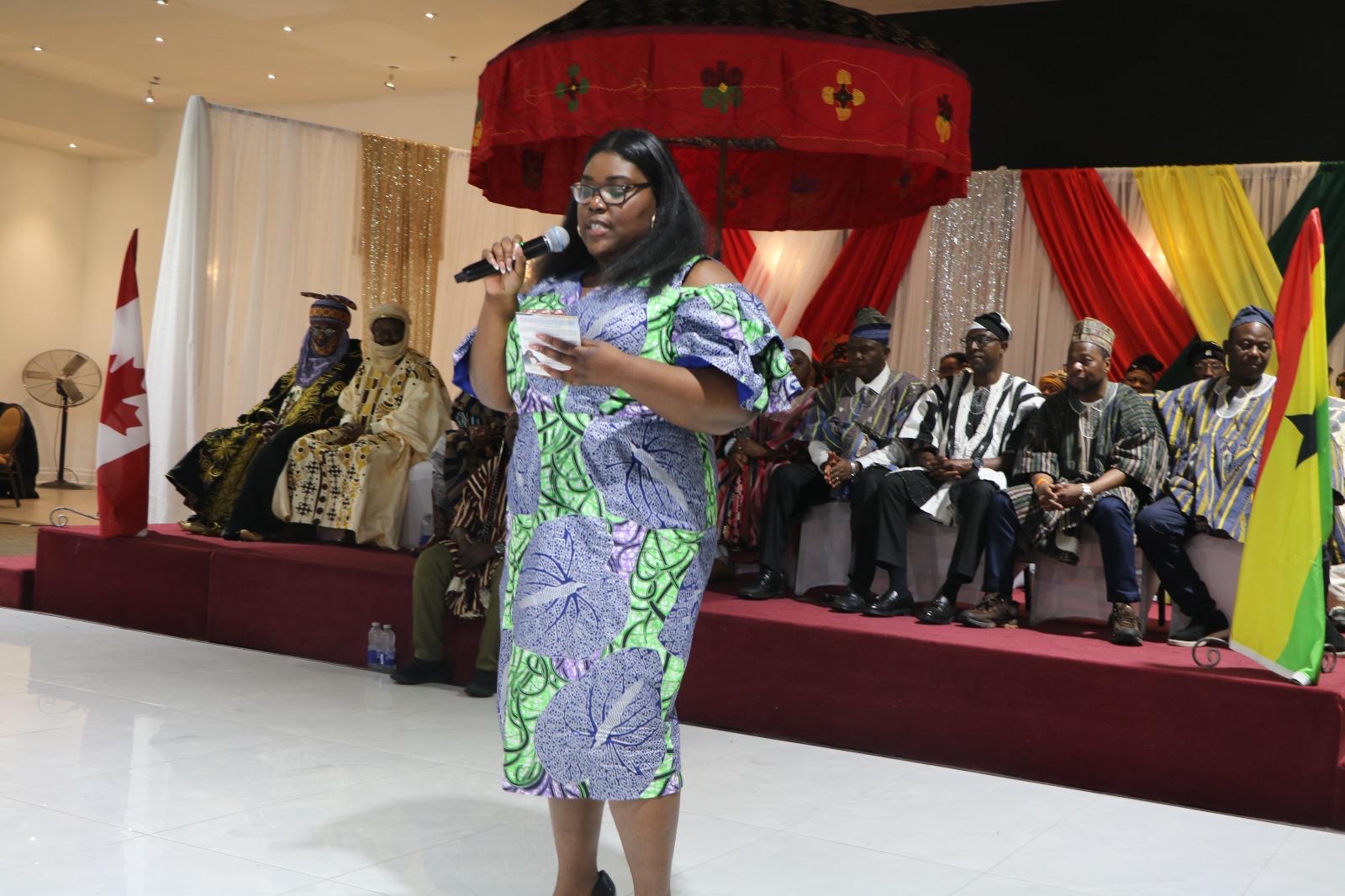


Strong leadership was also provided throughout the event by President Dr. Yussif Yakubu, Vice President Ibn Wahab, Executive Director Hajia Mariam Seidu Alale, and Canada Magazine representative Hajia Anda Salifu, alongside the many dedicated community members and volunteers whose service behind the scenes made the celebration possible. Their collective commitment to excellence set a standard that the festival will carry forward into its second year and beyond.
Drums, Dance, and the Power of Intergenerational Culture
At the living heart of the festival were its cultural performances — and none were more moving than the intergenerational dances in which children, youth, and adults moved together in traditional northern Ghanaian attire. These were not performances staged for spectators. They were acts of transmission: older generations passing steps, rhythms, and meanings to younger ones in real time, through the universal language of movement and music.
The drumming, in particular, deserves special recognition. In northern Ghanaian tradition, the drum is not merely an instrument — it is a messenger, a record-keeper, and a vessel of ancestral communication. Every beat carries history. Every rhythm carries meaning. When those drums sounded in North America, they carried the voices of ancestors across an ocean and across time, reaching young people who may have been born thousands of kilometres from northern Ghana but who carry its heritage in their blood.
Storytelling and oral tradition added another dimension of depth to the cultural programme — allowing elders to transmit not just entertainment but wisdom, history, and values to a generation that grows up in a world saturated with digital content. The choice to centre oral tradition at this festival was itself a statement: that some forms of knowledge cannot be googled, cannot be streamed, and can only be received in person, from a living elder, in a community gathering.
The Cuisine of the North — Identity Through Food
No celebration of northern Ghanaian culture is complete without its food — and the festival’s culinary programme was both a feast and an education. A rich showcase of traditional northern Ghanaian dishes brought the region’s deep culinary heritage to tables in North America, featuring tuo zaafi (TZ) with leafy vegetable stews, kuli kuli, millet- and sorghum-based dishes, and traditional drinks including pito.
These foods are more than sustenance — they are living cultural texts. They reflect centuries of agricultural wisdom, communal cooking traditions, and nutritional knowledge passed down through generations of northern Ghanaian families. For many young diaspora attendees — born in Canada or the United States, raised on a diet that blends Ghanaian and Western influences — the food experience was a genuinely revelatory reconnection to identity: learning who you are through what your ancestors ate, how they cooked, and what those choices meant.
The deliberate emphasis on naturally nutrient-dense, minimally processed, traditional ingredients also carried an implicit message about ancestral wisdom in health and sustainable living — a message with deep resonance in a modern world grappling with diet-related illness and disconnection from food systems.
Community Impact — Identity, Belonging, and Empowerment
The First Annual Damba Festival delivered community impact that extended well beyond the day of celebration itself. For young people born and raised in Canada and the United States, the festival provided an immersive, lived experience of northern Ghanaian culture that no classroom, book, or documentary could replicate. Strengthening pride in identity and a sense of belonging through music, dance, language, attire, and storytelling, it gave diaspora youth something increasingly rare and precious: a deep, embodied sense of where they come from.
The intergenerational connections forged at the festival were equally significant. When an elder shares a story with a teenager, when a grandmother adjusts the dance steps of a grandchild, when a chief addresses a room full of youth born far from home — something irreplaceable passes between them. The Damba Festival created hundreds of those moments, and each one is a thread in the cultural fabric that holds this community together across distance and time.


The presence of diplomatic, traditional, and civic institutions alongside grassroots community members also demonstrated that the Damba Festival is not the project of any one organisation. It is a collective endeavour — owned by the community, supported by its institutions, and dedicated to the wellbeing of its future generations.
A Living Legacy — Looking Forward
The First Annual Damba Festival in North America was not an ending — it was a beginning. A seed has been planted in new soil, and from that seed, an annual tradition will grow. Each year, the festival will welcome more families, introduce more children to their heritage, forge more connections between generations, and deepen the roots that northern Ghanaian culture has now laid down in North America.
The sound of the drums carried ancestral voices. The dancing feet of children carried the promise of the future. And the laughter, the food, the stories, and the prayers that filled the festival space carried the most important message of all: that the Ghanaian diaspora in North America is not a community in exile, waiting to return. It is a community in full flourishing — carrying its heritage with pride, living its identity with joy, and building a cultural future worthy of the ancestors who came before.
ABOUT THE AUTHOR
Miss Juliet Opoku, MACP, RP (Q), BScN, RN, CDE, CBE, MHFA is a Registered Nurse, Registered Psychotherapist (Qualifying), Certified Diabetes Educator, Community Birth Educator, and Mental Health First Aid practitioner. She serves as Vice President of the Ghanaian Canadian Association of Ontario (GCAO) and is a dedicated advocate for community health, cultural identity, and diaspora empowerment across Canada.
EDITORIAL NOTE: This feature article was written by Miss Juliet Opoku, Vice President of the Ghanaian Canadian Association of Ontario (GCAO), and published by GhanaianNewsCanada as part of our commitment to amplifying diaspora community voices, cultural heritage, and community-led storytelling.
Published by GhanaianNewsCanada | Community Feature | 2026
© 2026 GhanaianNewsCanada. All Rights Reserved.