By Boakye Stephen, Kumasi, Ghana | Reporting for Ghanaian News, Canada

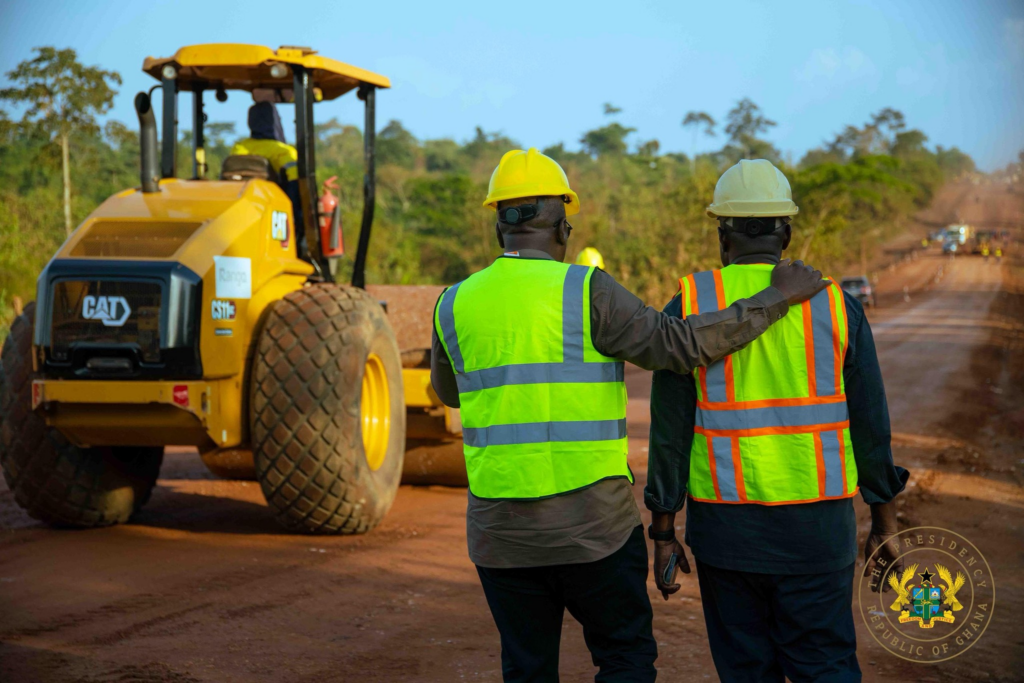
President John Dramani Mahama has inspected the 80-kilometre Jinijini-Sampa Road in the Berekum West District of the Bono Region as part of his ongoing “Resetting Ghana Tour,” reaffirming government’s focus on infrastructure as a driver of national development.
The visit, which took place on Wednesday, March 18, saw the President engaging directly with local chiefs, community leaders, and residents to gather first-hand feedback on the progress and real-life impact of the project.
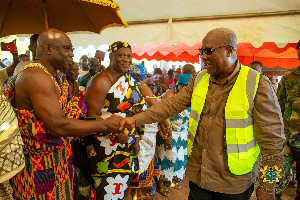
According to the presidency, the exercise forms part of a broader effort to ensure that key development initiatives are not only completed but are aligned with the actual needs of the people.
President Mahama emphasized the strategic importance of road infrastructure, stressing that quality road networks remain essential for boosting trade, improving mobility, and accelerating economic growth across regions.
He further highlighted the importance of maintaining macroeconomic stability, noting that prudent economic management is critical to sustaining national growth and improving the living standards of citizens.
In a statement shared by the presidency, the inspection is intended to strengthen oversight, enhance community involvement in development planning, and reinforce a governance model that prioritizes citizens’ concerns and participation.
The Jinijini-Sampa Road project is seen as a key corridor in the Bono Region, expected to facilitate trade, connect communities, and ease transportation challenges when fully completed.
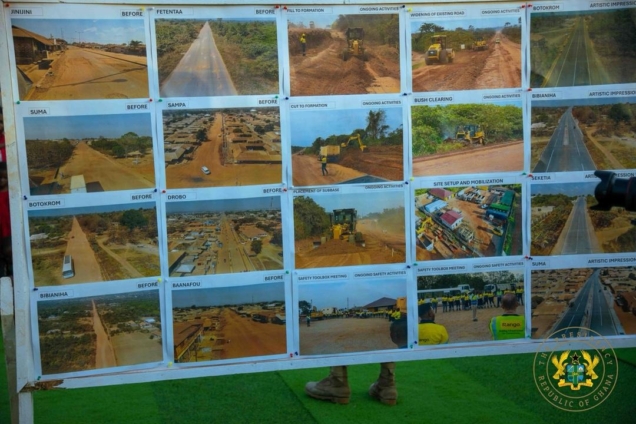
Commentary | Boakye Stephen :
From a governance and policy perspective, this hands-on inspection approach signals a shift toward more responsive and participatory leadership. Rather than relying solely on reports, the President’s direct engagement with communities introduces an element of accountability that is often missing in large-scale infrastructure projects.
However, the real test lies beyond inspections. The effectiveness of such tours will ultimately be measured by timely project completion, quality of work, and the tangible economic benefits delivered to ordinary citizens.
If consistently applied, this model could strengthen public trust in governance and ensure that national development is not just planned in offices but experienced in communities.