
Oil, Economy, and Climate Clash: Catherine McKenna Warns of Hard Choices Ahead
Former environment minister highlights tension between economic reliance on oil and urgent climate action
By Ebenezer Adu-Gyamfi / Emmanuel Ayiku | Reporting for Ghanaian News Canada April 20, 2026
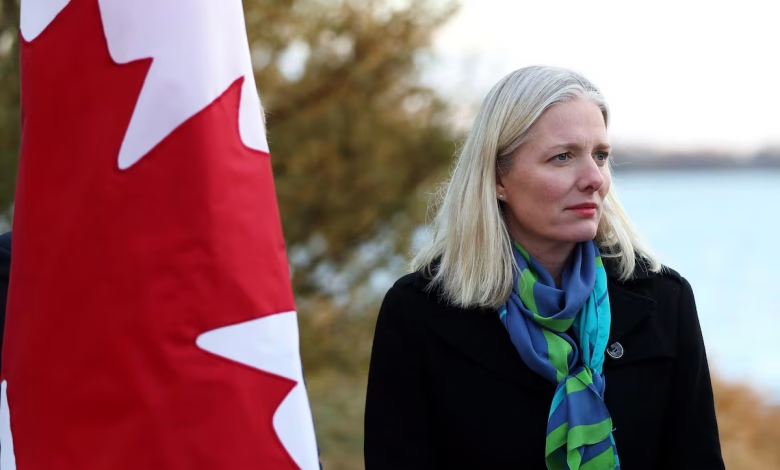
Former Canadian Environment Minister Catherine McKenna has issued a stark warning about the growing tension between economic dependence on the oil industry and the urgent need to address climate change.
In a recent commentary, McKenna emphasized that governments can no longer avoid making difficult decisions as the realities of climate change intensify globally.
Canada, one of the world’s major oil producers, faces a complex balancing act. While the oil and gas sector remains a key driver of economic growth, jobs, and exports, it is also one of the largest contributors to greenhouse gas emissions.
McKenna argued that continuing to expand fossil fuel production while simultaneously committing to climate targets creates a contradiction that policymakers must confront.
She stressed that the transition to cleaner energy systems will require not just political will, but also a willingness to challenge powerful industry interests and rethink long-standing economic models.
The former minister, who served from 2015 to 2019, has long been a vocal advocate for carbon pricing and market-based solutions to reduce emissions.
However, she acknowledged that such policies have often faced resistance, particularly from stakeholders within the oil and gas sector, as well as from political actors concerned about economic impacts.
Experts note that Canada’s oil and gas industry has played a significant role in shaping national climate policy debates, sometimes pushing back against stricter environmental regulations.
McKenna warned that delaying decisive action could increase long-term economic risks, as global markets gradually shift toward renewable energy and low-carbon alternatives.
She also highlighted the importance of clear and consistent policy direction, arguing that uncertainty can discourage investment in both traditional and emerging energy sectors.
The discussion reflects a broader global dilemma faced by many resource-rich nations: how to transition toward sustainable energy without destabilizing their economies.
McKenna’s remarks add to a growing chorus of voices calling for a more realistic and transparent approach to climate policy—one that acknowledges both the economic importance of fossil fuels and the environmental costs associated with them.
As countries worldwide accelerate efforts to meet climate targets, the debate over oil, economy, and environmental responsibility is expected to intensify in the years ahead.


