Human Decisions, Not Nature Alone, Are Driving Accra’s Flood Disasters – Engineers
By Boakye Stephen, Kumasi, Ghana | Reporting for Ghanaian News, Canada | June 5, 2026

Accra’s recurring floods are increasingly being linked to decades of environmental mismanagement, uncontrolled urban expansion and the destruction of natural drainage systems, according to the Ghana Institution of Engineers (GhIE). The warning comes in the wake of fresh flooding that disrupted transportation and economic activity across several parts of the capital following heavy rains.
Engineering experts argue that the city’s flood problems have evolved beyond seasonal weather concerns and now reflect long-standing structural and planning failures. They believe that unless corrective measures are implemented, the situation is likely to worsen in the coming years.
Speaking on Joy FM’s Super Morning Show, GhIE President Ing. Ludwig Annang Hesse said the predictability of flooding in Accra has become undeniable.
“These days, we do not need a prophet to tell us that when it rains, Accra will flood,” he said.
He observed that what was once considered an occasional occurrence has become a recurring annual challenge.
“We used to experience floods once in a while — perhaps once in 10 years, five years or even 20 years. Today, we know with certainty that Accra will flood every year, whether it is during the rainy season or not,” he stated.
According to him, extensive development activities have gradually eliminated many of the natural features that previously helped slow and contain runoff water.
“For the past 30 or 40 years, we have done things the wrong way. We have filled all the water-retention areas and low-lying lands, and we have built in places where development should never have occurred,” he explained.
The consequences, he noted, are now visible whenever heavy rainfall occurs.
“Water that once took about 12 hours to travel from Aburi to Accra now takes roughly an hour. The natural systems that slowed down the movement of water have been destroyed,” he noted.
He further stressed that critical flood-control areas have largely disappeared.
“All the water-retention areas in Accra have been compromised. We have brought this situation upon ourselves. We do not need a prophet anymore,” he said.
The engineer warned that continued inaction will leave residents facing repeated flood emergencies.
“We will continue to experience flooding in several parts of Accra annually. That is the situation we have created for ourselves,” he added.
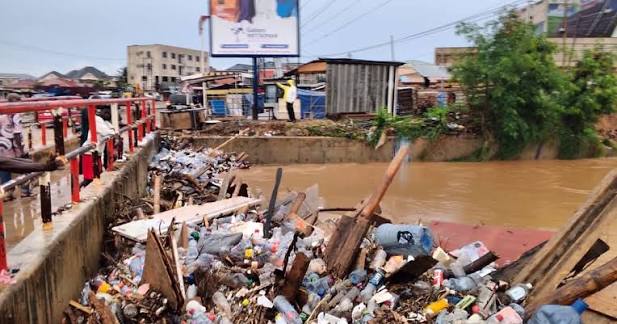
Turning to sanitation concerns, Ing. Hesse pointed to clogged drains and waterways as factors intensifying the problem.
“The drainage channels downstream, which are already operating beyond capacity, are filled with silt, rubbish and plastic waste,” he said.
He also criticised ongoing development activities in ecologically sensitive areas.
“We are building in waterways and filling water-retention basins. Places such as Sakumono, Teshie and Korle are all being reclaimed and developed. If we continue on this path, we are heading towards a disaster,” he warned.
Discussing possible solutions, he argued that expanding drains alone would not solve the challenge.
“Most of the solutions we have pursued over the years have been downstream solutions. We continue to expand drainage systems and invest heavily in them, but because the natural water-retention areas have been compromised, the water still overwhelms the system,” he explained.
Instead, he advocated retaining rainfall closer to where it lands.
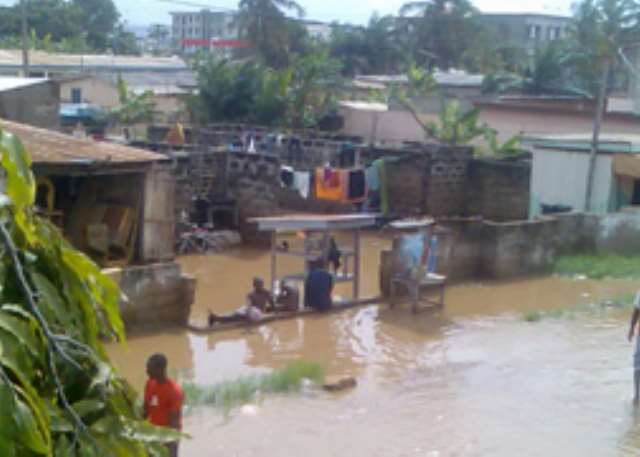
“The only viable option left is for each household to retain the rainwater that falls on its property for a period and release it gradually after peak flooding has passed,” he said.
“This is the only realistic option left to address Accra’s drainage challenges and minimise flooding in the city,” he stated.
Commentary | Boakye Stephen
The engineer’s remarks add to growing concerns that Accra’s flood crisis is increasingly a governance and planning issue rather than simply a weather-related challenge. Experts have long argued that restoring natural waterways, enforcing planning regulations and improving waste management are essential to reducing future flood risks.