Air Canada CEO Michael Rousseau to Step Down Amid Backlash
Retirement announcement follows criticism over language controversy after fatal crash response
By Ebenezer Adu-Gyamfi / Emmanuel Ayiku | Reporting for Ghanaian News, Canada March 30, 2026

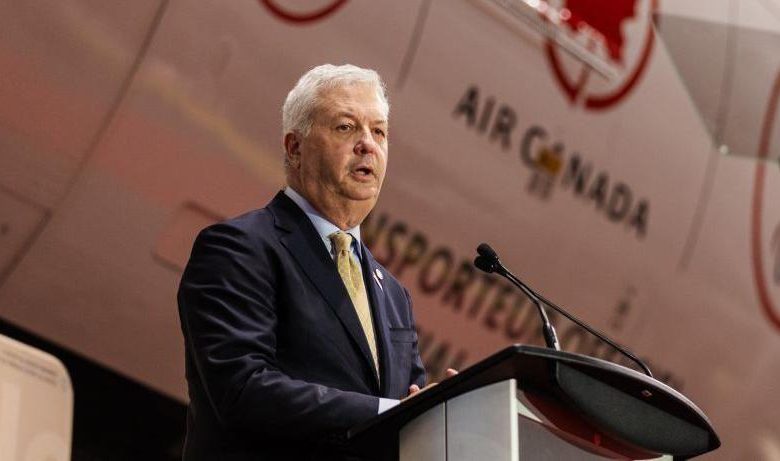
The Chief Executive Officer of Air Canada, Michael Rousseau, has announced plans to step down later this year, following mounting criticism over his handling of a recent crisis.
Air Canada confirmed that Rousseau will retire by the end of the third quarter of 2026, marking the end of his tenure that began in 2021.
The announcement comes in the wake of a fatal incident involving an Air Canada aircraft at New York’s LaGuardia Airport earlier in March, which resulted in the deaths of two pilots and injuries to dozens of passengers.
Rousseau faced intense backlash after delivering a public message of condolence primarily in English, with minimal use of French—despite Canada’s official bilingual status and the airline’s headquarters in Montreal, a predominantly French-speaking city.
The response sparked widespread criticism from political leaders and the public, particularly in Quebec, where language is closely tied to cultural identity. Calls for his resignation intensified, with lawmakers and officials emphasizing the importance of bilingual communication in national institutions.
Although Air Canada has stated that Rousseau’s departure aligns with long-standing retirement plans, analysts say the timing underscores the pressure generated by the controversy.
During his tenure, Rousseau was credited with steering the airline through the COVID-19 recovery period, stabilizing operations, and expanding its global network.
The company has indicated it will begin the process of identifying a successor, with increased emphasis on bilingual leadership capabilities, reflecting the sensitivities highlighted by the incident.
The development has also reignited broader discussions in Canada حول language, identity, and corporate responsibility, particularly for national institutions operating in a bilingual environment.
This episode illustrates how leadership today extends beyond operational competence into cultural intelligence.
In a country like Canada, language is not merely a communication tool—it is identity, history, and politics intertwined. A misstep in such a context can quickly evolve from a corporate issue into a national debate.
Rousseau’s exit highlights a deeper lesson: in global leadership, technical success must be matched with cultural awareness.
The question moving forward is not just who leads Air Canada—but what kind of leadership modern institutions now demand.