Trump Pulls the Plug on 86-Year-Old Canada-U.S. Defence Partnership — What It Means for Canadians
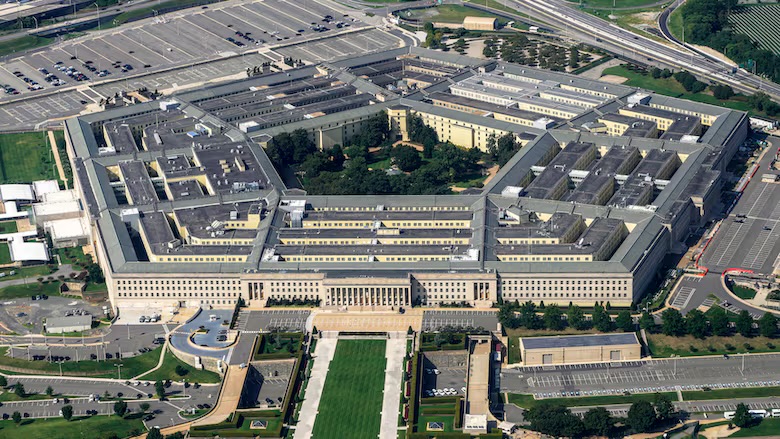
The Pentagon has suspended its participation in the Permanent Joint Board on Defence — a body established in 1940 during World War II — in the latest and most dramatic escalation of tensions between Washington and Ottawa under Prime Minister Mark Carney.
By: Ebenezer Adu-Gyamfi / Emmanuel Ayiku For GhanaianNewsCanada | May 19, 2026 | Ottawa / Washington / Toronto
OTTAWA / WASHINGTON — In a move that has sent shockwaves through the Canadian defence establishment and diplomatic community, the Trump administration announced on Monday, May 18, 2026 that it is suspending its participation in the Permanent Joint Board on Defence — an advisory body on North American continental defence that has existed without interruption since 1940. The decision, announced via a social media post by U.S. Undersecretary of War Elbridge Colby, represents the most significant rupture in formal Canada-United States military cooperation in modern history — and it lands directly on the doorstep of every Canadian, including the hundreds of thousands of Ghanaian-Canadians who call this country home.
The Permanent Joint Board on Defence — known by its acronym, the PJBD — was established in August 1940, when the world was at war and North America was bracing for potential attack. It was created by then-U.S. President Franklin D. Roosevelt and Canadian Prime Minister William Lyon Mackenzie King as the foundational institution of continental defence cooperation. For 86 years, through the Cold War, the September 11 terrorist attacks, and multiple shifts in global power, the board met annually and served as the backbone of military coordination between the two closest allies in the world. Until Monday.
For Ghanaian-Canadians and all immigrants who chose Canada as their home, this development is not an abstraction. It goes to the heart of what kind of country Canada is becoming — and how secure, stable, and sovereign it will remain in the face of an increasingly unpredictable neighbour to the south.
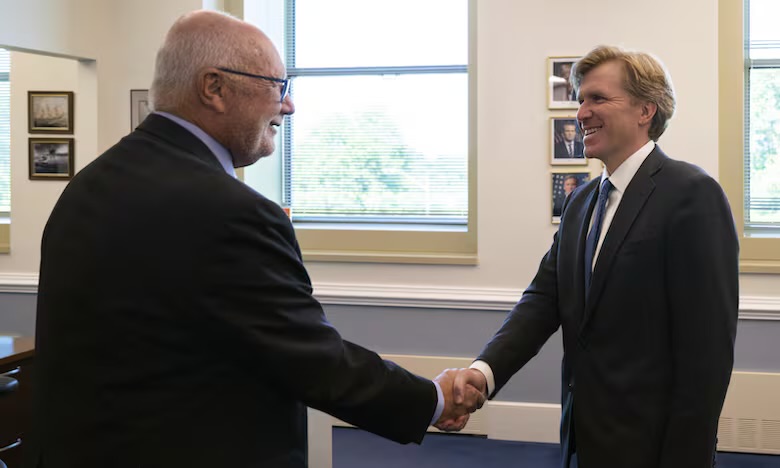
What Colby Said — and What He Really Meant
The announcement came not through official diplomatic channels or a formal press conference — but through a post on X (formerly Twitter) by Elbridge Colby, the U.S. Undersecretary of War for Policy. In his post, Colby wrote that the Department of War was “pausing” the PJBD to “reassess how this forum benefits shared North American defense,” adding that Canada had “failed to make credible progress on its defense commitments.”
Colby concluded his post with an image of a map showing the United States and Canada side by side, writing: “Delivering on shared continental defense begins by recognizing our shared geography. A strong Canada that prioritizes hard power over rhetoric benefits us all.” The message was pointed and deliberate — a public rebuke of Canadian Prime Minister Mark Carney’s government, delivered in the bluntest possible terms.
When CBC News contacted the Pentagon seeking further clarification and explanation, a public affairs officer said the department had nothing to add beyond Colby’s social media posts. The decision to announce the suspension of an 86-year-old bilateral defence institution through a tweet — and then refuse to elaborate further — speaks volumes about the current state of the Trump administration’s approach to its relationship with Canada.
What Is the PJBD and Why Does It Matter?
To grasp the full significance of Monday’s announcement, it is necessary to understand what the Permanent Joint Board on Defence actually does — and what it represents. The PJBD is not merely a symbolic body. According to military historians and defence analysts, it performs genuinely important operational work, meeting annually with senior Canadian and American defence and diplomatic officials to coordinate North American continental security planning.
Sean Maloney, a professor of history at the Royal Military College of Canada who has written extensively about the board, told CBC News that the PJBD and its associated Military Cooperation Committee handle substantial amounts of defence planning work. The U.S. withdrawal, Maloney said, “basically generates more friction in the system than we need right now.” His assessment was measured but clear: this is not a decorative institution. Pulling out of it has real operational consequences.
Imran Bayoumi, a former U.S. defence adviser now with the Scowcroft Center for Strategy and Security — a prestigious Washington think-tank — was even more direct. He told CBC News that the PJBD is an important symbol of the bilateral relationship between the two countries, and that cancelling participation in it is “a needless provocation that sends the wrong message to Ottawa and other U.S. allies.” Coming from a former American defence insider, that assessment carries significant weight.
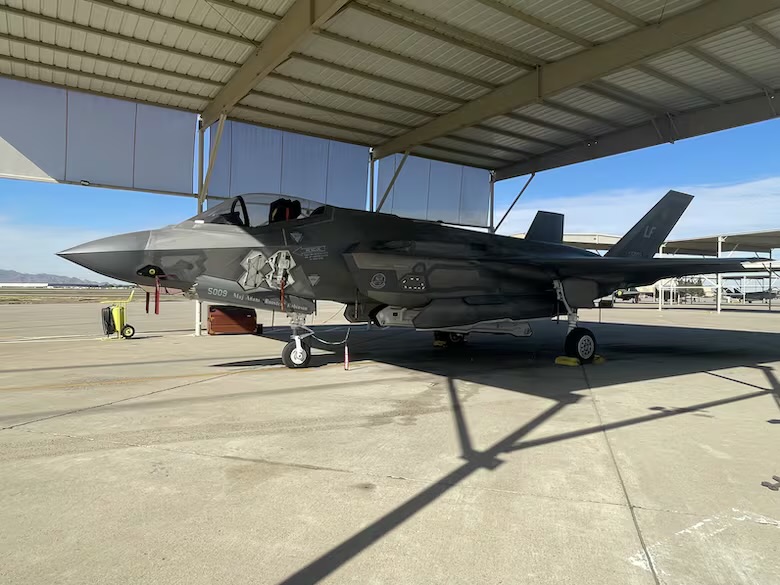
Former Canadian diplomat Artur Wilczynski, who attended the board’s meetings during his tenure at Public Safety Canada, was blunter still. Writing on X following the announcement, Wilczynski declared: “The lack of joint coordination will affect the US too. Bizarre decision by the Trump regime.” His use of the word “bizarre” reflects the disbelief felt across Canada’s defence and diplomatic establishment — a community that has spent decades building and maintaining exactly the kind of institutionalised cooperation that Washington just unilaterally dismantled.
The Defence Spending Dispute: What Canada Has — and Hasn’t — Done
The Trump administration’s stated justification for suspending the PJBD centres on Canada’s failure to meet NATO defence spending commitments. The NATO target is for member nations to spend at least two percent of their GDP on defence annually — a benchmark that Canada has consistently fallen short of for years. Under the Trudeau government, Canada’s defence spending hovered around 1.3 to 1.4 percent of GDP, despite repeated pledges to increase it.
Under Prime Minister Mark Carney, Canada has moved more decisively on defence spending than at any point in recent memory. Canada has pledged to reach five percent of GDP on defence spending by 2035 as part of a pact with NATO leaders — a commitment that, if fulfilled, would make Canada one of the highest defence-spending nations in the alliance. Carney has also taken a notably assertive posture on Canadian sovereignty, pushing back publicly and firmly against Trump’s rhetoric about Canada becoming the “51st state” and championing what he has called a vision of Canada’s future among the world’s “middle powers.”
It is this assertiveness that appears to be at the root of the Trump administration’s escalating pressure on Ottawa. Former Canadian MP and Conservative party leadership candidate Erin O’Toole — himself a former defence minister — observed pointedly that the U.S. pulling out of the military board made it more likely that Canada would turn to other countries for major weapons purchases. The implication was clear: by pressuring Canada through defence cooperation withdrawals, Washington may be inadvertently pushing Ottawa further towards European and other international defence partnerships.
A Pattern of Escalating Pressure on Canada
Monday’s announcement did not emerge in a vacuum. It is the latest in a sustained and escalating pattern of pressure that the Trump administration has applied to Canada since Trump returned to the White House for his second term in January 2025. The pattern began with tariff threats, evolved into trade war measures, and has now reached into the realm of formal military cooperation — an unprecedented escalation that reflects either a genuine strategic shift in how Washington views Canada, or a deliberate pressure campaign designed to extract concessions from Carney’s government.
The deterioration of the relationship gained international attention when Carney delivered a speech — widely praised in Canada and noted in diplomatic circles worldwide — in which he described what he called “a rupture in the world order.” Trump reportedly took notice of the speech and subsequently referred to Carney as “governor” — a pointed and dismissive reference to Trump’s repeated suggestions that Canada should become part of the United States. The remark was not taken lightly in Ottawa.
The timing of Monday’s PJBD suspension — coming immediately after Colby’s meeting with U.S. Ambassador to Canada Pete Hoekstra at the Pentagon — suggests the decision was deliberate and coordinated rather than impulsive. It appears to be part of a broader strategy within the Trump administration to maintain economic and now military pressure on Ottawa as leverage in ongoing trade and sovereignty disputes.
What This Means for Ghanaian-Canadians and All Immigrants
For the Ghanaian-Canadian community — and indeed for all immigrants who have built their lives in Canada — the deterioration of the Canada-U.S. relationship under Trump raises questions that are both immediate and long-term. Canada’s prosperity, security, and social stability have for generations rested partly on the bedrock of its alliance with the United States. When that bedrock develops cracks, the tremors are felt throughout Canadian society.
On the economic front, Ghanaian-Canadians — many of whom work in trade-sensitive industries including manufacturing, transportation, healthcare, and professional services — have already felt the effects of U.S.-Canada trade tensions through job market uncertainty, inflation, and the instability that accompanies sustained geopolitical friction between two deeply integrated economies. Canada and the United States conduct approximately two trillion dollars in bilateral trade annually. Disruptions to that relationship ripple through every sector of the Canadian economy.
On the security front, the suspension of the PJBD raises questions about the depth of coordination between Canadian and American forces in scenarios that matter directly to Canadian residents — from emergency response to continental defence against external threats. As a former Canadian whose grandfather deployed to Alaska for joint defence during World War II noted in an online response to the news: “I hope we don’t lose sight of that.” The shared history of North American defence is not merely a historical footnote. It is the foundation on which the security of millions of people in this country rests.
For newly arrived Ghanaians and other immigrants who chose Canada in part because of its stability, its rule of law, and its place in the world as a respected middle power, watching that stability be tested by its closest ally is unsettling. But it is also a reminder that Canada’s strength — its multicultural society, its democratic institutions, its independent foreign policy voice — is precisely what makes it worth defending. And defending it, as Carney has made clear, is exactly what his government intends to do.
What Happens Next?
The immediate question following Monday’s announcement is whether the suspension of the PJBD is a temporary pressure tactic or the beginning of a more fundamental restructuring of the Canada-U.S. defence relationship. Colby’s use of the word “pausing” — rather than “ending” or “withdrawing from” — leaves deliberate ambiguity. It is language designed to keep Ottawa under pressure while preserving the option to return to the table if and when Washington’s conditions are met.
Canada’s response has been measured but firm. The Canadian government has not publicly panicked over the announcement, nor has it immediately capitulated to U.S. demands. Carney’s government appears to be following a strategy of quiet resilience — continuing to meet NATO commitments at an accelerating pace, continuing to engage diplomatically, and continuing to build alternative partnerships with European allies and other middle powers, while refusing to be publicly destabilised by Washington’s escalating provocations.
Defence analysts suggest that while the PJBD suspension creates friction and sends an alarming signal, Canada and the United States maintain deep and overlapping defence cooperation through other channels — including NORAD, NATO, and bilateral military-to-military relationships that are not dependent on the PJBD specifically. The practical impact of the suspension may be more symbolic than operationally catastrophic — at least in the short term. But symbols in international relations matter enormously, and what this symbol says about the state of the most important bilateral relationship in Canadian history is deeply troubling.
For Ghanaian-Canadians watching these developments from Toronto, Calgary, Ottawa, and Vancouver — communities that have invested deeply in building their futures in this country — the message is both a reminder and a call. Canada remains one of the most stable, welcoming, and prosperous nations on earth. But its security and sovereignty require active defence — not just military, but diplomatic, economic, and civic. Every Canadian, regardless of where they were born, has a stake in ensuring that Canada emerges from this period of pressure stronger, more independent, and more confident in its own identity and values.
EDITORIAL NOTE: This article is an original work of journalism based entirely on verified reporting from CBC News, Al Jazeera, The Hill, Radio-Canada, Global News, and MSN Canada. All events described occurred on May 18, 2026. All attributions are drawn from published sources. GhanaianNewsCanada is committed to accurate, fair, and community-centred journalism.
By: Ebenezer Adu-Gyamfi / Emmanuel Ayiku | GhanaianNewsCanada | May 19, 2026
© 2026 GhanaianNewsCanada. All Rights Reserved.