
U.S. Military Aircraft Use Canadian Airspace for Refuelling Amid Iran Conflict
Canadian Airspace Quietly Supporting U.S. Operations
Writers: Ebenezer Adu-Gyamfi / Emmanuel Ayiku
GhanaianNewsCanada | March 23, 2026
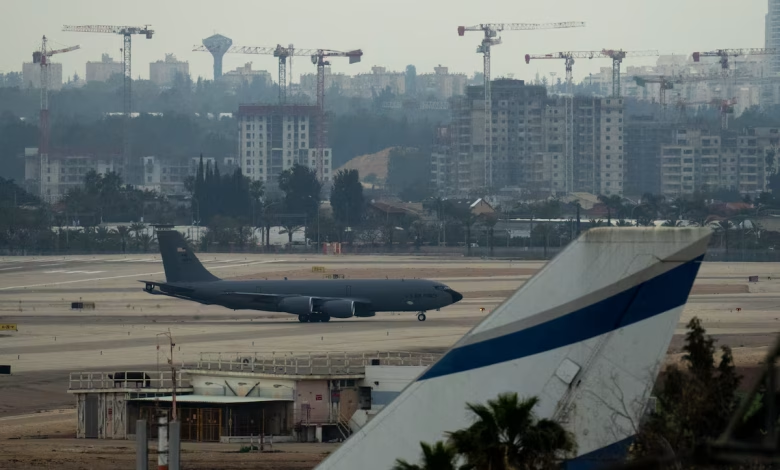
New reports indicate that U.S. military aircraft heading to the Middle East have been using Canadian airspace to conduct mid-air refuelling operations, highlighting Canada’s indirect role in the ongoing conflict involving Iran.
The flights are part of broader U.S. military movements linked to escalating tensions in the region, where operations have intensified in recent weeks.
According to reports, these aircraft pass through Canadian skies as part of long-distance missions, using aerial refuelling to extend their range before continuing toward operational zones.
NORAD Agreement Plays a Key Role
The use of Canadian airspace is made possible under the long-standing North American Aerospace Defense Command (NORAD) agreement between Canada and the United States.
Under this framework, U.S. military aircraft are permitted to operate within North American airspace for defence-related purposes, including transit and refuelling missions, without requiring separate case-by-case approval.
This arrangement reflects the deep military cooperation between the two countries, particularly in areas related to continental defence and security coordination.
Not Direct Combat, But Strategic Support
While Canada has maintained that it is not participating in offensive military operations in the Middle East, the use of its airspace underscores how allied infrastructure can play a supporting role in global conflicts.
Experts note that logistical support—such as airspace access and refuelling routes—is a critical part of modern military operations, enabling aircraft to reach distant regions without relying solely on overseas bases.
This type of support does not necessarily mean direct involvement in combat but still contributes to the overall effectiveness of military missions.
Political and Public Reactions
The development is likely to spark debate within Canada, particularly around questions of:
- Sovereignty and control over national airspace
- Transparency in military cooperation
- Canada’s indirect involvement in foreign conflicts
Some critics argue that such activities should require clearer public disclosure, while others view it as a normal part of Canada’s defence partnership with the United States.
Broader Context of Escalating Conflict
The revelation comes amid a wider escalation in the Middle East, where U.S. and allied operations have targeted Iranian military capabilities, triggering retaliatory actions across the region.
The conflict has already had global consequences, including:
- Rising oil prices
- Disruptions in key shipping routes like the Strait of Hormuz
- Increased military deployments by multiple countries
These developments have placed additional pressure on allied nations, including Canada, to balance support for partners with calls for de-escalation.
A Delicate Balance for Canada
Canada continues to walk a fine line—supporting its closest ally through established defence agreements while maintaining a public stance of non-involvement in offensive operations.
Officials have emphasized diplomacy and stability as key priorities, even as logistical cooperation with the United States continues behind the scenes.
What It Means Going Forward
The use of Canadian airspace for refuelling operations highlights how modern conflicts extend beyond battlefields, involving global networks of logistics, alliances, and strategic coordination.
As tensions persist, Canada’s role—whether direct or indirect—is likely to remain under scrutiny, particularly as citizens and policymakers debate the country’s place in an increasingly complex global security environment.

