


By: Ebenezer Adu-Gyamfi / Emmanuel Ayiku for GhanaianNewsCanada | July 23,2026
ACCRA, Ghana — Finance Minister Dr. Cassiel Ato Baah Forson on Thursday, July 23, presented the 2026 Mid-Year Budget Review to Parliament, offering an assessment of Ghana’s economic performance during the first half of the year while outlining the government’s fiscal priorities for the remainder of 2026.
The presentation, made in accordance with Section 28 of the Public Financial Management Act, 2016 (Act 921), provides Parliament and the public with an update on government revenue, expenditure, debt management and the overall state of the economy.
Addressing lawmakers, Dr. Forson said the review reflects the government’s commitment to maintaining fiscal discipline while accelerating economic growth and improving the living conditions of Ghanaians.
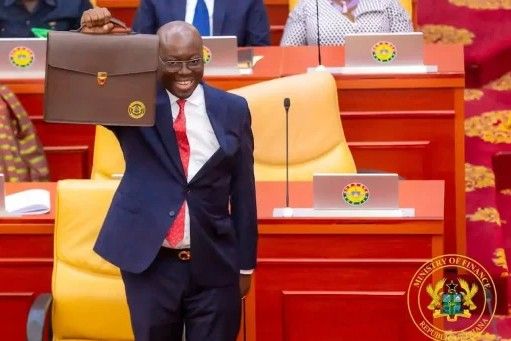
The Finance Minister also updated Parliament on the implementation of several flagship government initiatives, including the 24-Hour Economy and Accelerated Export Development Programme, Adwumawura, the National Apprenticeship Programme, and the Big Push infrastructure initiative, all of which are expected to drive employment, industrialisation and long-term economic transformation.
The review comes at a time when Ghana has recorded improving macroeconomic indicators. Government says recent gains in inflation, economic growth and investor confidence have created a stronger foundation for sustained recovery following the country’s economic challenges in recent years.
One of the key announcements made during the presentation was that the government will not seek supplementary budget estimates for 2026. Instead, Dr. Forson explained that government intends to realign spending within the already approved budget, ensuring that priority projects are funded without increasing overall expenditure.
According to the Minister, this approach demonstrates government’s determination to strengthen public financial management while ensuring value for money in the use of public resources.
The Mid-Year Budget Review is widely regarded as an important economic policy document because it allows government to assess progress, respond to emerging challenges and make necessary adjustments to keep the economy on track before the end of the fiscal year.
Economists, investors, businesses and development partners are expected to closely analyse the review for signals on government spending, taxation, borrowing and future economic policies.
With Ghana seeking to consolidate recent economic gains, the implementation of the measures announced in the Mid-Year Budget Review is expected to play a significant role in shaping the country’s economic outlook for the remainder of 2026.
