Donald Trump Threatens Intensified Bombing if Iran Rejects Peace Deal
U.S.-Iran tensions escalate as Washington warns of heavier military action amid fragile negotiations over the Strait of Hormuz
By Ebenezer Adu-Gyamfi / Emmanuel Ayiku | Reporting for Ghanaian News Canada | May 7, 2026
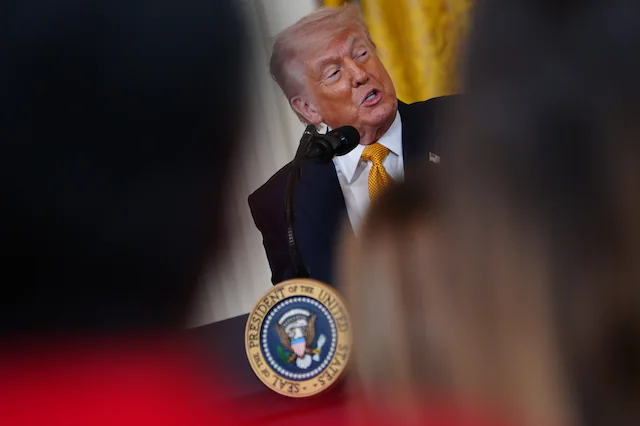
Donald Trump has threatened renewed and intensified military strikes against Iran if Tehran refuses to accept a proposed peace framework aimed at easing tensions in the Middle East and reopening the strategically important Strait of Hormuz.
The warning comes as diplomatic negotiations continue between the United States and Iran following weeks of military confrontation, naval operations, and instability in the Gulf region.
In a public statement, Trump warned that military action could resume at a much greater intensity if negotiations collapse.
“If they don’t agree, the bombing starts, and it will be, sadly, at a much higher level and intensity than it was before.”
The statement immediately raised international concern, with analysts warning that renewed conflict could destabilize global oil markets, disrupt maritime trade, and deepen tensions across the Middle East.
At the center of the crisis is the Strait of Hormuz, one of the world’s most important oil shipping corridors. A significant portion of global energy exports normally passes through the narrow waterway, making any military confrontation in the area a major international concern.
Recent reports indicate that the United States and Iran have been exploring a temporary framework to reduce hostilities and restore safe commercial shipping through the strait. However, negotiations remain fragile, with disagreements continuing over military activity, sanctions, and broader regional security issues.
The Trump administration has reportedly maintained military pressure while simultaneously pursuing diplomatic talks through regional mediators, including Pakistan. Officials say the proposed framework could create space for broader negotiations in the future.
Despite signs of diplomatic engagement, tensions remain high. Military incidents involving ships, drones, and missile attacks have continued in the Gulf region even after ceasefire discussions began. U.S. officials insist the situation has not yet crossed the threshold into renewed full-scale war, though observers warn that the margin for error is becoming increasingly small.
The crisis has also affected global markets. Oil prices have fluctuated sharply due to fears of disruption in the Strait of Hormuz, while shipping companies continue to face rising insurance and operational costs linked to regional instability.
International reactions to Trump’s comments have been mixed. Some allies argue that military pressure is necessary to push Iran toward compromise, while critics warn that threatening heavier bombing risks undermining diplomatic efforts and escalating the conflict further.
Meanwhile, Iranian officials have remained cautious in their public responses, reportedly reviewing American proposals while insisting that any agreement must respect Iran’s sovereignty and national interests.
Political analysts say the current situation reflects the growing complexity of modern geopolitical conflicts, where diplomacy, military deterrence, energy security, and global economic stability are deeply connected.
For the United States, the challenge remains how to maintain pressure on Iran without triggering a wider regional war that could have global economic and humanitarian consequences.
Threats of war are no longer only military statements. They are economic signals to the world.
When the Strait of Hormuz becomes unstable, fuel prices, global shipping, and international markets react immediately.
The danger in high-pressure diplomacy is that public threats can corner both sides politically. Once leaders make strong public declarations, compromise becomes harder without appearing weak.
That is why fragile negotiations often carry hidden risks.
One failed agreement, one military incident, or one miscalculation can rapidly transform tension into open conflict.
And in today’s interconnected world, regional wars rarely remain regional for long.
𝘼𝙗𝙤𝙪𝙩 𝙊𝙪𝙧 𝙍𝙚𝙥𝙤𝙧𝙏𝙄𝙉𝙂 𝙎𝙏𝘼𝙉𝘿𝘼𝙍𝘿𝙎
𝘛𝘩𝘪𝘴 𝘳𝘦𝘱𝘰𝘳𝘵 𝘪𝘴 𝘣𝘢𝘴𝘦𝘥 𝘰𝘯 𝘷𝘦𝘳𝘪𝘧𝘪𝘦𝘥 𝘪𝘯𝘵𝘦𝘳𝘯𝘢𝘵𝘪𝘰𝘯𝘢𝘭 𝘳𝘦𝘱𝘰𝘳𝘵𝘴, 𝘱𝘶𝘣𝘭𝘪𝘤 𝘴𝘵𝘢𝘵𝘦𝘮𝘦𝘯𝘵𝘴, 𝘢𝘯𝘥 𝘦𝘥𝘪𝘵𝘰𝘳𝘪𝘢𝘭 𝘢𝘯𝘢𝘭𝘺𝘴𝘪𝘴. 𝘖𝘶𝘳 𝘤𝘰𝘮𝘮𝘪𝘵𝘮𝘦𝘯𝘵 𝘪𝘴 𝘵𝘰 𝘥𝘦𝘭𝘪𝘷𝘦𝘳 𝘢𝘤𝘤𝘶𝘳𝘢𝘵𝘦, 𝘣𝘢𝘭𝘢𝘯𝘤𝘦𝘥, 𝘢𝘯𝘥 𝘤𝘰𝘯𝘵𝘦𝘹𝘵-𝘳𝘪𝘤𝘩 𝘫𝘰𝘶𝘳𝘯𝘢𝘭𝘪𝘴𝘮.