Deadly Volcano Eruption in Indonesia Kills Residents as Rescue Teams Race Against Danger
Massive ash clouds force evacuations while authorities warn of possible further eruptions on disaster-hit island
By Boakye Stephen, Kumasi, Ghana | Reporting for Ghanaian News Canada | May 8, 2026
At least three people have reportedly died following a powerful volcanic eruption on an island in Indonesia, as emergency teams continue rescue, evacuation, and disaster response operations in affected communities.
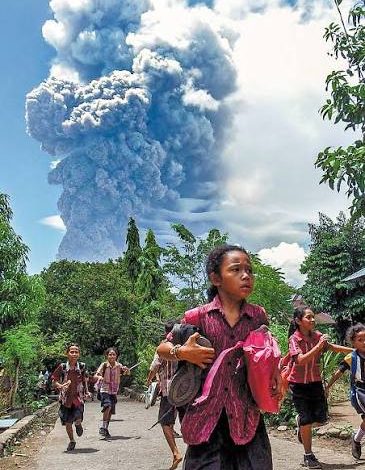
Authorities say the eruption sent massive ash clouds high into the atmosphere, covering nearby settlements with volcanic debris and triggering panic among residents living close to the volcano. Emergency sirens and evacuation warnings were reportedly issued as officials rushed to move vulnerable populations to safer areas.
Disaster management agencies confirmed that rescue operations remain ongoing, with emergency personnel searching affected zones while monitoring the possibility of additional eruptions and dangerous volcanic activity.

Images and reports from the region showed thick grey ash spreading across roads, rooftops, and villages, significantly reducing visibility and disrupting daily life. Residents were seen fleeing with personal belongings as authorities expanded evacuation zones around the volcano.
Local officials warned that volcanic ash poses serious health risks, particularly for children, elderly residents, and individuals with respiratory conditions. Emergency shelters have reportedly been established to accommodate displaced families while medical teams provide assistance to affected communities.
The eruption has once again highlighted Indonesia’s extreme vulnerability to natural disasters due to its location along the Pacific Ring of Fire, one of the most active seismic regions in the world.

Indonesia is home to more than 120 active volcanoes and frequently experiences earthquakes, eruptions, and tsunamis linked to tectonic activity beneath the Pacific Ocean. Scientists say pressure beneath volcanic systems can build rapidly, sometimes leading to sudden and explosive eruptions with little warning.
Authorities are also assessing possible structural damage to homes, roads, farmland, and public infrastructure in communities surrounding the volcano. Ashfall and volcanic debris have reportedly affected transportation and visibility in several areas, while aviation authorities continue monitoring risks to air travel.
Emergency officials have urged residents to strictly comply with evacuation directives and avoid restricted danger zones around the volcano, warning that conditions may remain unstable for days.
Volcanologists monitoring the eruption say secondary hazards such as lava flows, toxic gases, landslides, and mudflows remain possible depending on weather conditions and the intensity of future volcanic activity.
Meanwhile, humanitarian agencies are coordinating relief efforts to support displaced residents with food, clean water, temporary shelter, and medical care.

The latest eruption adds to a long history of deadly volcanic disasters in Indonesia, where communities often live in close proximity to active mountains due to fertile volcanic soil that supports agriculture and settlement.
For many residents, volcanic eruptions are both a natural reality and a recurring threat capable of changing lives within minutes.
COMMENTARY | BOAKYE STEPHEN
Natural disasters remind humanity of a difficult truth: technology may advance, but nature still holds enormous power.
Volcanoes do not negotiate with borders, politics, or economic status.
For countries along the Ring of Fire, disaster preparedness is not optional — it is survival planning.
The tragedy is that many vulnerable communities often live closest to danger because the same volcanic systems that threaten life also create fertile land and economic opportunity.
And when eruptions happen suddenly, the difference between survival and catastrophe often depends on warning systems, emergency coordination, and public trust in evacuation orders.
𝘼𝙗𝙤𝙪𝙩 𝙊𝙪𝙧 𝙍𝙚𝙥𝙊𝙍𝙏𝙄𝙉𝙂 𝙎𝙏𝘼𝙉𝘿𝘼𝙍𝘿𝙎
𝘛𝘩𝘪𝘴 𝘳𝘦𝘱𝘰𝘳𝘵 𝘪𝘴 𝘣𝘢𝘴𝘦𝘥 𝘰𝘯 𝘦𝘮𝘦𝘳𝘨𝘦𝘯𝘤𝘺 𝘶𝘱𝘥𝘢𝘵𝘦𝘴, 𝘥𝘪𝘴𝘢𝘴𝘵𝘦𝘳 𝘳𝘦𝘱𝘰𝘳𝘵𝘴, 𝘢𝘯𝘥 𝘱𝘶𝘣𝘭𝘪𝘤 𝘪𝘯𝘧𝘰𝘳𝘮𝘢𝘵𝘪𝘰𝘯 𝘳𝘦𝘭𝘦𝘢𝘴𝘦𝘥 𝘣𝘺 𝘢𝘶𝘵𝘩𝘰𝘳𝘪𝘵𝘪𝘦𝘴. 𝘖𝘶𝘳 𝘨𝘰𝘢𝘭 𝘪𝘴 𝘵𝘰 𝘱𝘳𝘰𝘷𝘪𝘥𝘦 𝘢𝘤𝘤𝘶𝘳𝘢𝘵𝘦, 𝘣𝘢𝘭𝘢𝘯𝘤𝘦𝘥, 𝘢𝘯𝘥 𝘤𝘰𝘯𝘵𝘦𝘹𝘵-𝘳𝘪𝘤𝘩 𝘫𝘰𝘶𝘳𝘯𝘢𝘭𝘪𝘴𝘮.