
Carney Pledges More Support for Indigenous Communities as Premiers and First Nations Leaders Meet
Canada’s prime minister meets Indigenous leaders and provincial representatives in Ottawa for landmark talks on economic development, Indigenous rights and reconciliation amid concerns over plans to accelerate major projects.

By: Ebenezer Adugyamfi & Emmanuel Ayiku for GhanaianNewsCanada
26 OCTOBER 2026
Canadian Prime Minister Mark Carney has pledged greater support for Indigenous communities as federal leaders, provincial premiers and First Nations representatives gathered in Ottawa for high-level discussions on economic development, Indigenous rights and the future of relations between Indigenous governments and Canada.
The meeting on Monday, October 26, 2026, represents a significant moment in federal-provincial-Indigenous relations, bringing First Nations leaders and first ministers together for their first face-to-face gathering of this kind in approximately two decades.
The talks come as the Carney government pushes to accelerate major infrastructure and resource development projects in an effort to strengthen Canada’s economy, attract investment and improve the country’s economic independence.
However, some Indigenous leaders have raised concerns that the push to speed up project approvals could weaken their communities’ ability to protect their lands, exercise their rights and participate meaningfully in decisions affecting their territories.
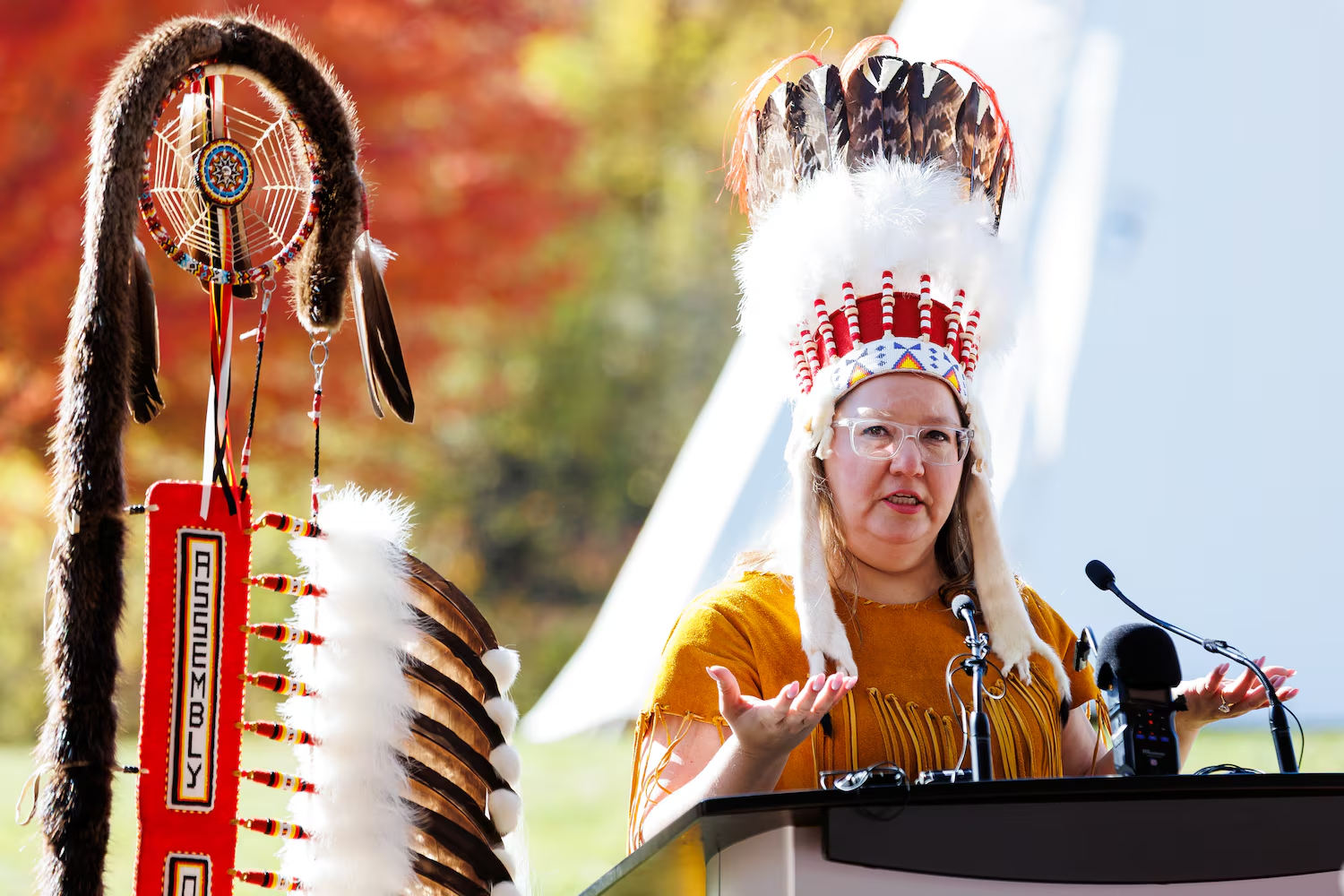
The Assembly of First Nations (AFN), which represents First Nations communities across the country, has called for concrete commitments rather than a meeting that produces promises without lasting action.
A landmark meeting after two decades
The Ottawa summit brings together representatives of First Nations, the federal government and participating provincial and territorial governments to discuss issues affecting Indigenous communities and Canada’s broader economic future.
The last comparable gathering was associated with the 2005 Kelowna Accord discussions under former prime minister Paul Martin. Those talks sought to address socioeconomic disparities facing Indigenous communities through investments in areas including education, health, housing and economic development.
The proposed agreement was not implemented after the subsequent change in federal government.
The current meeting therefore carries considerable political significance, with Indigenous leaders hoping that the discussions will produce a more durable framework for cooperation.
Assembly of First Nations National Chief Cindy Woodhouse Nepinak has stressed that First Nations must be treated as partners in decisions concerning the country’s development agenda.
She has argued that Indigenous communities should not be excluded from decisions about major projects that affect their lands, resources and future generations.
Prime Minister Carney has also emphasised the importance of creating economic opportunities while ensuring that Canada upholds its commitment to fairness and inclusion.
Economic development and Indigenous rights
A major issue confronting the meeting is the federal government’s plan to accelerate the approval and construction of major projects.
Carney’s government has prioritised infrastructure, energy and natural-resource development as part of its broader strategy to strengthen Canada’s economic position amid international uncertainty and changing trade relationships.
In 2025, Parliament passed the Building Canada Act, which gives the federal government a mechanism to designate certain projects as being in the national interest. Ottawa subsequently established a Major Projects Office to help streamline approvals and coordinate major developments.
The government argues that faster decision-making can help attract investment, create employment and reduce delays affecting projects considered important to the national economy.
However, some First Nations leaders fear that accelerating approvals without adequate consultation could undermine Indigenous rights and increase the risk of legal disputes.
They argue that economic growth should not come at the expense of treaty obligations, Indigenous jurisdiction or the ability of communities to influence developments taking place on their traditional territories.
The Ottawa discussions are expected to test whether the federal government can reconcile its ambition to accelerate development with the need to respect Indigenous rights and establish meaningful partnerships.
Calls for concrete commitments
For Indigenous leaders, the importance of the meeting will ultimately depend on what follows the discussions.
The Assembly of First Nations has emphasised the need for practical results, continued dialogue and commitments that extend beyond a single gathering.
Key concerns include funding for Indigenous communities, economic participation, jurisdiction, employment, health, policing and public safety.
Many communities continue to face challenges involving housing shortages, access to essential services and economic opportunities. Indigenous leaders want governments to work with them to address these concerns while ensuring that communities have a meaningful role in decisions affecting their future.
A successful meeting could help establish a more coordinated approach to Indigenous economic participation and improve relations between First Nations, Ottawa and provincial governments.
However, unresolved disagreements over authority, consultation and development could leave the parties facing further political tensions and legal challenges.
Not all premiers attending
The summit has also highlighted differences among provincial governments over how Indigenous relations and economic development should be approached.
Not all invited premiers participated in the gathering. Reports ahead of the meeting indicated that the premiers of Quebec and Alberta were expected to be absent, while British Columbia’s political transition also affected representation.
The absences underscore the difficulty of developing a unified national approach to Indigenous rights and major-project approvals when governments have different priorities and political positions.
Some provinces have introduced their own measures to accelerate development, creating additional questions about how provincial policies will interact with federal responsibilities and Indigenous rights.
Despite these differences, the gathering provides an opportunity for governments to discuss areas of common interest and identify ways to reduce conflict over future projects.
Protesters demand a greater voice
The meeting has also drawn criticism from grassroots Indigenous activists who believe the discussions do not adequately represent the views of young people and ordinary community members.
Some protesters gathered outside the venue in Ottawa, calling for a greater voice in decisions affecting their communities.
Their concerns reflect a wider debate within Indigenous communities about who should represent their interests in negotiations with governments and whether discussions focused on economic development adequately address questions of sovereignty, land rights and consent.
While some Indigenous leaders support greater resource development when communities are properly involved and benefit economically, others remain concerned that the government’s fast-track approach could prioritise investment over the protection of Indigenous rights.
These differing perspectives demonstrate that Indigenous communities are not a single political bloc, and their views on development can vary according to local circumstances, treaty arrangements and economic priorities.
What the summit means for Canada
The outcome of the Ottawa meeting could have important implications for Canada’s economic development plans and its relationship with Indigenous peoples.
If the discussions produce clear commitments on funding, consultation, jurisdiction and economic participation, they could help create a more predictable environment for major projects while strengthening cooperation with Indigenous communities.
Such an approach could also reduce the likelihood of disputes that delay infrastructure and resource developments.
However, if the meeting fails to address fundamental disagreements over Indigenous rights and decision-making authority, tensions could persist, potentially leading to further protests and court challenges.
For Prime Minister Carney, the challenge is to demonstrate that Canada’s pursuit of economic growth can proceed alongside its responsibilities to Indigenous peoples.
For First Nations leaders, the priority is to ensure that their communities are treated as genuine partners rather than being consulted only after governments have already determined the direction of major projects.
The significance of the summit will therefore be measured not simply by the leaders who attended, but by the commitments made, the resources provided and the extent to which Indigenous communities can influence decisions affecting their lands and future generations.

