
Carney Condemns Trump’s Russian Diesel Deal While Welcoming Ukraine Energy Ceasefire
The Canadian prime minister says the U.S. agreement could provide Moscow with additional revenue to support its war against Ukraine, even as he backs President Donald Trump’s efforts to halt attacks on energy infrastructure.

By: Ebenezer Adugyamfi & Emmanuel Ayiku for GhanaianNewsCanada
Date: October 12, 2026
Canadian Prime Minister Mark Carney has criticized U.S. President Donald Trump’s decision to arrange diesel supplies from Russia, warning that the deal could provide Moscow with additional revenue to sustain its war against Ukraine.
However, Carney has also welcomed Trump’s announcement of an energy ceasefire between Russia and Ukraine, describing the initiative as a potential step towards reducing the conflict and protecting civilians from further hardship.
The two positions highlight the diplomatic challenge facing Canada as it seeks to maintain close relations with its largest trading partner while continuing to support Ukraine and the international effort to pressure Russia over its invasion.
Carney expressed his concerns on Sunday, October 11, following discussions with Ukrainian President Volodymyr Zelenskyy. The prime minister’s office said Carney made clear that the Russian diesel arrangement ran counter to the efforts of Canada, Ukraine and their allies to establish peace and stability in Europe.
At the same time, Carney publicly thanked Trump for his leadership in pursuing an energy ceasefire, which could help reduce attacks on power stations, fuel infrastructure and other energy facilities.
The developments came after Trump announced a new arrangement with Russian President Vladimir Putin to bring Russian diesel into the United States, a move that has attracted criticism from Ukrainian officials and members of the U.S. Congress.
The agreement has also raised questions about the effectiveness of sanctions imposed on Russia following its February 2022 invasion of Ukraine.
Trump Announces Russian Diesel Supply Agreement
Trump announced the diesel arrangement on Friday, October 9, following a telephone conversation with Putin.
According to Trump’s announcement, Russia would immediately supply more than 300,000 tonnes of diesel, followed by another 500,000 tonnes in November and further shipments in subsequent periods.
Trump said additional quantities would depend partly on the condition of Russia’s diesel refineries, some of which have reportedly been damaged during the war.
The U.S. president presented the arrangement as an attempt to increase fuel supplies and ease pressure on American consumers facing sharply higher diesel prices.
Diesel is essential to several parts of the U.S. economy, including trucking, agriculture, construction, industrial operations and some home-heating systems. When fuel prices rise, transportation and production costs can also increase, potentially feeding into the prices of food and other consumer goods.
The deal comes at a politically sensitive time for Trump, with U.S. congressional midterm elections scheduled for November 3, 2026.
The announcement also represents a significant departure from the U.S. policy of restricting Russian energy imports in response to the invasion of Ukraine.
The U.S. Treasury Department issued a general licence permitting the relevant Russian diesel imports through April 7, 2027, according to reporting by Reuters and Global News.
The agreement has prompted criticism from lawmakers who argue that allowing Russian fuel into the American market could weaken the economic pressure intended to constrain Moscow’s ability to finance the war.

Why Carney Opposes the Deal
Carney’s principal concern is that the diesel arrangement could generate additional revenue for Russia while the war against Ukraine continues.
Canada has supported international sanctions and other measures intended to restrict Russia’s access to resources that can finance its military operations. Ottawa has also provided support to Ukraine as it defends itself against Russian attacks.
From the Canadian government’s perspective, an agreement that creates new commercial opportunities for Russian energy exports risks undermining that broader strategy.
Following his conversation with Zelenskyy on October 11, the Prime Minister’s Office said the arrangement would provide additional revenue for Russia and help finance what it described as Moscow’s illegal and unjustifiable war against Ukraine.
Carney also indicated that Canada remained willing to expand its sanctions against Russia.
His criticism does not mean Canada has withdrawn its support for Trump’s diplomatic efforts. Instead, Ottawa is distinguishing between two separate developments: the proposed fuel arrangement, which it believes could benefit Russia financially, and the proposed energy ceasefire, which could reduce the damage caused by the war.
That distinction is central to understanding Canada’s response. The government can welcome diplomatic efforts intended to stop attacks while opposing a commercial agreement that it believes could strengthen the finances of one of the parties involved in the conflict.
Carney Welcomes Trump’s Energy Ceasefire Initiative
On Sunday, Trump announced that Russia and Ukraine had agreed to an immediate energy ceasefire.
The proposed arrangement was presented as an effort to stop attacks on energy infrastructure, which has been a significant target during the conflict.
Energy infrastructure includes power plants, electricity networks, refineries, fuel-storage facilities and other installations needed to supply electricity and heat homes, hospitals, factories and businesses.
Attacks on these facilities can leave communities without electricity, disrupt essential services and create additional hardships for civilians, particularly as temperatures fall.
Carney welcomed the announcement, saying the proposed ceasefire had the potential to significantly de-escalate the war and protect thousands of people from hardship.
The Prime Minister’s Office also said Carney thanked Trump for his leadership towards securing the agreement and expressed Canada’s strong support for the initiative.
However, the announcement did not immediately provide a detailed, independently confirmed account of the terms, monitoring arrangements or enforcement mechanisms of the proposed ceasefire.
Zelenskyy said Ukraine supported the idea but was awaiting details from Washington. He also stressed that Russia needed to demonstrate its commitment by stopping attacks on Ukrainian energy infrastructure.
That response underlined a central difficulty in any ceasefire arrangement: a public announcement must be followed by clear commitments and actions from both sides if it is to produce a sustained reduction in hostilities.
Ukraine Seeks Guarantees That Russia Will Honour the Agreement
Ukraine has repeatedly called for international pressure on Russia to stop attacks on its territory and infrastructure.
For Kyiv, a ceasefire focused on energy facilities could offer some protection to civilians and help preserve essential services. But the practical value of such an agreement would depend on whether Russia and Ukraine follow the same rules and whether violations can be identified and addressed.
Zelenskyy’s response to Trump’s announcement reflected those concerns.
Although he welcomed the proposed ceasefire, he said he was waiting for details and emphasised the need for Russia to reciprocate.
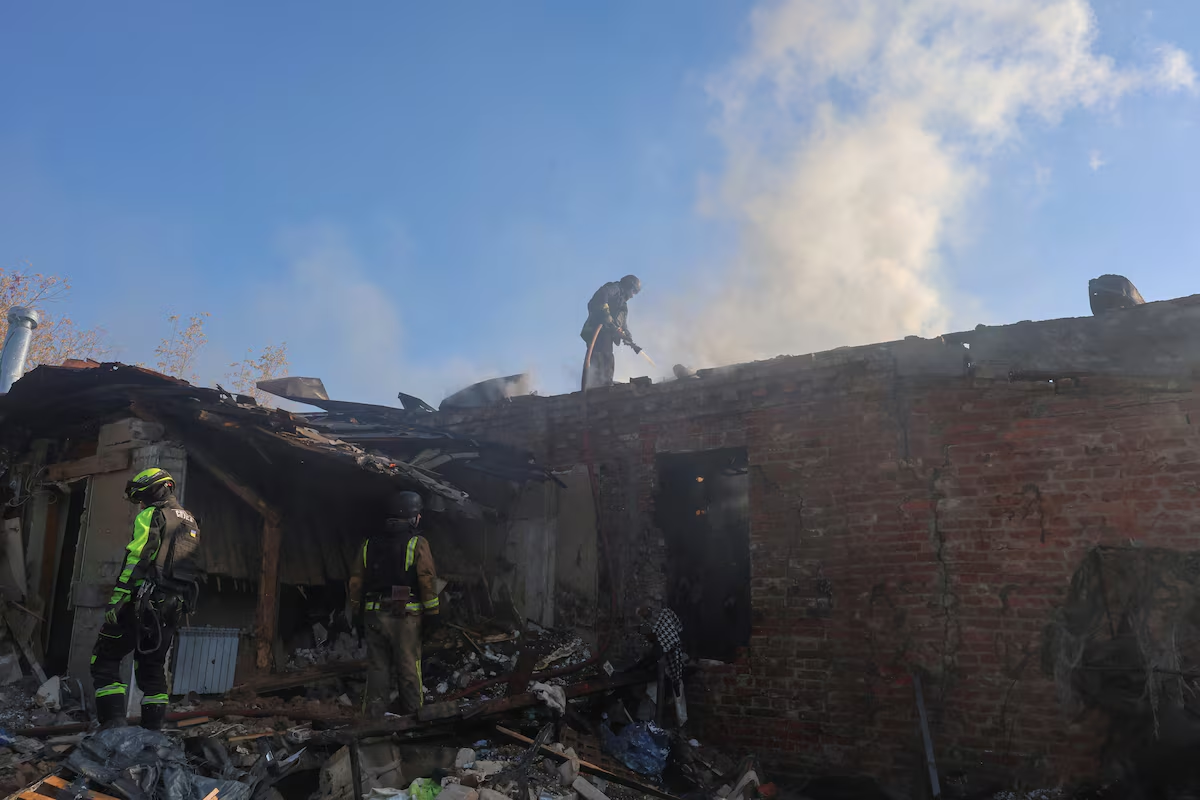
Reports on Sunday indicated that attacks and military operations had continued after Trump’s announcement, including an attack on energy infrastructure in Kharkiv. That made it important to distinguish between the announcement of a proposed ceasefire and evidence that a sustained halt to attacks had actually taken effect.
A credible agreement would need to clarify which facilities are covered, when restrictions begin, how alleged violations are assessed and what happens if either side breaks its commitments.
Without those details, it remains difficult to determine whether the initiative will produce a durable reduction in attacks or a temporary pause in a limited category of operations.
U.S. Lawmakers Challenge the Russian Diesel Arrangement
Trump’s decision to permit Russian diesel imports has also triggered opposition within the United States.
On October 11, a bipartisan group of seven U.S. senators — four Republicans and three Democrats — urged the president to reverse the decision.
The lawmakers argued that the agreement conflicts with restrictions Congress introduced in 2022 to prevent Russian energy imports from generating revenue for Moscow while Russia continued its aggression against Ukraine.
They also questioned whether the administration had followed the required process for consulting Congress and explaining its decision.
The criticism is notable because it includes members of Trump’s own Republican Party, demonstrating that the disagreement extends beyond the usual divide between Republicans and Democrats.
Some critics argue that allowing Russian fuel into the U.S. market could weaken the credibility of American sanctions and provide an economic benefit to the Russian government.
Other Republicans have defended the decision, arguing that Trump must consider the cost of fuel for American households and businesses.
Treasury Secretary Scott Bessent has defended the administration’s move as lawful and beneficial to American consumers.
The competing arguments reflect a broader policy tension between reducing domestic energy costs and maintaining economic pressure on Russia.
Whether the agreement violates U.S. law is a matter of legal interpretation and potentially further government or congressional scrutiny. The senators’ objections should therefore be understood as their stated position rather than a final judicial determination.
Will Russian Diesel Bring Down U.S. Fuel Prices?
Trump has presented the agreement as a way to increase supply and ease pressure on diesel prices.
However, the actual effect on American fuel costs remains uncertain.
Diesel prices are influenced by several factors, including crude oil prices, refinery capacity, transportation costs, seasonal demand, inventories and disruptions to global energy supplies.
The amount of fuel that reaches the market, the speed of delivery and the commercial terms of the arrangement will all affect its potential impact.
Even a substantial increase in supply does not automatically guarantee a major reduction in retail prices. The effect would depend on how the additional fuel interacts with existing supply and demand and whether other market pressures remain in place.
The deal’s critics also question whether any short-term price relief would justify the potential financial benefit to Russia.
For the U.S. administration, the immediate concern is the cost of fuel for consumers and businesses. For Ukraine and its allies, the concern is that new energy revenue could help Moscow sustain its military campaign.
Those competing priorities explain why the agreement has become both an economic and a diplomatic controversy.
What the Dispute Means for Canada-U.S. Relations
The disagreement places Carney in a delicate diplomatic position.
Canada and the United States maintain deeply integrated economies, particularly in energy, transportation, manufacturing and cross-border trade. Cooperation with Washington remains important to Canada’s economic interests and security.
At the same time, Ottawa has publicly committed itself to supporting Ukraine and working with allies to maintain pressure on Russia.
Carney’s response shows that Canada intends to continue cooperating with Trump where it sees an opportunity to reduce the conflict, while remaining prepared to challenge decisions it believes could undermine efforts to end the war.
The Canadian government has also highlighted the importance of its own energy exports to the United States. In its October 11 readout of Carney’s conversation with Trump, the Prime Minister’s Office said Canada would continue maximising its exports of oil and diesel to the American market.
That statement underlines Canada’s role as an important energy supplier to its southern neighbour, even as the two governments differ over the implications of Russian fuel imports.
The dispute does not, by itself, establish that Canada and the United States are heading towards a broader diplomatic confrontation. It does, however, demonstrate that their interests can diverge on foreign policy even when economic cooperation remains extensive.
Canada Maintains Support for Ukraine
Carney’s October 11 conversation with Zelenskyy also covered continued cooperation to support Ukraine’s defence.
According to the Prime Minister’s Office, the two leaders discussed increasing coordination with allies to address Ukraine’s air-defence needs.
Air-defence systems are important for intercepting missiles and drones that threaten cities, military positions and critical infrastructure.
Canada has supported Ukraine through military assistance, financial measures, sanctions and cooperation with international partners. Carney’s latest comments indicate that Ottawa intends to maintain that broader approach even while welcoming diplomatic initiatives led by Washington.
The government’s position is that progress towards peace must be assessed not only by announcements but also by whether the measures reduce attacks, protect civilians and limit Russia’s ability to continue financing its war.
The diesel dispute has therefore become another test of how Canada and its allies can pursue negotiations while maintaining pressure on Moscow.
What Happens Next?
Several questions remain unresolved.
First, the practical terms of the proposed energy ceasefire need to be clarified, including which installations are covered and how compliance will be assessed.
Second, the U.S.-Russia diesel arrangement faces continuing political and legal scrutiny, particularly from senators who argue that it conflicts with existing sanctions legislation.
Third, the economic consequences of the deal will depend on the quantity of fuel delivered, the conditions of the imports and the broader state of energy markets.
For Canada, the immediate priority will be to support any credible initiative that reduces attacks on Ukraine while continuing to oppose measures that Ottawa believes could strengthen Russia’s ability to finance the war.
The coming days will be important in determining whether Trump’s proposed energy ceasefire produces a verifiable reduction in attacks and whether the Russian diesel agreement proceeds without further legal or political obstacles.
For Carney, the central message is clear: Canada can welcome efforts to stop the fighting while opposing an energy deal it believes could undermine the pursuit of peace.
