
Canada’s Supreme Court Upholds Quebec’s Controversial Bill 21, With One Major Exception
Landmark ruling allows Quebec to maintain restrictions on religious symbols worn by certain public-sector workers, while protecting the democratic rights of elected legislators.
November 27, 2026
By: Ebenezer Adugyamfi & Emmanuel Ayiku for GhanaianNewsCanada
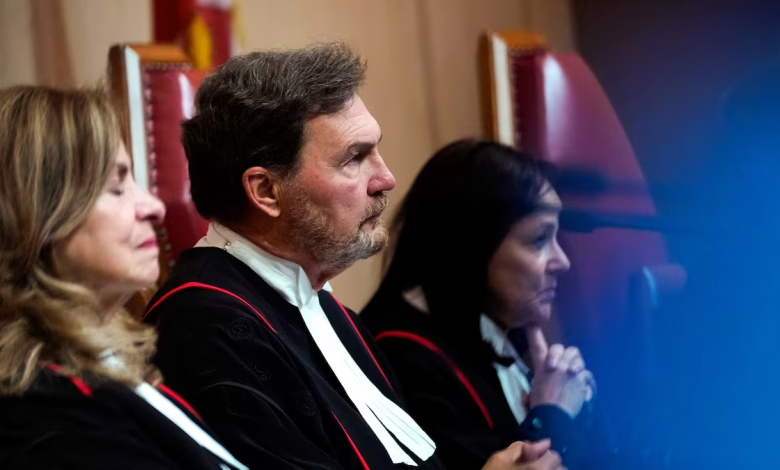
The Supreme Court of Canada has upheld the central provisions of Quebec’s controversial secularism law, known as Bill 21, allowing the province to continue restricting certain public-sector employees from wearing religious symbols while performing their duties.
In a landmark decision released on Friday, November 27, Canada’s highest court confirmed that Quebec had validly invoked the notwithstanding clause of the Canadian Charter of Rights and Freedoms to protect the legislation from certain constitutional challenges.
However, the court struck down one important application of the law, ruling that a provision requiring members of Quebec’s National Assembly to keep their faces uncovered violates their democratic rights when it prevents elected representatives from taking their seats and participating in parliamentary proceedings.
The judgment represents a significant development in Canada’s constitutional debate, particularly concerning the balance between religious freedom, provincial legislative authority and the protection of minority rights.
What is Quebec’s Bill 21?
Passed in June 2019, Bill 21, formally known as the Act Respecting the Laicity of the State, establishes Quebec’s model of state secularism.
The legislation prohibits certain public-sector employees in positions of authority from wearing religious symbols while carrying out their professional responsibilities.
Those affected include teachers, police officers, judges and other designated public employees.
Religious symbols covered by the legislation include Muslim hijabs, Sikh turbans, Jewish kippahs and visible Christian crosses.
The law also requires certain public employees delivering services to keep their faces uncovered.
Quebec’s government has defended the legislation as necessary to preserve the neutrality of state institutions and maintain the province’s distinctive understanding of secularism.
However, civil liberties organisations and religious minority groups have argued that the restrictions disproportionately affect people whose religious beliefs require them to wear visible religious clothing.

Supreme Court backs Quebec’s use of the notwithstanding clause
A central issue before the Supreme Court was whether Quebec had legally exercised its authority under Section 33 of the Canadian Charter, commonly known as the notwithstanding clause.
The provision allows federal or provincial legislatures to temporarily override certain Charter protections, including rights relating to freedom of religion, expression and equality.
Quebec invoked the clause when it introduced Bill 21 in 2019, seeking to protect the legislation from challenges based on the affected Charter rights.
The Supreme Court confirmed that the province had validly exercised this constitutional power.
The judges also reaffirmed that governments can invoke the notwithstanding clause pre-emptively, without first obtaining a court ruling establishing that legislation violates Charter rights.
In another important clarification, the court confirmed that judges retain the authority to issue declarations that legislation is inconsistent with Charter protections, even when the notwithstanding clause has been invoked.
However, the court did not issue such a declaration against Bill 21 in this case.
One exception: Elected legislators protected
Although the Supreme Court upheld the law’s central framework, it found that Section 8 of Bill 21 violates the democratic rights of elected members of Quebec’s National Assembly to the extent that it prevents representatives whose religious beliefs require face coverings from taking their seats and participating in legislative proceedings.
Section 3 of the Canadian Charter protects citizens’ rights to vote and to seek election to legislative bodies.
The court concluded that the religious-face-covering restriction could interfere with those democratic rights.
This exception does not remove the religious-symbol restrictions applying to teachers, police officers and other designated public-sector employees.
Consequently, the province can continue enforcing the central requirements of Bill 21 in workplaces covered by the legislation.
What does the ruling mean for religious minorities?
The decision has significant implications for religious communities across Quebec, particularly Muslim women who wear hijabs, Sikh men who wear turbans and Jewish people who wear kippahs.
For affected individuals, the ruling means that the existing employment restrictions remain in place.
Critics of Bill 21 have argued that the legislation creates barriers to employment and professional advancement for people whose religious practices involve visible symbols.
Supporters, meanwhile, maintain that public institutions should demonstrate religious neutrality and that the province has the constitutional authority to establish its own secularism framework.
The judgment does not resolve the wider political disagreement over whether Bill 21 represents an appropriate balance between secular governance and individual religious freedom.
Why the ruling matters beyond Quebec
The Supreme Court’s decision extends beyond the immediate dispute over religious symbols.
Its interpretation of the notwithstanding clause could influence how other provincial governments exercise their constitutional powers.
Ontario, Alberta and Saskatchewan have also invoked Section 33 in connection with various controversial pieces of legislation.
The court’s confirmation that governments can invoke the clause pre-emptively, alongside its recognition that courts can still issue declarations of inconsistency, will therefore be closely examined by provincial governments, constitutional lawyers and civil liberties organisations.
The decision also comes at a politically sensitive time for Prime Minister Mark Carney, whose government faces the broader challenge of maintaining national unity amid disagreements over provincial autonomy, constitutional powers and Canada’s relationship with Quebec.

What happens next?
The Supreme Court’s ruling settles the central legal questions raised in the appeals, although political and public debate over Bill 21 is expected to continue.
Quebec’s government can maintain the legislation’s principal restrictions, subject to the constitutional exception concerning elected members of the National Assembly.
Religious organisations, civil liberties advocates and affected communities are expected to continue challenging the policy through public advocacy and other available legal avenues.
For now, the decision reinforces Quebec’s authority to maintain its distinctive secularism legislation while providing an important clarification about the democratic rights of elected representatives and the continuing role of Canadian courts in interpreting constitutional law.
The ruling is likely to remain an important reference point in Canada’s ongoing debate over religious freedom, minority protections and the limits of provincial power.
GhanaianNewsCanada will continue following the legal and political implications of this landmark Supreme Court decision.

