CAGD Workers’ Union Pushes for Autonomy, Says Reform Key to Strengthening Ghana’s Fiscal Governance
By Boakye Stephen | Kumasi, Ghana | Reporting for Ghanaian News, Canada
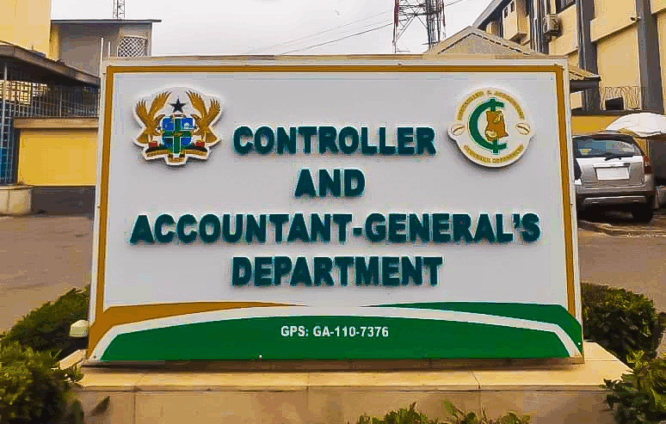
The Controller and Accountant-General’s Department Workers’ Union (CAGDWU) has strongly defended the proposal to grant autonomy to the Controller and Accountant-General’s Department (CAGD), describing the reform as critical to strengthening Ghana’s fiscal governance.
The union also rejected claims by the Executive Secretary of the Civil and Local Government Staff Association of Ghana (CLOGSAG), Isaac Bampoe Addo, who has opposed the proposed independence of the department.
In a statement issued by the union’s leadership, the workers insisted that the recommendation by the Constitutional Review Committee (CRC) followed extensive consultations and a comprehensive evaluation of the department’s role in managing Ghana’s public finances.
The statement was signed by Interim President Ahmed Muniru Mohammed, Interim General Secretary Becky Ayiku Otuo, Interim Financial Controller Abdul Razak Mohammed, and Interim Organiser Gershon Ntsri.
According to the union, the comments made by Mr Bampoe Addo do not represent the views of workers within the Controller and Accountant-General’s Department.
The union emphasized that the department already has a recognised workers’ union capable of protecting the interests and welfare of its staff. It added that any potential transition of staff from CLOGSAG would not negatively affect their conditions of service.
“The Constitutional Review Committee has undertaken wide consultation and a comprehensive assessment of the important role CAGD plays as a manager of Ghana’s financial resources before recommending autonomy for the Department,” the statement explained.
The union believes that granting independence to the department would significantly strengthen fiscal discipline, enhance professional integrity, and align Ghana’s public financial management system with international best practices.
It also dismissed concerns raised by CLOGSAG that autonomy could create constitutional confusion, arguing instead that independence would bring greater clarity in institutional responsibilities and improve decision-making processes.
Furthermore, the union rejected claims that autonomy could weaken fiscal coordination within government structures. It maintained that granting independence would instead remove bureaucratic and political bottlenecks, allowing the department to manage government expenditure more efficiently and professionally.
The union warned that any attempts by individuals or groups to obstruct the reform process would be resisted, emphasizing that the independence of the department is necessary to improve the management of Ghana’s public finances.
CAGDWU has therefore called on Parliament, civil society organisations, and the general public to support the proposed reform.
According to the union, granting autonomy to the Controller and Accountant-General’s Department would improve operational efficiency, safeguard national financial resources, and strengthen fiscal governance in Ghana.
“The independence of CAGD will strengthen fiscal discipline, promote global best practices and reinforce professional integrity in Ghana’s financial administration,” the statement added.
Commentary | By Boakye Stephen
The debate surrounding the autonomy of the Controller and Accountant-General’s Department highlights a broader issue within Ghana’s public financial management system, the need to balance administrative independence with effective government coordination.
The CAGD plays a central role in managing government finances, processing payments, and maintaining public accounts, making it one of the most important institutions responsible for financial accountability in the country.
Advocates for autonomy argue that granting independence could help insulate the department from political interference, enabling it to operate with greater professionalism and transparency.
In many countries, financial oversight institutions are deliberately structured to function independently in order to strengthen fiscal discipline and reduce the risk of financial mismanagement.
However, critics of the proposal caution that autonomy must be carefully designed to ensure that it does not create institutional fragmentation or weaken coordination between government agencies responsible for fiscal policy.
The ongoing debate therefore raises an important national question: How can Ghana best structure its financial governance institutions to ensure both accountability and efficiency?
If properly implemented, reforms aimed at strengthening the independence of financial management institutions could play a key role in improving transparency, protecting public funds, and enhancing confidence in Ghana’s fiscal administration.
Ultimately, the outcome of this debate may shape the future of public financial governance in Ghana for decades to come.