
Afenyo-Markin Stands Firm After Attacking Judge — NPP Warns Government: Stop the Arrests or Face Revolt
Ghana's political temperature is rising sharply as Minority Leader Alexander Afenyo-Markin defends his explosive attack on a sitting judge, the Ghana Bar Association fires back, lawyers are denied access to ailing Abronye DC in custody, and the NPP escalates its fight to the international diplomatic community — warning the Mahama government that over 16 arrests of party members for social media posts will not go unanswered.

By: Ebenezer Adu-Gyamfi / Emmanuel Ayiku For GhanaianNewsCanada | May 20, 2026 | Accra / Toronto
ACCRA / TORONTO — Ghana woke up on Wednesday, May 20, 2026, to one of the most explosive political and judicial confrontations the country has seen in years — a story that cuts to the heart of free speech, judicial independence, political persecution, and the fragile relationship between Ghana’s ruling NDC government and its increasingly embattled opposition. At the centre of the storm stands Minority Leader Alexander Afenyo-Markin, a senior lawyer, Member of Parliament for Effutu, and now the most vocal critic of a sitting Circuit Court judge in recent Ghanaian political history.
The controversy erupted on May 17, 2026, when Afenyo-Markin held a press conference to respond to the court’s decision to remand NPP Bono Regional Chairman Kwame Baffoe — widely known as Abronye DC — into the custody of the National Investigations Bureau without bail. The Minority Leader’s words were direct and unprecedented: he publicly named the Circuit Court 9 judge, known as “Niger,” declared he had “no respect for him,” questioned the judge’s competence, and vowed to continue speaking out until the judge “upholds the law.” The nation has been talking about it ever since.
The story has since multiplied into several interlocking crises: the Ghana Bar Association has condemned Afenyo-Markin’s remarks as unprofessional; legal practitioners are calling for him to be cited for contempt; Abronye DC’s lawyers are being denied access to their client despite alarming reports about his deteriorating health; the NPP has formally petitioned the Diplomatic Corps; and over 16 NPP members have now been arraigned before courts for social media posts — a figure that has sent shockwaves through Ghana’s political and civil society landscape.
What Afenyo-Markin Actually Said — and Why
To understand the full weight of this controversy, one must understand the specific trigger that caused Afenyo-Markin to break from the measured language typically expected of a senior parliamentarian and lawyer. Abronye DC had been arrested and arraigned before Circuit Court 9 in Accra on charges of “offensive conduct conducive to breach of peace” and “publication of false news” — charges arising from comments he allegedly made criticising a judge and questioning judicial impartiality in a social media video.
When the Circuit Court 9 judge declined to grant Abronye DC bail — reportedly ruling that the accused could potentially commit further offences if released — Afenyo-Markin’s patience ran out. Speaking at the NPP’s May 17 press conference at party headquarters, the Minority Leader declared publicly: “That judge has no respect for his own judicial oath. I don’t think he read the law. That circuit court judge called Niger, I have no respect for him.” He challenged the judge to cite him for contempt, vowing he would keep speaking until the judge “upholds the law.”
In the days that followed, Afenyo-Markin elaborated on his position in a series of social media posts and public statements, defending his remarks as both ethical and constitutionally grounded. “It is both ethical and within my constitutional rights to call out a Judge who has no respect for the law and the rights of citizens,” he wrote. He also pointed to what he described as a broader pattern: “There is a pattern in the conduct of the Circuit Court 9 Judge in political cases that go before him.” He called on the Chief Justice to personally monitor the judge’s conduct and ensure standards were upheld, warning that “our law Lords are not above the law.”
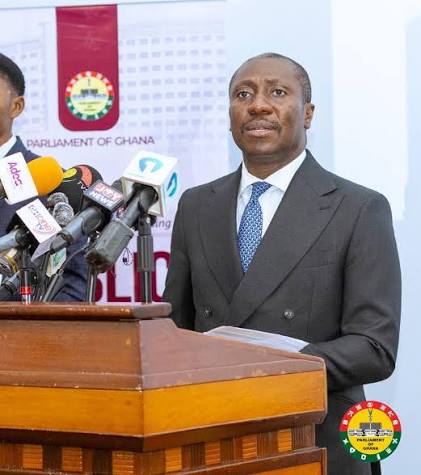
Crucially, when the story landed on the front page of The New Publisher newspaper on Wednesday May 20 — under the headline “I Fired Judge’s Lawless Conduct Not His Person” — Afenyo-Markin’s office appeared to embrace the framing, signalling that the Minority Leader was standing firmly behind his position and had no intention of backing down.
Ghana Bar Association Fires Back: ‘Unethical and Unprofessional’
The Ghana Bar Association moved swiftly to condemn Afenyo-Markin’s remarks, with GBA spokesperson Saviour Kudze delivering a pointed rebuke that framed the Minority Leader’s conduct as a serious breach of professional and ethical standards. “It is very unpalatable, unbecoming of a senior lawyer of his standing at the Bar, particularly so a senior lawyer who is privileged enough to be the Minority Leader of the Parliament of the Republic of Ghana, a lawyer who I am told is also a chief. Is this the kind of example he wants to give his constituents?” Kudze stated.
The GBA spokesperson argued that the appropriate channel for challenging a judicial ruling was the appellate system — not a press conference and not social media. “As a lawyer, if his complaint is that a judge has acted in a way according to him not within the ambit of the law, this is not the way I think that he should go,” Kudze said. “My thinking is that the appellate system is not there for fun. If the judge didn’t act within his jurisdiction, he knew what to do.”
Private legal practitioner Justice Abdulai went further, publicly calling for Afenyo-Markin to be cited for contempt of court. Speaking on GHOne TV on May 19, Abdulai argued that the Minority Leader could not hide behind parliamentary immunity to escape accountability for remarks made about a pending judicial matter. “The Minority Leader is very much aware of this,” Abdulai said, noting that a person of Afenyo-Markin’s legal training fully understands the implications of publicly disparaging a sitting judge over an active case.
Afenyo-Markin was unmoved. Responding directly to the GBA’s criticism in a strongly worded social media post, the Minority Leader wrote: “I cannot, in good conscience, respect a judge who has no respect for the law.” He pushed back against the characterisation of his remarks as a personal attack, insisting: “Questioning the excesses of a judge’s pattern of conduct does not amount to an attack on his person.” The Minority Caucus, he added, would take “a series of actions in Parliament and the appropriate constitutional steps” to formally rebuke the judge.
Abronye DC: Lawyers Denied Access, Health Deteriorating
While the legal and political battle raged publicly, a more urgent and disturbing situation was reportedly unfolding in the custody facility where Abronye DC is being held. Lead counsel for the NPP Bono Regional Chairman, Kojo Oppong Nkrumah — himself a former Information Minister and Member of Parliament — alleged publicly on May 19 that lawyers representing Abronye DC had been systematically denied access to their client.
“We have not been granted access to Abronye. Some party leaders have been able to see him, but his lawyers have not been given access. When we go, they keep tossing us from the police to the NIB,” Oppong Nkrumah stated on Asempa FM’s Ekosii Sen programme. He revealed that Abronye DC’s wife had been permitted a visit on the previous Saturday, and had subsequently informed the legal team that her husband’s health was deteriorating in custody. The health concerns have heightened the sense of urgency around demands for bail or release.
Adding another layer of legal complexity to an already constitutionally murky situation, Oppong Nkrumah revealed that despite the remand order reportedly being made, no signed and certified remand order had been produced by the court registry, despite repeated requests by Abronye DC’s legal team. If confirmed, this raises profound questions about the legality of the detention itself — a point the NPP has raised in its formal petition to the Chief Justice and the Judicial Council.
16 Arrests for Social Media Posts: The NPP’s Explosive Claim
The case of Abronye DC, inflammatory as it is, is far from isolated. Oppong Nkrumah revealed on May 19 that the total number of NPP members arraigned before courts over social media commentary since the NDC government assumed office on January 7, 2025 has now surpassed sixteen. “So far they have arraigned over 16 of our members before the courts simply because of things they have said about the government that they don’t agree with,” he stated. “Over sixteen NPP persons have been arrested for simply making comments on social media or posting things on social media that the government finds unpalatable.”
Among those cited as examples are David Essandoh, an NPP Agona West Constituency Organiser who was arrested for lamenting online about the return of “dumsor” — Ghana’s recurring electricity crisis — and Baba Amando, another party communicator charged under the same sections of the Criminal Offences Act. Oppong Nkrumah drew an explicit parallel to Ghana’s discredited criminal libel era, arguing that the current prosecutions are, in substance if not in legal label, criminal libel by another name. “The charges against Abronye DC, Baba Amando, David Essandoh and others are, in substance and effect, criminal libel prosecutions. The only difference is the label on the charge sheet,” he said.
Former Vice President Mahamudu Bawumia, positioning himself as the NPP’s 2028 presidential candidate, has added his voice to the chorus of condemnation. In a formal statement issued on May 13 under the headline “Democracy and Free Speech Under Siege,” Bawumia accused President Mahama’s government of mounting “an endless assault on the fundamental rights of officers, activists, and supporters” of the NPP. “These actions undermine free speech and are setting Ghana’s democracy backwards,” he wrote, warning those involved in state institutions that “the day of accountability will come.”
NPP Takes the Fight Global — Petitions the Diplomatic Corps
In an extraordinary escalation that signals just how seriously the NPP views the current situation, the party has formally petitioned the Dean of the Diplomatic Corps — effectively taking its grievances about Abronye DC’s detention and the broader pattern of arrests to the international community. Presenting the petition, NPP Member of Parliament Jerry Ahmed Shaib explained that the party had deliberately chosen diplomatic engagement over street demonstrations as its first response, in line with its commitment to peaceful, constitutional means of protest.
The petition accused the government of promoting what it described as a “culture of silence” — a phrase loaded with historical resonance in Ghana, evoking the repressive era of military rule. It called on ambassadors and the international diplomatic community to engage Ghanaian authorities and ensure that justice and human rights were upheld. Shaib also raised the alarming allegation that even after the remand order was reportedly made, no signed and certified court order had been produced — raising the spectre of unlawful detention without proper legal documentation.
The party also formally petitioned the Chief Justice and the Judicial Council, urging them to safeguard judicial independence and public confidence in the courts. NPP General Secretary Justin Kodua Frimpong said the party was in a state of “shock, deep sadness, and serious concern” over the remand ruling, describing it as politically motivated and an attack on democratic freedoms. He questioned the legal basis for remanding a person accused of a bailable offence for an indefinite period, asking: “There is no court record for which Abronye has been found guilty… so for a sitting judge to remand him… we find that very shocking.”
The Free Speech Question: A Constitutional Debate Ghana Must Have
Beneath the raw political theatre of this confrontation lies a genuine constitutional question that transcends party affiliation and goes to the heart of Ghana’s democratic identity: where is the line between criminal conduct and protected free speech? The charges being used to prosecute Abronye DC and others — Sections 207 and 208 of the Criminal Offences Act, covering offensive conduct conducive to breach of peace and publication of false news — are provisions that prominent legal practitioners have publicly called for repeal.
Prominent lawyer and media personality Samson Lardy Anyenini has publicly called for the review or repeal of these provisions, arguing that they are overly broad and dangerously susceptible to abuse as tools of political silencing. The NPP’s petition to the diplomatic community made the same argument: “Criticism of public officials, including members of the judiciary, is not a crime in a constitutional democracy. Where any individual, including a judge, believes that his or her reputation has been injured, Ghanaian law already provides civil remedies through defamation proceedings. The conversion of political criticism into criminal prosecution is therefore not a legal necessity. It is a political choice designed to intimidate and silence dissent.”
The NDC government has not issued a comprehensive public response to the NPP’s allegations as of Wednesday morning. The government’s position, as represented through state institutions, appears to be that the law has been applied appropriately in each case. But the sheer volume and pace of prosecutions — sixteen-plus in just over sixteen months — has made that position increasingly difficult to sustain in the court of public opinion, and increasingly difficult to defend before Ghana’s international partners.
What This Means for Ghana’s Democracy — and Why Ghanaian-Canadians Should Care
For Ghanaian-Canadians following events from Toronto, Calgary, Ottawa, and beyond, this story carries resonance that goes beyond partisan politics. Canada is a country built on the constitutional protection of free expression — a value enshrined in Section 2(b) of the Canadian Charter of Rights and Freedoms. The sight of people being arrested and remanded for social media posts is, for Ghanaians living in Canada, jarring in a way that is both personal and civic.
Many Ghanaian-Canadians maintain deep ties to Ghana’s political life — following elections closely, donating to parties, engaging with politicians during diaspora visits, and expressing views on social media about Ghanaian affairs. The question of whether doing so could expose them to prosecution under Ghanaian law — particularly if they are dual citizens or plan to return — is not purely hypothetical. It is a question with real implications for how the diaspora engages with its homeland.
More broadly, Ghana’s reputation as West Africa’s democratic anchor — a country that other nations in the region look to as a model of peaceful, rights-respecting governance — is at stake in how this moment is handled. The Mahama government came to power on a platform of democratic renewal and institutional integrity. If the administration allows the current pattern of prosecutions for political speech to continue unchallenged, it risks undermining the very democratic legacy it claims to champion.
As Afenyo-Markin put it in one of his statements: Ghana risks sliding back into a “culture of silence” if state institutions are allowed to intimidate political opponents through arrests and prosecutions. Whether one agrees with his confrontational tactics or not, the underlying warning deserves to be heard — and answered, not with more arrests, but with genuine accountability, transparent judicial processes, and a reaffirmation of the free speech principles that have defined Ghana’s democracy since 1992.
“I cannot, in good conscience, respect a judge who has no respect for the law. Questioning the excesses of a judge’s pattern of conduct does not amount to an attack on his person. Our law Lords are not above the law.”
EDITORIAL NOTE: This article is an original work of journalism based on verified reporting from Adom Online, Rainbow Radio Online, The Herald Ghana, Ghanamma, Asaase Radio, Graphic Online, Diplomatic Times Online, The Ghanaian Times, ABC News Ghana, Pulse Ghana, and The Ghana Report. All events occurred on or before May 20, 2026. GhanaianNewsCanada is committed to fair, accurate, and community-centred journalism.
By: Ebenezer Adu-Gyamfi / Emmanuel Ayiku | GhanaianNewsCanada | May 20, 2026
© 2026 GhanaianNewsCanada. All Rights Reserved.
