
Alberta’s Rural Immigration Experiment Offers Lessons as Province Seeks More Control Over Immigration
In Brooks, a Ghana-trained pharmacist is working with the community to recruit healthcare professionals from overseas as rural Alberta struggles to fill critical jobs

Date: August 19, 2026
By: Ebenezer Adugyamfi/ Emmanuel Ayiku for GhanaianNewsCanada
Photo/Copyright Notice: The photographs and images used in this article are the property of CBC News and are reproduced for educational and informational purposes only. GhanaianNewsCanada does not claim ownership of these images. All rights remain with their respective copyright owners.
As Canada continues to debate how much control provinces should have over immigration, the experience of rural communities in Alberta is providing a closer look at how immigration can be used to address specific local labour shortages.
For several rural municipalities in Alberta, immigration is not simply about increasing population numbers. It is about finding people with the skills needed to keep local businesses and essential services running.
One of the communities at the centre of that discussion is Brooks, Alberta, where a Ghana-trained pharmacist has been working with the town to attract other healthcare professionals from overseas.
The experience of Ebenezer Asare, a pharmacist and pharmacy owner in Brooks, illustrates both the opportunities and challenges of giving rural communities greater influence over who comes to settle in their communities.
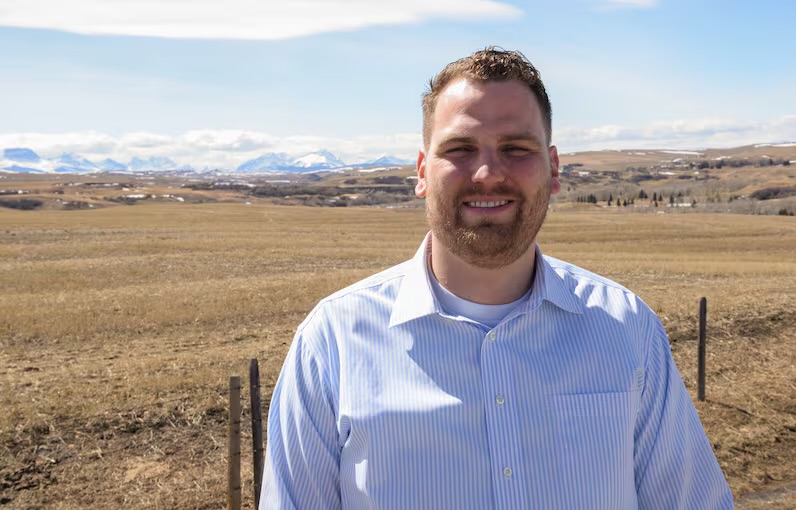
A Ghanaian pharmacist helping Brooks recruit overseas
Asare, who owns a pharmacy in Brooks, has been working with the community to attract pharmacists because of difficulties finding enough qualified professionals locally.
A Ghanaian-trained pharmacist himself, Asare understands the process of moving to Canada and becoming licensed to practise in the country.
He earned a Bachelor of Pharmacy with Honours from Kwame Nkrumah University of Science and Technology (KNUST) in Ghana before completing Canada’s International Pharmacy Bridging Program.
He became licensed to practise as a pharmacist in Alberta in 2011.
Today, Asare operates pharmacies in Brooks and Medicine Hat and has also become involved in supporting internationally trained pharmacists.
His experience gives him a unique perspective on the role immigrants can play in filling critical vacancies in smaller Canadian communities.
Why Brooks needs workers from overseas
For rural communities such as Brooks, recruiting workers can be considerably more difficult than it is in Canada’s major cities.
A job may be available, but there may simply not be enough qualified people living in the community to fill it.
Healthcare is particularly important because rural residents still require access to pharmacists, doctors, nurses and other professionals regardless of the size of the population.
This is where international recruitment can make a difference.
Instead of waiting indefinitely for qualified professionals to move to the community, local employers and community officials can actively search for people overseas who are willing to relocate.
Asare’s work with Brooks demonstrates how this approach can operate at the local level.
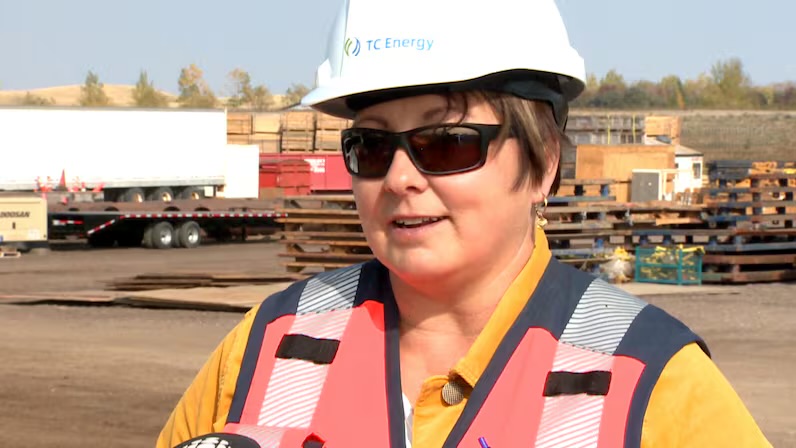
Rural municipalities have had a role since 2022
The CBC report examines Alberta’s rural immigration model, under which rural municipalities have been able to nominate individuals for permanent residence since 2022.
The idea is relatively straightforward: give communities a greater role in identifying the workers they actually need.
Rather than relying entirely on a broad provincial or national approach, communities can identify shortages in their own labour markets and seek immigrants whose skills match those needs.
For a community struggling to recruit pharmacists, for example, an internationally trained pharmacist could be far more valuable than simply adding another newcomer without a job connection.
That is the central lesson emerging from Alberta’s rural immigration experiment.
The case for giving communities more control
The question of whether Alberta should take greater control over immigration has become increasingly prominent.
Supporters argue that provinces and communities are often better positioned to understand their own labour needs.
A rural community knows whether it needs pharmacists, nurses, teachers, tradespeople, agricultural workers or other professionals.
Ottawa, meanwhile, has to design policies for a country with vastly different economic conditions across provinces and regions.
Giving communities a greater voice could therefore allow immigration to respond more directly to local needs.
The Brooks experience provides an example of what that could look like in practice.
But attracting workers is only the beginning
Recruiting someone from overseas does not automatically guarantee that the person will remain in a rural community.
Newcomers need employment, housing, schools, healthcare, transportation and a welcoming community.
This is particularly important for professionals such as pharmacists, doctors and nurses whose qualifications may need to be assessed before they can practise in Canada.
Internationally trained professionals may have extensive education and experience but still have to complete Canadian licensing requirements.
Asare’s own career demonstrates that pathway.
After arriving in Alberta, he completed the necessary bridging process before becoming a licensed pharmacist.
He later became involved in helping other internationally trained pharmacists navigate the same process. Alberta government records identify him as a former instructor who trained foreign-trained pharmacists.
Asare’s story reflects a wider immigration reality
Asare’s story is particularly relevant to Ghanaian readers because it shows how professionals trained in Ghana can contribute to Canada’s healthcare system.
He began his pharmacy career in Ghana before relocating to Alberta in 2009.
After becoming licensed in Canada, he not only established himself professionally but also became involved in helping other international pharmacy graduates.
He has since served on the Board of Governors of Medicine Hat College and is also a member of Alberta’s Premier’s Council on Multiculturalism.
His experience demonstrates that immigration can have a multiplier effect.
One newcomer may fill an important vacancy, but that same person can later help recruit, mentor and train other newcomers.
From Ghana to rural Alberta
For Asare, the journey from Ghana to Alberta has ultimately placed him in a position where he is helping another Canadian community attract professionals from around the world.
It is a striking example of how immigration can reshape both the individual and the community.
A pharmacist trained in Ghana becomes licensed in Alberta, establishes businesses, becomes involved in community leadership and then helps address labour shortages by encouraging other professionals to consider rural Alberta.
That is the kind of local impact proponents of community-driven immigration point to when arguing that communities should have a stronger voice in immigration decisions.
Rural immigration is not the same as immigration to Toronto
The Alberta experience also highlights an important distinction in Canada’s immigration debate.
Much of the national conversation focuses on major urban centres such as Toronto, Vancouver, Montreal, Calgary and Edmonton.
But rural Canada has different challenges.
Some smaller communities are concerned about population growth and pressure on infrastructure, while others are worried about having too few workers to keep businesses and essential services operating.
A policy designed primarily around the challenges of Canada’s largest cities may therefore not adequately address the needs of rural communities.
For Brooks and similar municipalities, the problem can be finding enough qualified people rather than simply managing population growth.
International recruitment can help fill critical gaps
The healthcare sector is one of the clearest examples.
A pharmacy cannot provide services to residents if there are not enough pharmacists to operate it.
The same principle applies to hospitals, nursing homes, restaurants, farms, construction companies and other businesses in rural communities.
When local recruitment fails, employers may look beyond Canada’s borders.
International recruitment therefore becomes a practical response to a local labour shortage.
The challenge is ensuring that such recruitment is properly managed and that newcomers have realistic opportunities to settle permanently if they choose to do so.
Alberta’s experiment raises a bigger question
The experience of rural Alberta raises an important question for Canadian policymakers:
Should the people who understand a community’s labour needs have more say in selecting the immigrants who come to that community?
The Brooks example suggests there can be advantages.
A local community can identify a shortage, find an employer with a genuine vacancy and help recruit a qualified person from overseas.
That approach can make immigration more directly connected to employment and local economic needs.
But it also requires safeguards to ensure that newcomers are not recruited simply as short-term labour and then left without adequate support.
A model that could benefit rural communities
If properly managed, community-driven immigration could help rural Alberta address two problems at the same time: labour shortages and population decline.
A newcomer who arrives for a job may eventually establish deeper roots.
They may buy a home, bring their family, participate in community activities, open a business or help recruit other professionals.
This is already visible in Asare’s experience in Brooks and Medicine Hat.
His work extends beyond operating pharmacies. He has become involved in education, mentorship and community leadership, demonstrating how immigrants can become part of the long-term fabric of rural communities.
What this means for Ghanaian professionals
For Ghanaian professionals considering Canada, the Brooks example is also significant.
Canada’s immigration opportunities are not limited to the country’s largest cities.
Rural communities can offer opportunities for qualified professionals whose skills are in demand.
However, professionals in regulated occupations such as pharmacy must understand that having qualifications from Ghana does not automatically permit them to practise in Canada.
They must meet Canadian provincial licensing requirements.
Asare’s journey shows that while the process can be demanding, internationally trained professionals can successfully establish careers and businesses in rural Alberta.
The bigger debate over Alberta’s immigration powers
The experience of communities such as Brooks comes at a time when Alberta is seeking greater influence over immigration policy.
The province argues that immigration should respond more closely to Alberta’s economic requirements.
The federal government, however, remains responsible for Canada’s overall immigration system, meaning any expansion of provincial authority would require cooperation between Ottawa and the provinces.
The rural experience adds another dimension to that debate.
It suggests that the question is not simply about how many immigrants Canada accepts.
It is also about where immigrants settle, what skills they bring and whether those skills match the needs of the communities receiving them.
A lesson from Brooks
The story of Ebenezer Asare and Brooks offers a practical example of what community-driven immigration can achieve.
A rural community identifies a shortage.
An employer needs qualified workers.
A Ghanaian-trained professional with knowledge of the international recruitment process helps look overseas.
And a newcomer gets an opportunity to build a new life while providing an essential service to Canadians.
That does not mean every rural immigration programme will produce the same results.
But it demonstrates why local knowledge matters.
As Canada continues to debate immigration levels and Alberta pushes for greater control over its immigration system, the experience of Brooks provides a valuable lesson: immigration works best when the skills of newcomers are connected to genuine needs in the communities where they settle.
For rural Alberta, international recruitment is not simply about bringing more people into the province.
It can be about ensuring that a pharmacy has a pharmacist, a business has the workers it needs and a small community has a better chance of sustaining itself.
And for immigrants like Ebenezer Asare, the journey can go beyond finding a job. It can lead to building businesses, mentoring others and helping an entire community attract the skills it needs to grow.
