By Boakye Stephen | Kumasi, Ghana – Reporting for GhanaianNewsCanada
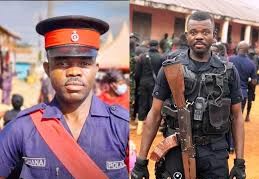
Authorities in Accra have launched an investigation into the death of Deputy Superintendent of Police (DSP) Rockson Gyasi, whose body was discovered at his residence in Akweteyman, raising serious concerns within the security community and among the public.
According to police information, the officer, who was stationed at Tsito in the Volta Region, had travelled to Accra on Tuesday, March 10, 2026, to visit his family. The situation took a tragic turn in the early hours of Friday, March 13, when his wife reportedly discovered him lying unresponsive inside the house and alerted the police.
Officers from the Tesano Divisional Police Command responded to the distress call and secured the residence for preliminary examination.
Initial observations by investigators indicate that the officer was found lying on the kitchen floor, while his service pistol was located nearby. Police reports also mention visible facial injuries, prompting authorities to classify the incident as an unnatural death pending detailed forensic analysis.
Digital Messages Under Review
Investigators have also retrieved electronic messages believed to have been sent by the deceased to his wife shortly after he arrived home earlier in the week. Police sources say the messages are currently being examined as part of efforts to understand the officer’s emotional state before the incident.
Authorities say the digital evidence has been added to the official investigation file as detectives continue to reconstruct the sequence of events leading to the tragedy.
The body of DSP Rockson Gyasi has since been transported to the Police Hospital Mortuary in Accra, where a post-mortem examination is expected to determine the exact cause of death.
Police Investigation Ongoing
The Tesano Divisional Police Command has assured the public that investigations are ongoing and that more information will be made available once the forensic and investigative processes are completed.
Commentary:
A Disturbing Reflection on Institutional Silence and Human Struggle
Beyond the immediate facts of this unfortunate incident lies a larger and deeply troubling question about the emotional and psychological burdens carried by men and women in uniform.
Police officers are often perceived by society as symbols of strength, authority, and control. Yet behind the uniform is a human being who experiences fear, fatigue, emotional strain, family pressures, and psychological battles just like any other citizen.
In many societies, including Ghana, discussions about mental health within security institutions remain largely suppressed or ignored. Officers are trained to confront danger, violence, and tragedy daily, but very little public attention is given to the invisible wounds that accumulate silently over time.
If the circumstances surrounding this death eventually reveal deeper emotional distress, it would not simply be an isolated personal tragedy, it would also be a reflection of systemic gaps in institutional care, counselling, and psychological support within security services.
Another issue that cannot be ignored is the culture of silence often surrounding personal struggles among security personnel. Many officers feel compelled to hide emotional vulnerability out of fear that it may be interpreted as weakness or professional inadequacy.
But strength does not lie in silence. True strength lies in creating systems where those who protect society are themselves protected emotionally, psychologically, and socially.
The death of DSP Rockson Gyasi, regardless of the final findings of investigators, should therefore serve as a moment of national reflection. It invites policymakers, security leadership, and society at large to reconsider how much attention is given to the mental well-being, welfare systems, and emotional resilience of those entrusted with protecting the nation.
For behind every badge is a human story, often courageous, sometimes painful, and occasionally tragically misunderstood.
As investigations continue, many Ghanaians will not only seek answers about what happened, but also hope that the tragedy sparks serious conversations about institutional care, human dignity, and the silent struggles of those who stand daily on the frontlines of public safety.