Ghana at 69: A Nation Celebrates, Reflects, and Looks to the Future
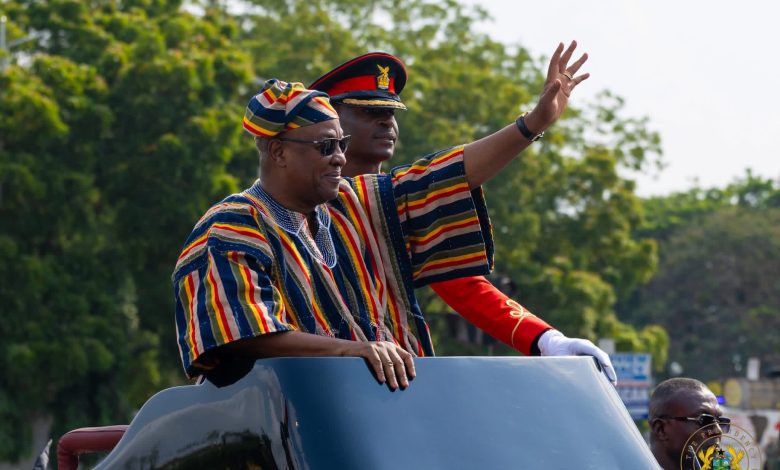
the Black Star flag flew high over Jubilee House, President Mahama rallied Ghanaians under the powerful theme: “Building Prosperity, Inspiring Hope”
By: Ebenezer Adu-Gyamfi / Emmanuel Ayiku for GhanaianNewsCanada, 7, March 2026

ACCRA, GHANA — On Friday, March 6, 2026, the Republic of Ghana marked 69 years of independence with a nationwide outpouring of patriotism, cultural pride, and national reflection. From the grand ceremonial forecourt of Jubilee House in Accra to the smallest villages across the country’s ten regions, millions of Ghanaians paused to honour a historic milestone — the day in 1957 when their nation became the first country in sub-Saharan Africa to break free from European colonial rule, charting a bold new course not just for Ghana, but for the entire African continent.
This year’s celebrations carried a particularly charged energy. With President John Dramani Mahama at the helm of the country’s government, the 69th anniversary was embraced not merely as a ceremonial occasion, but as a moment of collective rededication — a call to every Ghanaian to play their part in building a more prosperous and hopeful nation for generations yet unborn.
The Weight of History: How It All Began
To understand the depth of emotion that fills Ghana every March 6, one must appreciate the extraordinary journey that led to that fateful day in 1957. Long before European boots ever touched its shores, the land now known as Ghana was home to thriving civilisations — the powerful Ashanti kingdom, the Fante confederacy, the Ga-Dangme states, and many others, each with sophisticated systems of governance, trade, and culture.
It was the glittering wealth of the region — gold, ivory, and later, the tragic trade in human beings — that first attracted Portuguese sailors in the 15th century. Over the centuries that followed, Dutch, Swedish, Danish, and ultimately British interests competed for dominance along what they called the Gold Coast. By 1874, Britain had consolidated full colonial control, and for decades, the Ghanaian people were governed by a foreign power thousands of miles away.
But the desire for self-rule never died. After the Second World War swept away old certainties and exposed the moral contradictions of empire, the independence movement found its greatest champion in one remarkable man: Dr. Kwame Nkrumah. A pan-Africanist visionary educated in both the United States and Britain, Nkrumah returned to the Gold Coast in 1947 and threw himself into the struggle for freedom with unmatched fire and determination.
Nkrumah won a stunning electoral victory from his prison cell in 1951 — a moment that demonstrated the unstoppable momentum of the independence movement. By 1952 he was the leader of the Gold Coast government, and on March 6, 1957, standing before an ocean of ecstatic citizens at the Old Polo Grounds in Accra, he declared in a voice that reverberated across the globe: “At long last, the battle has ended! Ghana, our beloved country, is free forever!”
The world took notice. The Reverend Dr. Martin Luther King Jr., who attended the independence ceremony, delivered his famous sermon “The Birth of a New Nation” inspired by what he witnessed in Accra. Ghana had not just freed itself — it had lit a torch that would illuminate the path to independence for nation after nation across Africa.
The 69th Anniversary: A Day of Grand Ceremony
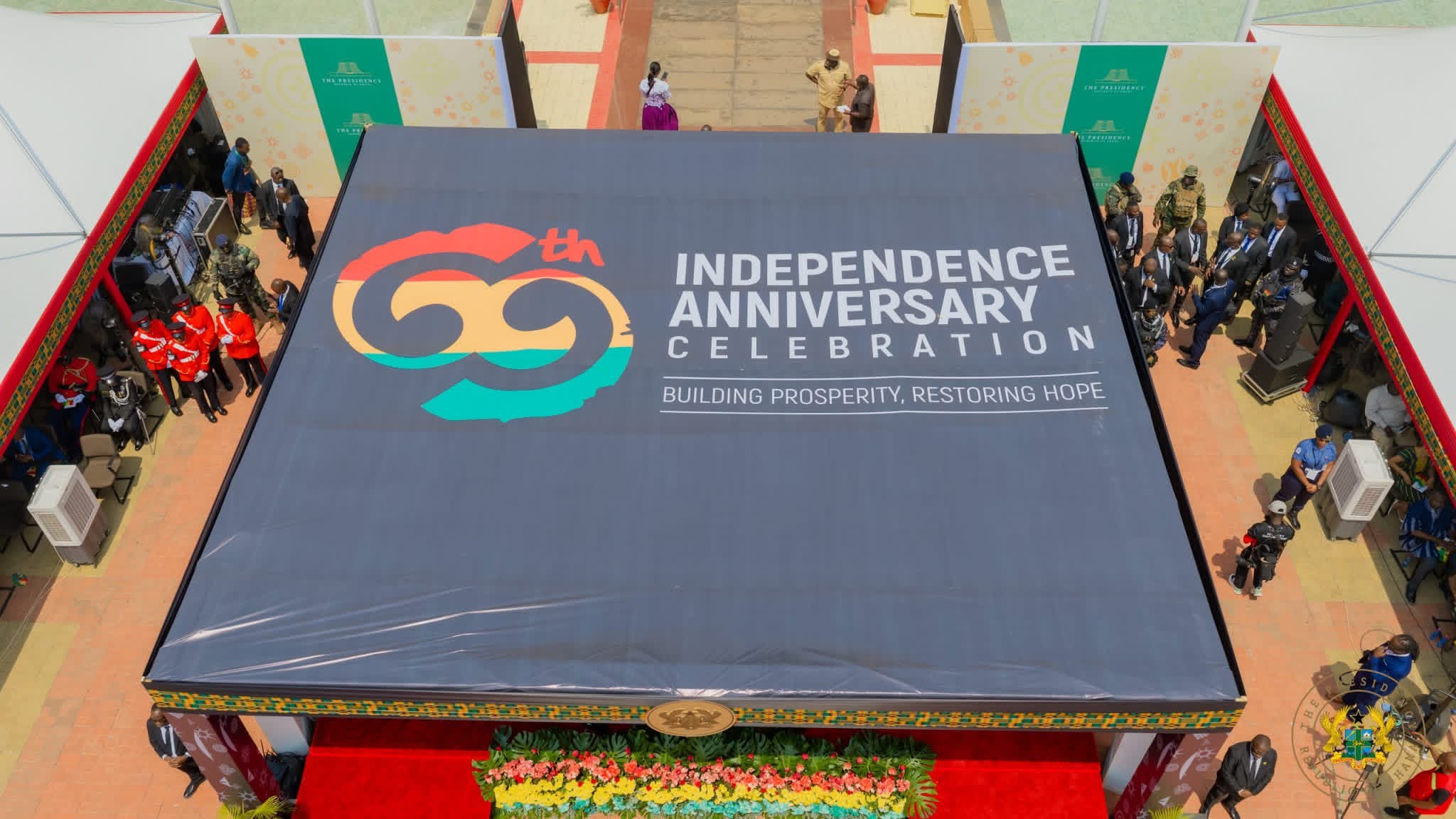
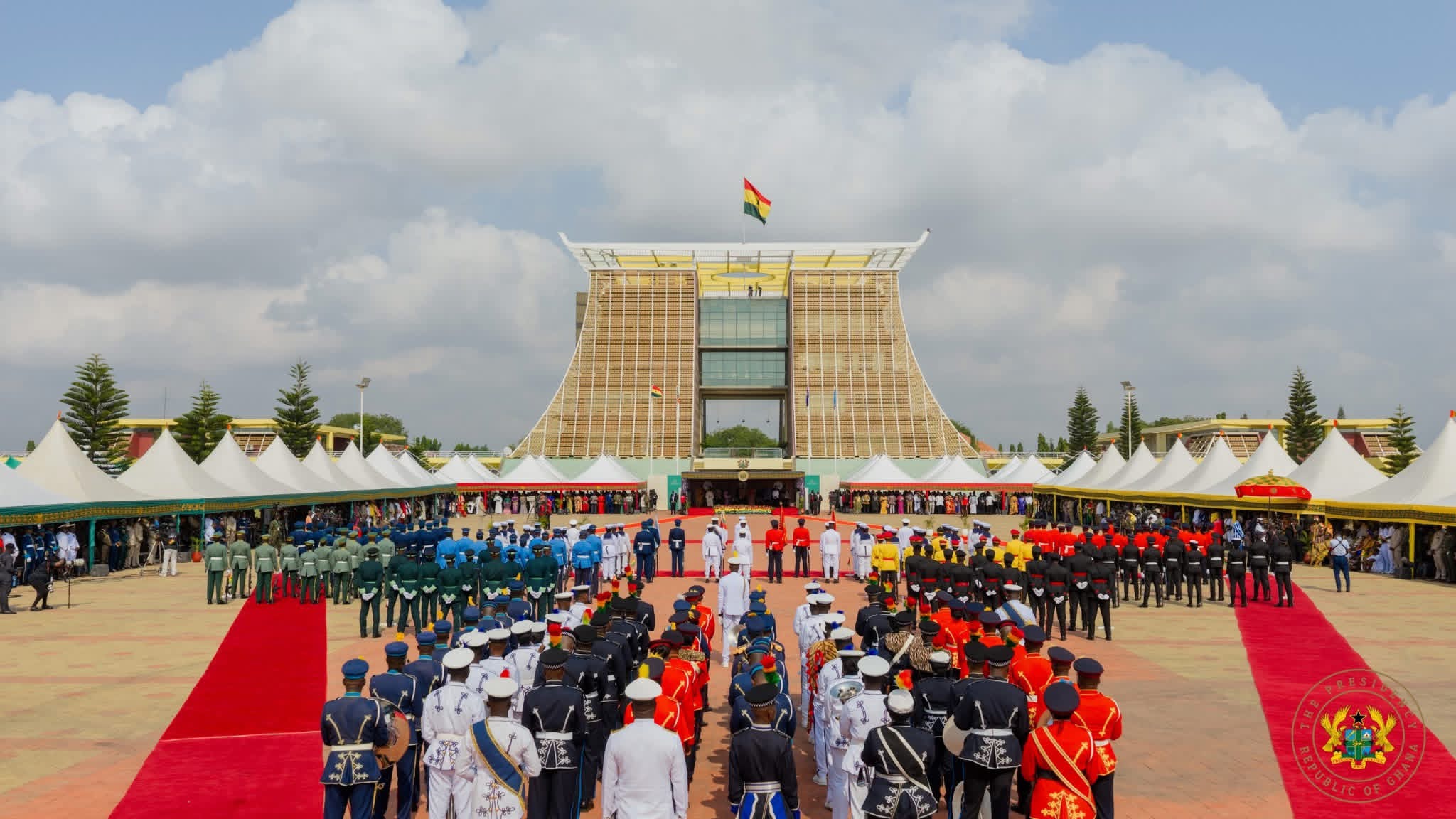
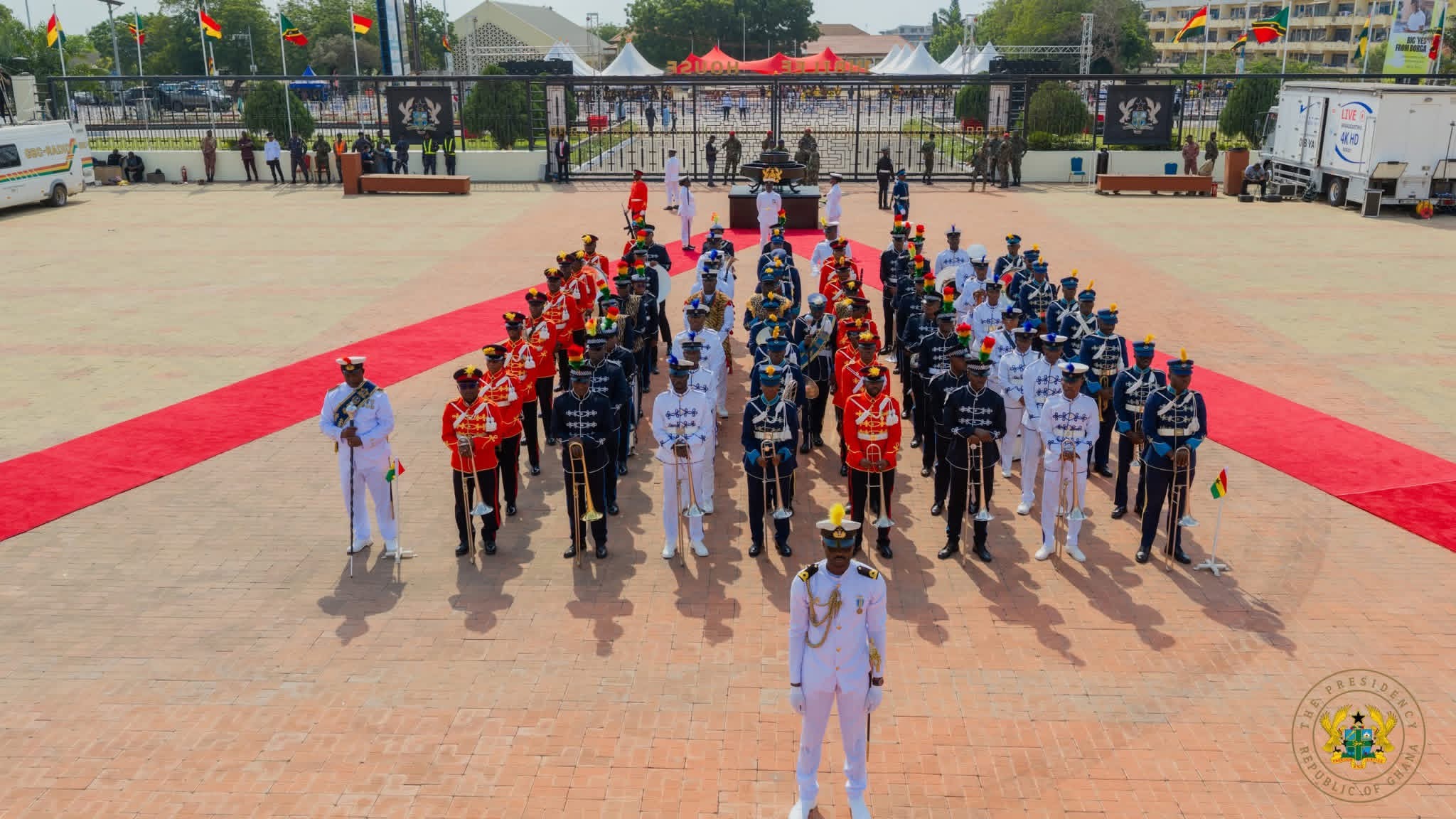
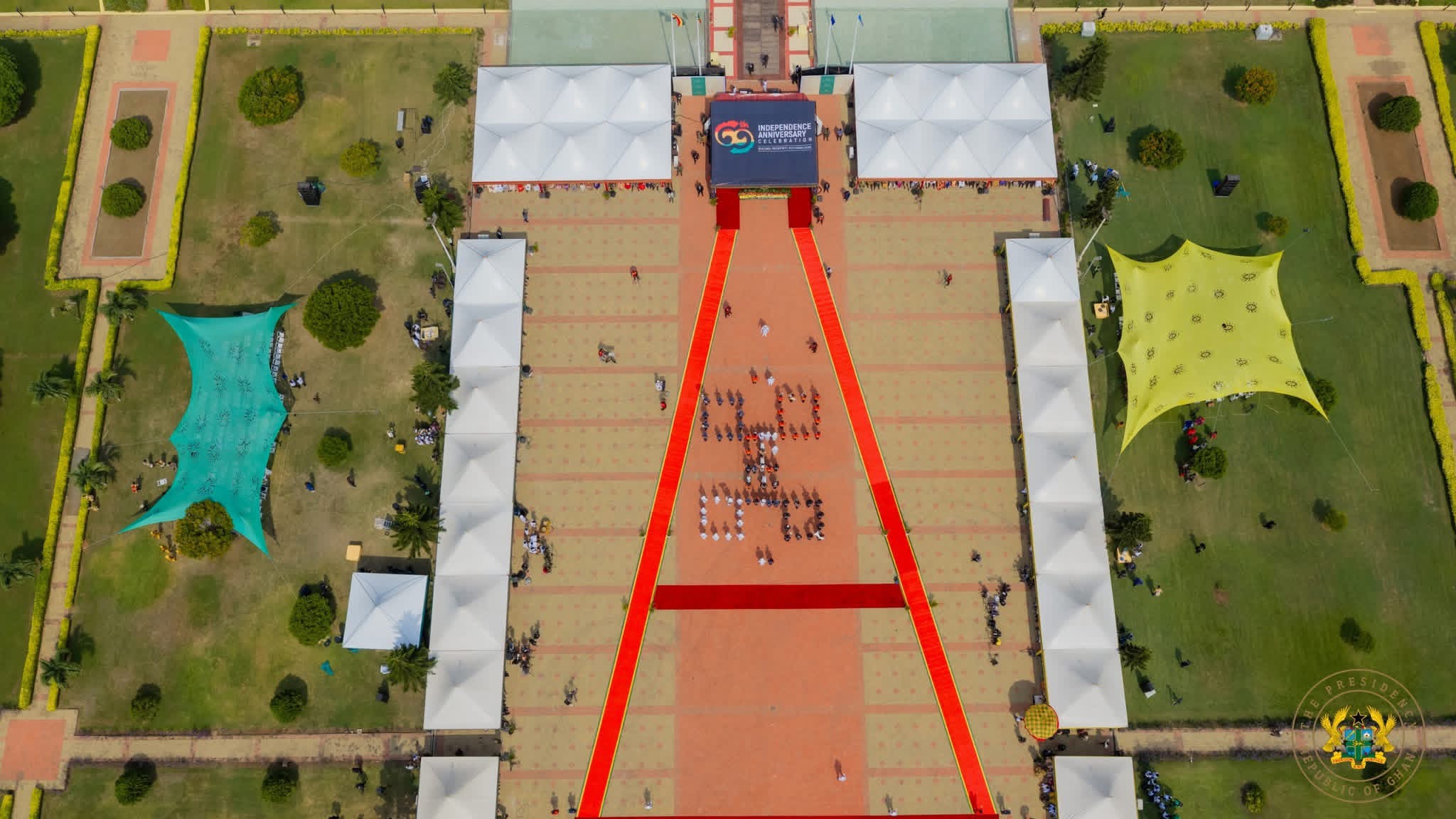
This year’s celebrations were held under a single, unifying theme: “Building Prosperity, Inspiring Hope.” In a significant departure from tradition, the main national ceremony was hosted not at the iconic Black Star Square but at the forecourt of Jubilee House — the seat of Ghana’s presidency — drawing together an impressive gathering of dignitaries, citizens, and symbolism.
In attendance were former Presidents John Agyekum Kufuor and Nana Addo Dankwa Akufo-Addo, members of the diplomatic corps, traditional leaders in their resplendent regalia, officers and men of the Ghana Armed Forces, school children in crisp uniforms, and thousands of ordinary Ghanaians who came to share in the national moment. Ghana’s Ministry for the Interior had officially declared March 6 a Statutory Public Holiday, ensuring that all government offices, banks, and most businesses across the country observed the day in full.
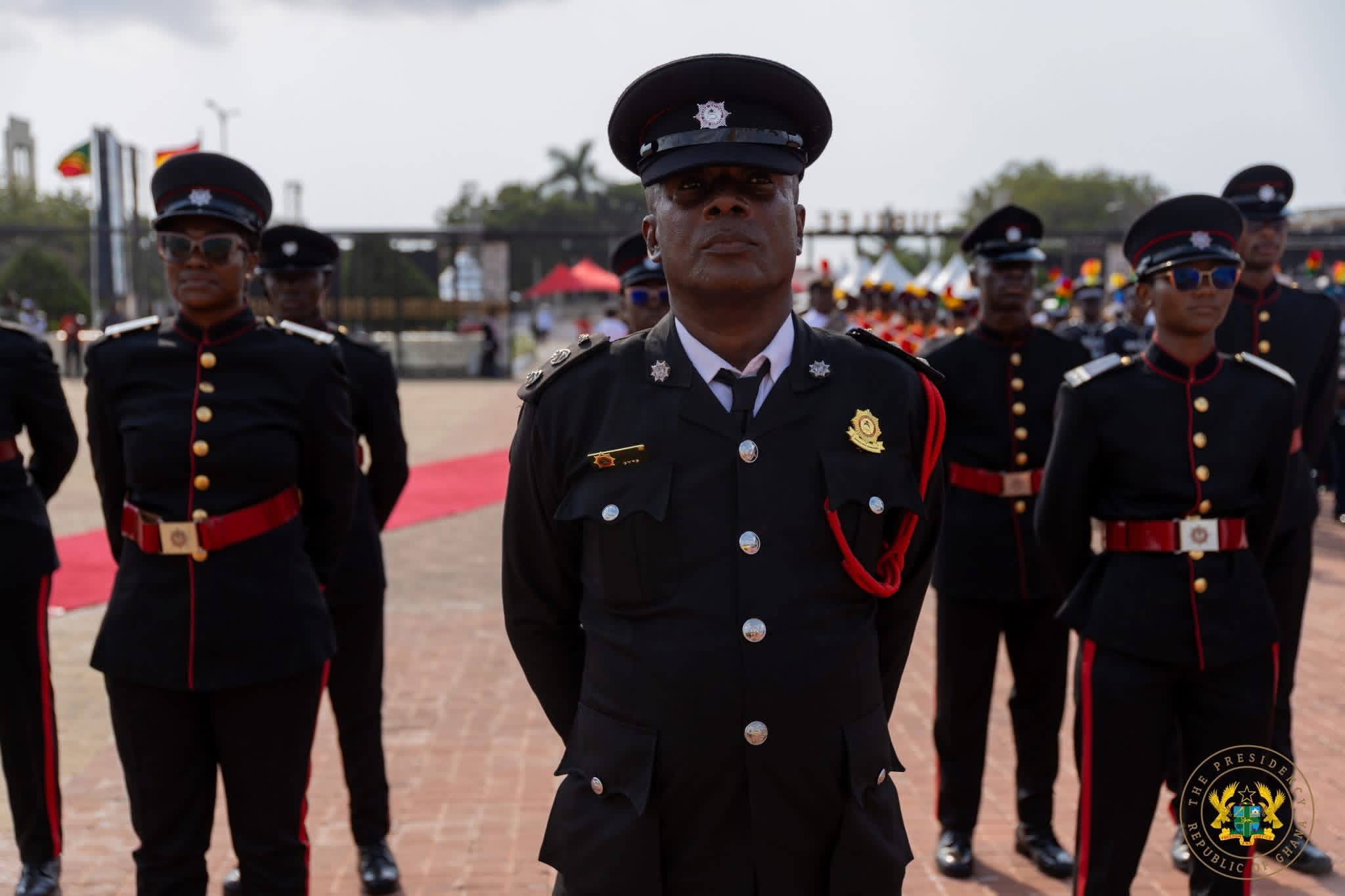
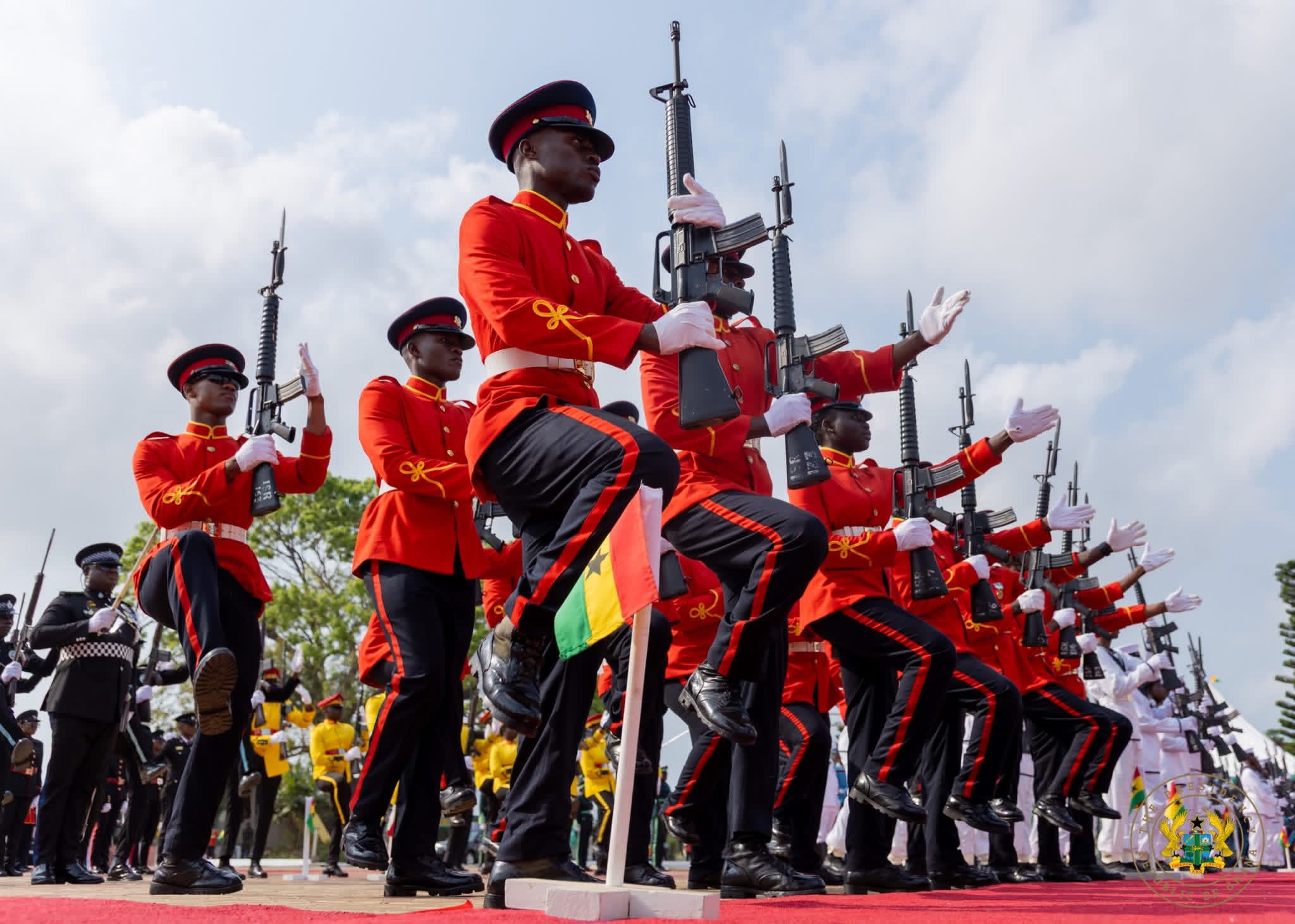
The ceremony featured colourful parades by the Ghana Armed Forces, police and security services marching in precision under the warm harmattan sky. School children from across the Greater Accra region performed cultural dances and drills. Traditional musical groups represented Ghana’s rich ethnic mosaic, from the rhythmic drumming of the Akan people to the vibrant dance traditions of the north. The national flag — its red, gold, and green bands with the proud black star at the centre — was raised with full military honours as the crowd stood in reverent attention.
President Mahama’s Address: A Blueprint for a National Reset
The highlight of the national ceremony was the address delivered by President John Dramani Mahama, who used the platform not merely to commemorate the past, but to chart a compelling vision for Ghana’s future. His speech was widely praised for its candour, its ambition, and its deeply personal tone.
Opening with a tribute to Ghana’s founding generation, the President paid particular homage to Osagyefo Dr. Kwame Nkrumah: “Nkrumah didn’t just grant us independence; he awakened within us a sense of consciousness and a continental purpose.” He went on to acknowledge every leader in Ghana’s post-independence history, recognising their collective contribution to the democratic institutions the country enjoys today.
On the theme of democracy, the President struck a note of quiet pride, observing that Ghana’s political culture has matured in ways that few nations can claim. “Our democracy has endured because we have learned to compete without destroying, to disagree without hatred, and to transfer power peacefully,” he said, describing this as “evidence of the maturity and wisdom of the Ghanaian people.”
But Mahama also delivered a sobering message on responsibility. “Independence granted us freedom, but freedom demands responsibility,” he told the crowd. “Patriotism should extend beyond slogans. True patriotism must be shown through our everyday actions.” He called on all Ghanaians to place country above political party, ethnic group, and personal interest — a message he framed as essential to any meaningful national progress.
Anti-Corruption Drive, Women’s Bank, and the 24-Hour Economy
Beyond the ceremonial, President Mahama’s address contained substantial policy announcements that immediately captured national attention. He described corruption as “a cancer that weakens the foundation of the country,” pledging that his government would strengthen independent anti-corruption institutions and ensure that no individual — regardless of political connection — remains above the law.
The President also announced that the government is in the final stages of establishing a Women’s Development Bank — a dedicated financial institution designed to provide Ghanaian women entrepreneurs with access to capital, mentorship, and business support services. This was widely applauded as a significant step toward closing the gender gap in economic participation.
He further announced the formalisation of the 24-Hour Economy Authority Bill — an ambitious legislative initiative designed to transform Ghana into a multi-shift production hub. “Factories will operate around the clock, and services will become more accessible,” Mahama said, arguing that such a transformation is essential to stabilising the Ghanaian cedi and restoring investor confidence in the country’s economy.
A Message to Ghana’s Youth: “I See You, I Hear You”
One of the most warmly received passages of the President’s speech was his direct address to Ghana’s young people. In an era of high youth unemployment and widespread frustration, Mahama chose to speak with empathy and encouragement rather than platitudes.
“To the young people of this country, I see you, and I hear you, and I believe in your potential,” he declared to loud applause. “You belong to a generation that is armed with tools and opportunities that earlier generations could hardly have imagined. In your hands, a smartphone transforms into a creative studio and a gateway to the global economy.”
He outlined a raft of government investments targeting young Ghanaians: expanded digital infrastructure, innovation hubs across Accra, Kumasi, Tamale, Takoradi, Ho, and Koforidua, reformed education curricula aligned to the modern economy, and expanded apprenticeship and internship programmes to bridge the gap between school and the workplace.
He also took a moment to congratulate the 52 outstanding students who received the President’s Independence Day Award for School Children, as well as Keita Secondary Technical School for winning the 69th Independence Day Quiz Competition.
Ghana’s Place in Africa and the World
Independence Day 2026 also prompted reflection on Ghana’s remarkable standing as a continental and global leader. The President reaffirmed Ghana’s deep commitment to pan-African unity and economic integration, highlighting the country’s proud role as host of the secretariat of the African Continental Free Trade Area (AfCFTA) in Accra. He described AfCFTA as the foundation for Africa’s economic sovereignty and insisted that Ghana’s destiny remains inseparable from the continent’s collective integration.
Mahama also echoed one of Nkrumah’s most enduring philosophical declarations: that the independence of Ghana is meaningless unless it is linked to the total liberation of the African continent. In doing so, he positioned Ghana not as a nation merely celebrating its own past, but as a moral leader with an active responsibility to the broader African family and the global diaspora.
On the international stage, Ghana’s independence anniversary was recognised far beyond its own borders. In the United Kingdom, the All Party Parliamentary Group for Ghana marked the occasion with a special ceremony. In Boston, Massachusetts, the City Council adopted a resolution honouring Ghana as a pioneer of African freedom, and a flag-raising ceremony was held at Boston City Hall Plaza at 11 AM on March 6. King Charles of the United Kingdom also sent a personal message praising the warm and enduring friendship between Ghana and Britain.
Celebrations Across the Nation and the Diaspora
While Accra was the undisputed centrepiece of the national celebrations, the spirit of independence rang out in every corner of the country. In regional capitals and rural towns alike, march-pasts were organised by school children and security services, with residents lining the streets to cheer and wave the national colours of red, gold, and green.
Across Ghana, private citizens celebrated in their own ways — hosting family gatherings, playing highlife and afrobeats music, preparing traditional foods, and hoisting national flags outside their homes. Social media was flooded with messages of pride and hope, with hashtags such as #GhanaAt69 and #GhanaIndependenceDay trending throughout the day.
For Ghanaians living abroad — from London to Toronto, New York to Sydney — the day was equally significant. Diaspora community groups organised dinners, cultural shows, and educational events, reinforcing the bonds between Ghanaians at home and the global community they have built beyond their homeland’s shores.
The Symbols of Ghana’s Freedom
No discussion of Ghana’s Independence Day is complete without reflection on the powerful symbols that define the nation’s identity. The national flag, designed by Theodosia Okoh, carries layers of meaning that resonate just as deeply today as they did in 1957. The red band represents the blood shed by those who fought and died for freedom; the gold band honours the country’s abundant mineral wealth; the green band celebrates Ghana’s lush forests and natural richness. At the centre, the black star — the lodestar of African freedom — burns as a permanent symbol of the continent’s emancipation.
The iconic Independence Arch and Black Star Gate at Black Star Square in Accra remain among the most powerful physical testaments to Ghana’s freedom. The square itself, one of the largest public squares in the world capable of holding up to 30,000 people, has served as the stage upon which Ghana’s national story has been performed for nearly seven decades. The name “Ghana” itself, drawn from an ancient West African empire famed for its power and wealth, carries the weight of that proud history.
Looking Ahead: Ghana at 70 and Beyond
As the flag was lowered at the close of the 69th Independence Day ceremonies, the eyes of the nation were already turning toward an even greater milestone: Ghana at 70. President Mahama used the occasion to issue a direct challenge to every Ghanaian citizen to use the coming year to recommit to the values of hard work, integrity, and national unity that will define the celebrations of 2027.
“As Ghana approaches its 70th independence anniversary next year, let us work together towards building a country where education and healthcare are accessible, where opportunities are based on merit, and where economic prosperity is shared by all,” the President urged. “National development cannot depend solely on leadership — it requires the collective effort of every Ghanaian.”
The road ahead is not without challenges. Ghana, like many nations, continues to grapple with economic pressures, youth unemployment, and the complex demands of governance in a rapidly changing world. But if the spirit of March 6, 2026 is any indication, the Ghanaian people remain as resilient, as proud, and as determined as ever to honour the sacrifices of those who came before them and to build something worthy of the generations who will follow.
As President Mahama closed his address with a personal pledge that resonated long after the cheers faded: “As your president, I pledge to serve with integrity, humility, and unwavering dedication,” he left his nation with the same charge that Nkrumah issued 69 years before — that the work of freedom is never truly finished. It must be chosen, defended, and renewed by every generation.
★ GHANA FORWARD ★ AFRICA FORWARD ★