By: Ebenezer Adu-Gyamfi / Emmanuel Ayiku for GhanaianNewsCanada 23/2/2026
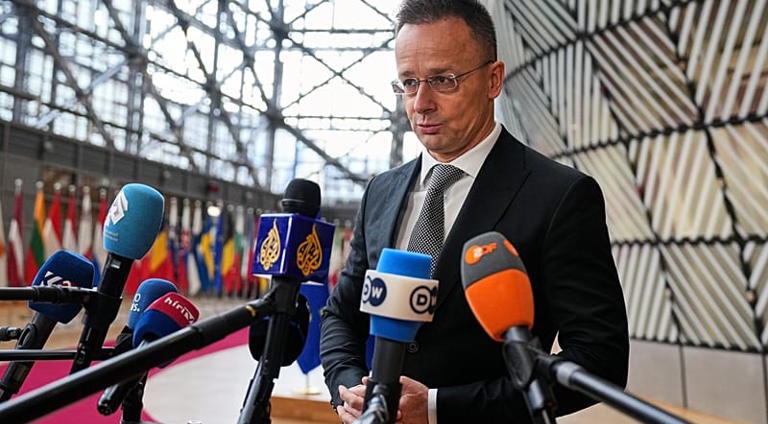
BRUSSELS — A diplomatic clash unfolded on Monday at an EU foreign ministers’ meeting in Brussels, where Péter Szijjártó was confronted by Ukrainian journalists over his government’s controversial decision to block emergency financial aid for Ukraine. The exchange highlighted deep rifts between Budapest and Kyiv and underscored mounting frustration among EU partners over Hungary’s position on the war and energy supplies.
The dispute centres on a decision by Hungary to veto a €90 billion EU aid package for Ukraine, a lifeline programme agreed by European leaders late last year but now stalled due to Hungary’s objections. Budapest says it will block the funding and other measures, including new sanctions on Russia, until oil deliveries through a key transit pipeline resume — a dispute Kyiv and Brussels attribute to damage caused by Russian attacks.
Energy Row Sparks Diplomatic Firestorm
The tensions flared over the Druzhba oil pipeline, a Soviet-era route that once delivered Russian crude through Ukrainian territory to Hungary and neighbouring countries. Hungary claims Ukraine has failed to reopen the pipeline after damage occurred last month, accusing Kyiv of using energy supplies as political leverage. Ukraine denies responsibility and says Russian strikes caused the disruption.
As the press conference unfolded ahead of the EU meeting, a Ukrainian journalist directly asked Szijjártó: “Why do you hate Ukraine so much?” — a question that quickly turned the exchange heated and personal.
Szijjártó rejected the premise. “We do not hate Ukraine,” he insisted, instead claiming that the Ukrainian state has pursued a historically hostile approach towards Hungary, particularly on issues such as minority rights and energy politics. He argued that Brussels and Kyiv were colluding to disadvantage Budapest.
When pressed on Hungary’s continued purchase of Russian energy — which critics say indirectly supports Moscow’s war effort — Szijjártó defended Hungary’s sovereign right to decide where it buys its fuel, dismissing the accusation as “not serious”.
EU Partners Express Frustration
Hungary’s actions have drawn sharp rebukes from other EU states. The bloc’s High Representative for Foreign Affairs, Kaja Kallas, criticised Budapest for jeopardising unity and cooperation at a critical time for European support to Ukraine.
“Vetoing decisions agreed by all member states undermines trust and collective action,” she said, emphasising that the €90 billion loan was intended to help Ukraine meet essential budgetary needs.
Other EU diplomats and national leaders have voiced similar concerns. Some have described Hungary’s move as “disloyal” to the bloc’s collective response to the Russian invasion and urged Brussels to find ways to proceed without Budapest’s consent.
Broader Implications for EU-Ukraine Relations
The incident comes on the eve of the fourth anniversary of Russia’s full-scale invasion of Ukraine, a date many leaders had hoped to mark with renewed support and solidarity. Instead, the dispute over energy and aid has overshadowed those plans and exposed tensions within the EU over how best to support Kyiv.
Analysts say Hungary’s stance reflects broader domestic and geopolitical considerations. Budapest has historically maintained closer energy ties with Russia than many other European nations, and its leadership has publicly questioned the pace and scale of support for Ukraine. Critics see this as a deepening rift within the EU, while Hungarian officials frame it as defending national interests and sovereignty.