

US Trains Ghanaian Journalists Ahead of 2026 World Cup- Opportunity or Subtle Narrative Influence?
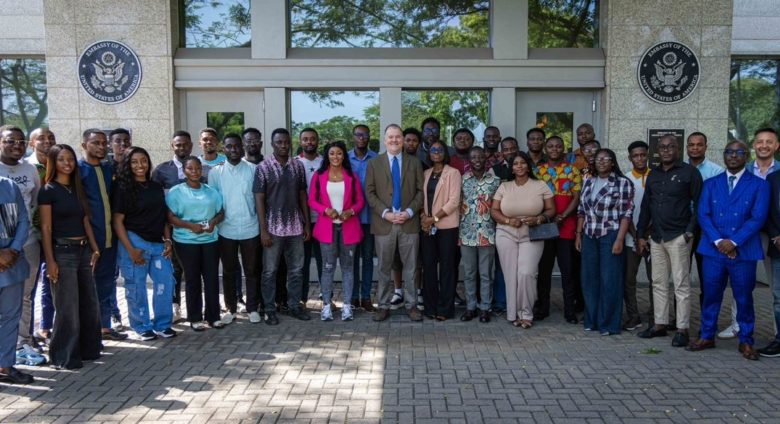
The United States Embassy in Ghana has trained over 30 Ghanaian sports journalists and bloggers as part of preparations toward the 2026 FIFA World Cup, which will be hosted by the United States, Canada, and Mexico.
By Boakye Stephen, Kumasi, Ghana | Reporting for GhanaianNews,Canada
March 18, 2026
The United States Embassy in Ghana has trained over 30 Ghanaian sports journalists and bloggers as part of preparations toward the 2026 FIFA World Cup, which will be hosted by the United States, Canada, and Mexico.
The training workshop focused on key areas such as FIFA regulations, ethical reporting, storytelling, and digital media engagement. The initiative is aimed at equipping Ghanaian media practitioners with the necessary tools to meet international reporting standards before, during, and after the global tournament.
The sessions were facilitated by notable figures including Henry Asante Twum of the Ghana Football Association, renowned sports journalist Gary Al-Smith, and media professional Eva Okyere. Their contributions provided participants with both practical knowledge and industry insights to enhance their reporting capabilities on the global stage.
Strengthening Professional Standards in Sports Journalism
The training forms part of broader efforts to ensure that Ghanaian journalists are well-prepared to deliver high-quality coverage during the World Cup.
Participants were taken through modern reporting techniques, ethical considerations, and the importance of accurate storytelling in sports journalism. With the World Cup expected to attract global attention, organizers emphasized the need for Ghanaian reporters to align with international best practices.
In addition, the U.S. Chargé d’Affaires, Rolf Olson, advised participants to begin visa application processes early and cautioned against overstaying, stressing the importance of adhering to international travel regulations.
Beyond Training: Questions of Influence and Narrative
While the initiative has been widely viewed as a positive step toward professional development, it has also sparked deeper conversations about influence and narrative control within global journalism.
Analysts suggest that such training programs, though beneficial, may carry broader implications beyond skill development. Journalism is not only about technical ability but also about perspective, voice, and how stories are framed.
When global powers invest in training journalists from other countries, it may inadvertently shape how those journalists interpret and present stories, particularly on international platforms.
This dynamic is often described as soft power—a subtle form of influence that operates through education, professional standards, and institutional engagement rather than direct control.

The Subtle Message Behind Visa Compliance
The emphasis on visa compliance during the workshop has also drawn attention. While practical and necessary, it serves as a reminder of the structured nature of global mobility.
Participants were reminded that access to international events such as the World Cup depends on adherence to rules and regulations set by host countries.
Observers note that such messages, though routine, reflect broader global realities where movement, access, and participation are often governed by external systems.
A Call for Independent Ghanaian Storytelling
The training places Ghanaian journalists at a critical point—where global exposure meets local identity.
Experts argue that while it is important to learn and adopt international standards, it is equally important for journalists to maintain their unique perspectives and cultural authenticity.
There is concern that without conscious effort, journalists may become technically skilled but lose their independent voice, resulting in narratives that align more with external viewpoints than local realities.
Balancing Learning with Identity
As Ghana prepares to participate in the 2026 World Cup, the role of its media becomes increasingly important. Journalists are not only reporting on matches but also representing Ghana’s voice on the global stage.
The challenge, therefore, is to strike a balance:
-
Embrace global best practices
-
Maintain independent thinking
-
Preserve Ghanaian identity in storytelling
Because ultimately, true success lies not just in covering international events, but in ensuring that Ghana’s stories are told authentically and accurately.

The Bigger Picture Ahead of 2026
With the World Cup approaching, initiatives like this training highlight both opportunity and responsibility.
Ghanaian journalists now have access to improved skills, global exposure, and professional networks. However, they must also remain conscious of their role as custodians of their own narratives.
As the world turns its attention to the 2026 tournament, the real test will not only be in how well Ghanaian journalists report—but in how well they retain their voice while engaging a global audience.