


By Ebenezer Adu-Gyamfi / Emmanuel Ayiku | Reporting for Ghanaian News, Canada
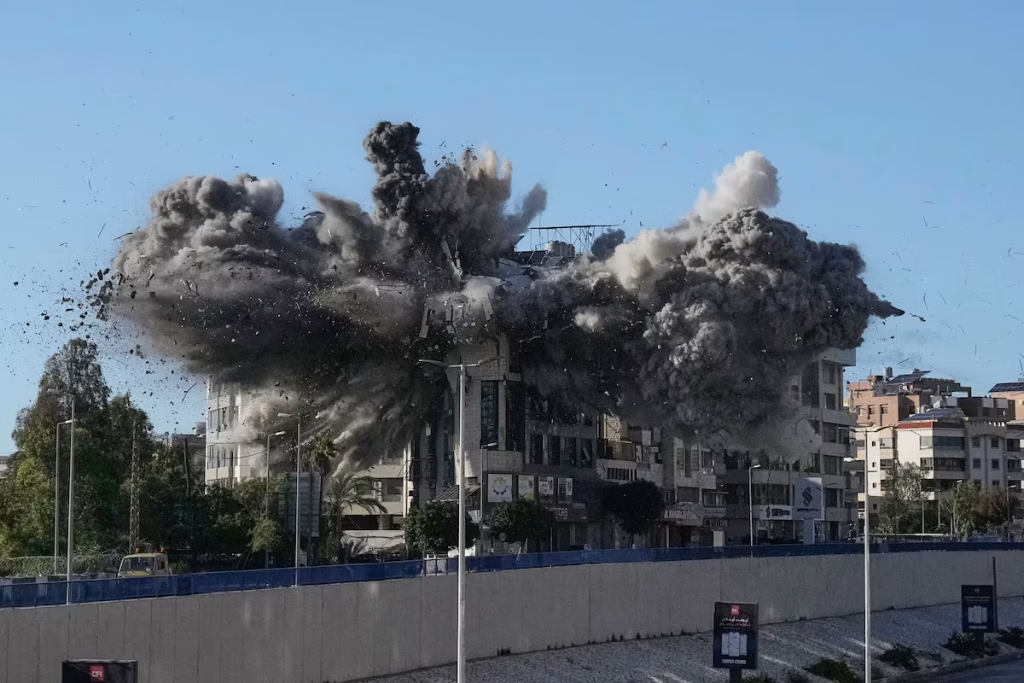
The ongoing war involving the United States and Israel against Iran has entered a critical phase, with escalating military operations, rising global tensions, and growing uncertainty over how the conflict will end.
The conflict began on February 28, when U.S. and Israeli forces launched large-scale airstrikes targeting Iran’s military infrastructure, leadership, and nuclear-related facilities. Iran responded with missile and drone attacks across the region, including strikes on Israel and U.S. bases in the Gulf, widening the scope of the الحرب.
Since then, the campaign has intensified significantly. U.S. forces have reportedly carried out thousands of strikes, targeting Iran’s defense systems, naval assets, and strategic facilities, while Israel has focused heavily on high-level assassinations and intelligence-driven operations against Iranian leadership.
Despite these military advances, officials say the conflict remains far from resolved. U.S. Secretary of State Marco Rubio recently indicated that while there may be a “finish line” in sight, the war is likely to continue for weeks rather than ending immediately.
At the same time, the strategic objectives of the war appear to be evolving. Initial ambitions—such as weakening Iran’s military capabilities or even triggering regime change—have faced resistance, with Iran demonstrating resilience despite sustained attacks. Analysts say this has forced a recalibration of expectations among U.S. and Israeli policymakers.
The الحرب has also triggered wider regional instability. Iran’s retaliation has extended beyond Israel to include attacks on U.S. and allied interests across the Middle East, while allied groups such as Hezbollah and Houthi forces have become increasingly involved, raising fears of a broader regional conflict.
Global economic consequences are already being felt. Disruptions linked to the conflict—particularly around the Strait of Hormuz, a key global oil transit route—have driven volatility in energy markets and contributed to wider financial instability.
Diplomatic tensions have also intensified. European allies have shown reluctance to fully support the U.S.-led campaign, highlighting divisions within traditional alliances. This has raised questions about the long-term cohesion of Western partnerships and the future of coordinated military action.
Meanwhile, international pressure is mounting for a negotiated resolution. Diplomatic channels remain open, with indirect communications ongoing between Washington and Tehran, though significant gaps remain between both sides.
Observers note that the conflict now sits at a crossroads. While military operations continue to degrade Iran’s capabilities, the absence of a clear political endgame risks prolonging the crisis and deepening global instability.
