

U.S. and Israel Launch Major Strikes on Iran, Aim to Oust Its Leadership
Coordinated Operation Targets Iranian Command and Military Sites as Regional Tensions Explode
By: Ebenezer Adu-Gyamfi / Emmanuel Ayiku for GhanaianNewsCanada 28/2/2026

In a dramatic escalation of Middle East hostilities on February 28, 2026, the United States and Israel launched coordinated military strikes against key targets inside Iran, signaling a shift toward direct confrontation after years of proxy conflict, stalled diplomacy, and rising mistrust.
Officials in Washington and Tel Aviv stated the operation’s aim was to degrade Iran’s military infrastructure, constrain its nuclear and missile capabilities, and ultimately create conditions that could lead to the overthrow of Iran’s regime a declaration that immediately drew global attention and alarm.
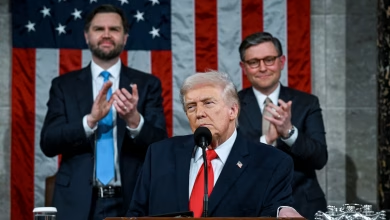
U.S. President Donald Trump described the strikes as a necessary step to “end a longstanding security threat” to the United States and its allies, while urging ordinary Iranians to seize the moment to remove their leaders once the bombardment concludes.
First Strike and Scope of Assault
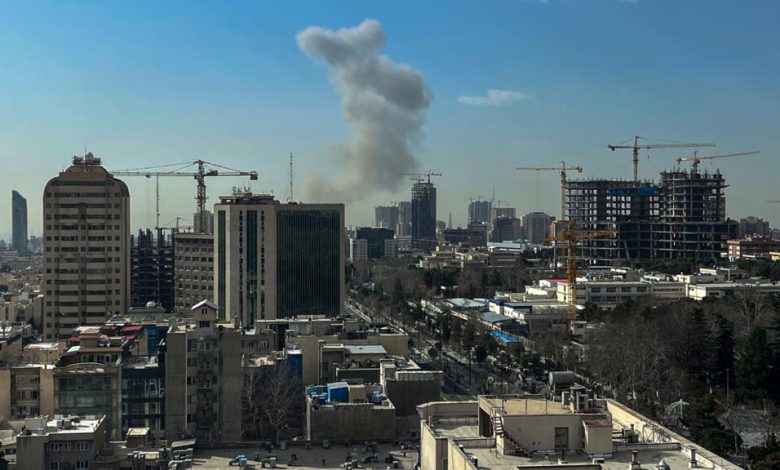
The initial wave of attacks designated by the U.S. military as “OPERATION EPIC FURY” reportedly targeted senior Iranian officials and strategic military sites in urban centers including Tehran, Isfahan, Qom, Karaj, and Kermanshah.
An Israeli government source said both ‘Supreme Leader Ayatollah Ali Khamenei’ and President Masoud Pezeshkian were targeted, though independent confirmation of their status was not immediately available. Another source familiar with the matter reported that Khamenei was not in Tehran at the time and had been moved to a secure location.
Iran’s state media and an Iranian source close to the country’s leadership reported that several senior commanders of the Iranian Revolutionary Guard Corps and political officials may have been killed during the strikes, though independent verification remains limited.
Iranian Response and Wider Blast Zones
In retaliation, Iran’s military launched missiles toward Israel and U.S. positions in Gulf states, with some explosions reported in neighboring countries including the United Arab Emirates, Bahrain, and Kuwait as air defense systems responded.
Both Iranian officials and state media condemned the attack as “illegal, unprovoked aggression,” warning that further retaliation would continue until their adversaries were “decisively defeated.”
Diplomatic Breakdown and Nuclear Concerns
The strikes followed indirect negotiations facilitated by Oman earlier in the week that failed to produce a breakthrough on Iran’s controversial nuclear program. Diplomatic efforts had sought to limit nuclear development and missile capabilities in exchange for sanctions relief — but the talks ended without agreement, paving the way for military action.
Israeli Defence Minister Israel Katz framed the operation as pre-emptive, asserting that it would remove the “existential threat” that Iran’s program posed to Israel and regional stability.
Civilian Casualties and Humanitarian Impact
Reports from Iranian authorities indicate that civilian infrastructure, including a girls’ school in southern Iran, was hit during the strikes, leading to dozens of deaths and many more injuries — a claim that could not be independently verified at the time of reporting.
The toll on non-combatants has already drawn international concern. Global humanitarian and rights organizations have cautioned that strikes affecting civilian areas could deepen humanitarian crises and stoke long-term instability across the region.
Regional and Global Reactions
The strikes have prompted an urgent session of the United Nations Security Council, with diplomats warning that such a significant escalation threatens not just regional, but global stability.
While some nations support the efforts to curb Iran’s nuclear ambitions, others have condemned the action as dangerously provocative. Russia, for example, described the strikes as a “preplanned, unprovoked aggression” that risks widespread humanitarian and economic fallout.
Arab governments in the Gulf are also reportedly concerned that escalating conflict could destabilize vital shipping lanes — particularly the Strait of Hormuz, through which a significant portion of the world’s oil supply transits — threatening oil markets and economic security.
Immediate and Long-Term Implications
Beyond the immediate military clashes, analysts warn that the confrontation could evolve into a protracted conflict. Major oil producers have already adjusted crude shipments amid fears of disruption, and global markets reacted swiftly to the news.
Meanwhile, the international community continues to call for restraint, urging all parties to return to diplomatic channels and comply with international law — even as the first volleys of what may be a longer confrontation unfold.