


By: Ebenezer Adu-Gyamfi / Emmanuel Ayiku for GhanaianNewsCanada 26/2/2026
A senior U.S. official has recently made public statements expressing concern about Canada’s policy direction, underscoring evolving tensions in the diplomatic relationship between the two nations.
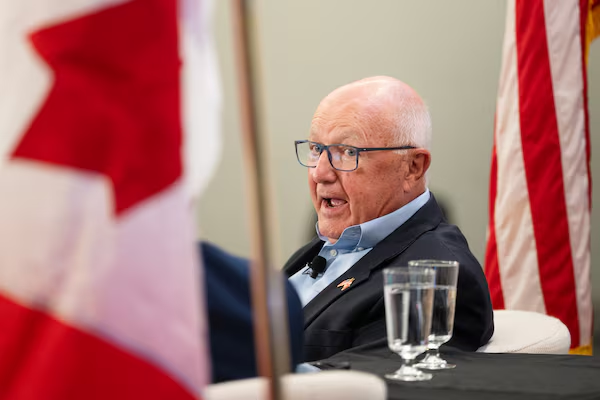
The remarks, delivered in a public forum by a former official close to U.S. policymaking circles, touched on areas of economic and strategic disagreement, and reflect broader questions about how the United States views Canada as a partner amid changing global dynamics.
Context of the Comments
Relations between Canada and the United States have faced strains in recent months as leaders on both sides of the border navigate complex issues including trade, energy policy, and regional security. Although the two countries remain close allies, differing priorities have occasionally sparked public disagreement.

In the recent remarks, the official suggested that certain Canadian policy choices — particularly those related to trade and economic engagement — might not align with what Washington considers optimal for bilateral cooperation. While specifics were not detailed, the tone emphasized a desire for stronger alignment on shared goals.
A Diplomatic Balancing Act
Canada and the United States share one of the world’s most significant bilateral relationships, with deep ties in commerce, defense, and cultural exchange. Despite that, diplomatic relationships — even between close allies — often involve negotiation and occasional critique.
Observers say that public statements of concern can serve dual purposes: signaling serious issues while also prompting dialogue behind the scenes. By voicing concerns in a public setting, American officials may be aiming to stimulate policy discussions within Canada and among U.S. political audiences alike.
Reactions From Canadian Circles
Canadian officials and commentators have pushed back against the notion that policy choices are out of step, noting that Ottawa has pursued decisions based on domestic priorities and national interests. They emphasize that while both countries benefit from cooperation, Canada retains sovereign authority to shape policy according to its economic and social objectives.

Experts say that such pushback is common in international relations, especially when strategic interests diverge or when domestic political pressures influence diplomatic rhetoric.
Economic and Strategic Implications
The comments come at a time of heightened economic uncertainty and shifting geopolitical priorities. Trade between Canada and the United States remains substantial, but discussions over tariffs, market access, and regulatory frameworks have become more contentious.
Strategic cooperation extends beyond trade, touching on issues such as defense collaboration, energy infrastructure, and technology partnerships. Divergent positions in any of these areas can ripple into broader diplomatic engagement.
Looking Ahead
The recent remarks from a prominent American official may not signal a breakdown in the Canada–U.S. relationship, but they do illustrate that challenges remain. Analysts say the path forward will require careful negotiation, open communication, and pragmatic efforts to bridge differences.
As both countries prepare for future leadership transitions and ongoing economic shifts, how they manage disagreements publicly and privately will shape the evolution of one of the most enduring bilateral relationships in the world.
