


By: Ebenezer Adugyamfi‑Gyamfi / Emmanuel Ayiku
March 30, 2026
for GhanaianNewsCanada
The United States has allowed a Russian oil tanker to deliver crude to Cuba, marking a significant shift in the enforcement of a fuel blockade previously championed by President Donald Trump.
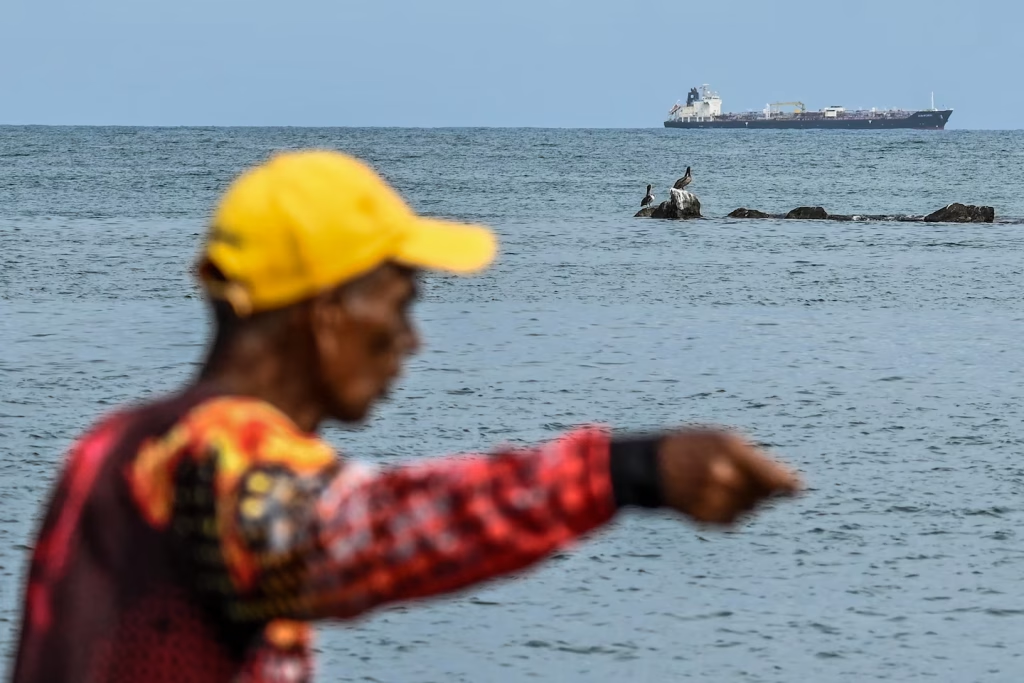
The tanker, identified as the Anatoly Kolodkin, carried approximately 730,000 barrels of oil and arrived at Cuba’s Matanzas port, providing temporary relief to an island grappling with severe fuel shortages and widespread blackouts.
The move effectively softens what had been described as one of the strictest U.S. efforts to restrict energy supplies to Cuba in decades. The blockade, intensified earlier this year, aimed to pressure the Cuban government by cutting off critical oil imports, contributing to a worsening humanitarian and economic crisis.
Despite the hardline policy, Trump indicated he would not oppose the shipment, framing the decision in humanitarian terms.
“If a country wants to send some oil into Cuba right now, I have no problem,” he said.
U.S. officials reportedly chose not to intercept the vessel, even though it is linked to Russia’s so-called “shadow fleet” and subject to sanctions. Analysts suggest the decision reflects both humanitarian considerations and broader geopolitical constraints, including rising global tensions and limited enforcement capacity.
Russia, for its part, described the shipment as humanitarian assistance, emphasizing Cuba’s urgent need for energy amid collapsing infrastructure and prolonged electricity outages.
The delivery is expected to provide only short-term relief, with experts estimating it could sustain the country for a few weeks under strict rationing.
The development comes against the backdrop of a broader crisis in Cuba, where reliance on imported fuel has left the country vulnerable to external shocks. The U.S.-led restrictions, combined with disruptions in traditional supply from Venezuela and Mexico, have pushed the island into one of its most severe energy shortages in recent history.
This moment reflects a contradiction at the heart of modern geopolitics—where pressure strategies collide with humanitarian realities.
A blockade is designed to force political change, but when it begins to threaten civilian survival, it exposes the limits of coercive diplomacy.
The U.S. decision to allow the tanker through suggests an implicit acknowledgment: economic warfare has thresholds beyond which it becomes morally and strategically difficult to sustain.
At the same time, Russia’s intervention signals a re-emergence of Cold War-style alignments, where rival powers exploit humanitarian gaps to expand influence.
The deeper question remains—can pressure reshape regimes without destabilizing entire societies?
