


By: Ebenezer Adugyamfi‑Gyamfi / Emmanuel Ayiku
March 30, 2026
for GhanaianNewsCanada
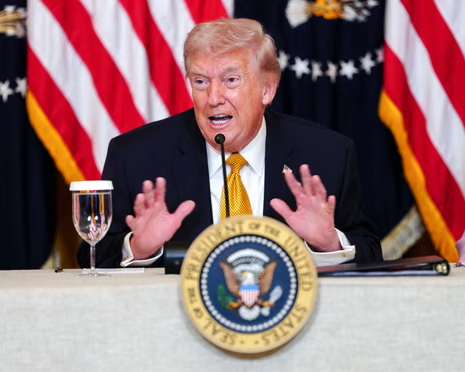
U.S. President Donald Trump has issued a stark warning to Iran, threatening to destroy key civilian infrastructure if a deal to end ongoing hostilities is not reached “shortly.”
According to multiple international reports, Trump said the United States could target critical facilities including power plants, oil wells, and desalination systems—assets essential to both the economy and civilian life.
The warning comes amid escalating tensions tied to the strategic Strait of Hormuz, a vital shipping lane through which a significant portion of the world’s oil supply passes. Trump has demanded that the waterway be reopened, linking it directly to ongoing diplomatic efforts.
Trump warned that failure to reach an agreement could lead to the U.S. “completely obliterating” Iran’s energy and infrastructure systems, according to reports.
The threat comes despite claims from Washington that negotiations are progressing. U.S. officials have indicated that talks are ongoing through intermediaries, although Iranian authorities have denied direct engagement and rejected key proposals.
The situation has intensified alongside continued military exchanges in the region, with attacks reported on energy facilities and infrastructure across multiple countries. Analysts warn that any escalation targeting civilian infrastructure could significantly worsen humanitarian conditions and disrupt global energy markets.
Oil prices have already surged amid the uncertainty, reflecting fears of prolonged instability in the Gulf region, a cornerstone of global energy supply.
Commentary (Boakye Stephen):
This moment represents more than geopolitics—it is a test of the boundaries between military strategy and humanitarian law.
Targeting civilian infrastructure shifts conflict from battlefield confrontation to systemic disruption of everyday life. Power, water, and energy are not just strategic assets—they are lifelines.
The crisis also highlights the increasing use of economic choke points, such as the Strait of Hormuz, as leverage in modern warfare.
At its core, this is a confrontation between pressure and resistance—where diplomacy is pursued in parallel with threats of overwhelming force.
The question now is whether this strategy compels resolution—or accelerates escalation.
