

Trump Orders Federal Release of UFO and Possible Alien-Life Files
U.S. president directs Pentagon and agencies to declassify and disclose government records amid renewed public interest
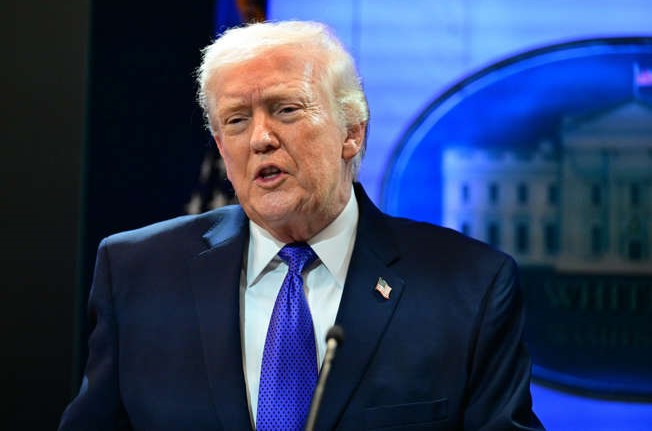
WASHINGTON — U.S. President Donald Trump has directed the Pentagon and other federal agencies to begin identifying and making public government files related to unidentified flying objects (UFOs), unidentified aerial phenomena (UAP) and potential extraterrestrial life, setting in motion one of the most expansive transparency initiatives on the topic in years.

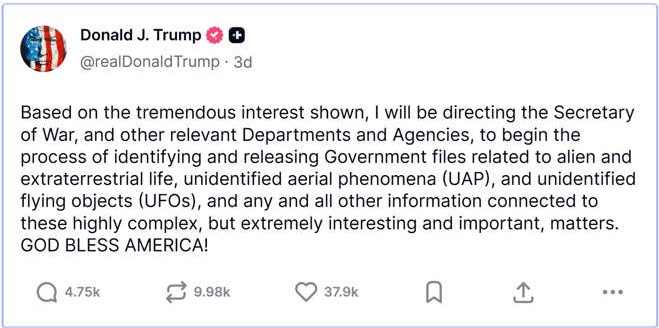
Trump’s announcement, made via his Truth Social platform and echoed by senior officials, taps into long-standing public curiosity and recent political attention on the issue, including remarks by former President Barack Obama about the possibility of life elsewhere in the universe.
What the Directive Entails
In his February statement, Trump said he was responding to “tremendous interest” from the public and would instruct the Secretary of Defense and other agencies to “begin the process of identifying and releasing Government files related to alien and extraterrestrial life, unidentified aerial phenomena (UAP), and unidentified flying objects (UFOs)” along with all related information.
Defense Secretary Pete Hegseth has since confirmed that Pentagon personnel are working to compile and review relevant documents as part of compliance with the president’s direction, though he acknowledged the process is complex and no formal timeline has been announced.
Officials have reiterated that the effort involves identifying existing federal records — which could range from older investigative reports to surveillance data — and preparing them for public release through appropriate channels such as the National Archives.
What It Could Mean
While the announcement has sparked excitement among enthusiasts of “UFO disclosure” and extraterrestrial research, experts caution that the release may not reveal dramatic evidence of alien visitation.
In past declassification efforts, including hundreds of pages previously released under the Pentagon’s All-Domain Anomaly Resolution Office (AARO), UAP reports have largely comprised unexplained phenomena that often turn out to be mundane sources such as aircraft, drones, weather balloons or sensor artifacts when fully analyzed, with no confirmed evidence of extraterrestrial technology.
Scientists and skeptics also note that some documents likely to be released could contain redactions for national security reasons — particularly if they involve classified sensor systems or intelligence capabilities — limiting revelations about their contents.
Political and Cultural Backdrop
The move comes amid renewed public focus on UFOs and UAPs following remarks by former presidents and increased congressional scrutiny in recent years. Lawmakers on both sides of the aisle have previously pushed for greater transparency on unidentified aerial phenomena, and some members of Congress, including House task force leaders, have publicly supported efforts to ensure release of all relevant material.
Critics — including some Republican voices — have also interpreted the disclosure push as a possible political distraction, pointing to controversies around other high-profile document releases and government transparency debates.
What the Public Might See
If fully implemented, the effort could produce a trove of records ranging from decades-old military investigations to more recent government reports on UAP encounters. Analysts say the focus will likely remain on phenomena that are unidentified yet not demonstrably linked to extraterrestrial visitors — meaning the files may contain intriguing clues and unexplained events, but not definitive proof of alien contact.
In 2024, for example, federal statistics showed thousands of UAP sightings, with only a small fraction requiring further analysis and most explainable as ordinary objects or phenomena after review.
Looking Ahead
As the declassification process unfolds, officials plan to coordinate with the National Archives and Records Administration (NARA) and other agencies to make compiled files accessible to researchers and the public. Many scientists welcome the transparency for the potential to support broader scientific inquiry into unexplained aerial events — though with measured expectations about what revelations may emerge.
Whether the eventual release will satisfy UFO enthusiasts or fuel further debate remains unclear, but the directive marks a significant moment in the long-running conversation about government secrecy, aerial phenomena and the possibility of life beyond Earth.