By Boakye Stephen, Kumasi, Ghana |


Reporting for Ghanaian News, Canada
Ghana’s Parliament was thrust into an intense and emotionally charged debate on March 27, as lawmakers confronted the contentious issue of reparations for the Transatlantic Slave Trade, a subject that continues to shape global political discourse.
At the center of the debate was Minority Leader Alexander Afenyo-Markin, who challenged what he described as a one-sided narrative surrounding reparatory justice. He urged Parliament to confront the often-overlooked role of African intermediaries in the slave trade.
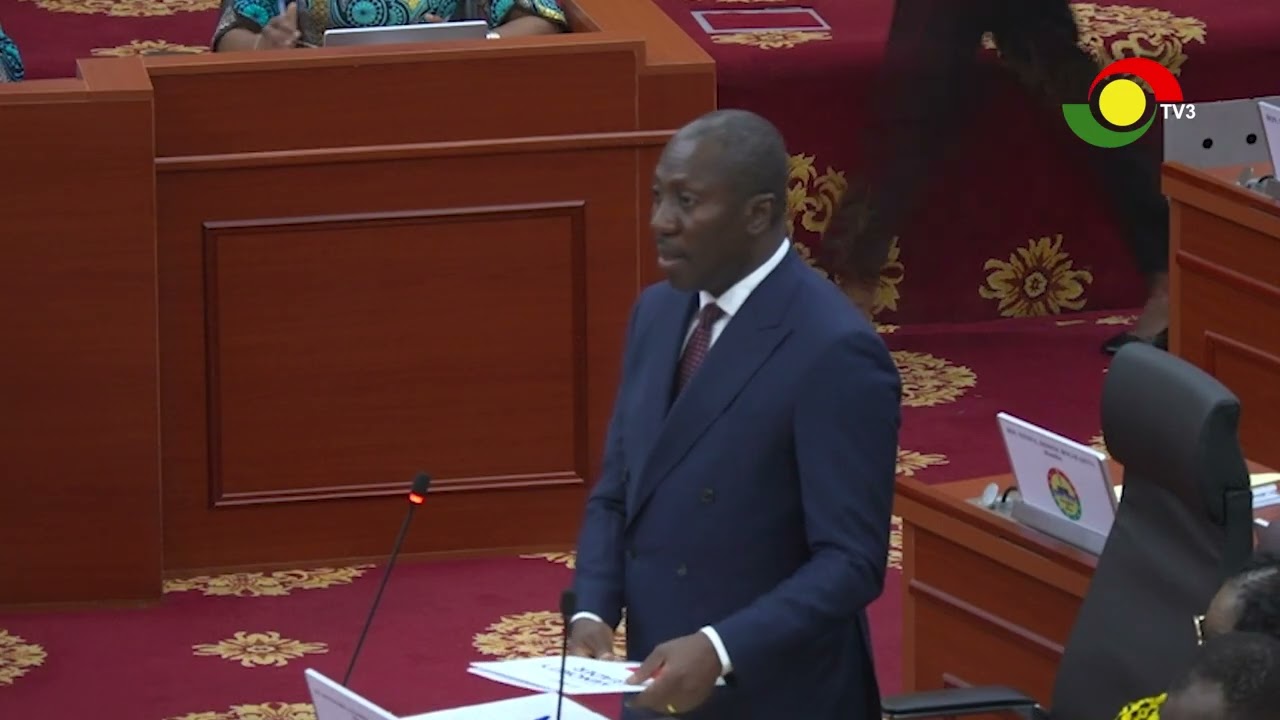
He argued:
“When somebody berths a vessel at Cape Coast, and you decide to go to the North, Bono area, get to the Ashanti area, and to the Assin area, and you are chasing your strongest among your own people, then after 100 years, you say, ‘I should be compensated’.”
He further emphasized:
“Who should compensate whom? We maltreated our own and told the whiteman that he should also maltreat our own. The story must be told and must be put in its proper context.”
In a forceful rebuttal, Majority Leader Mahama Ayariga defended the legitimacy of reparations, grounding his argument in economic history and structural inequality.
He stated:
“Many of those countries that have wealth can trace their wealth to slavery… It is the labour of these slaves that helped them to build capital.”
He concluded:
“There is the need to share that wealth in recognition of those who have been the foundation of the creation of that wealth.”
Commentary:
This parliamentary clash reveals a profound philosophical tension between moral accountability and historical complexity.
While Afenyo-Markin’s argument emphasizes internal participation, it risks equating local complicity with systemic orchestration. On the other hand, Ayariga’s position highlights the enduring economic consequences but raises practical questions about implementation.
The truth lies in a layered understanding:
Africa’s role must be acknowledged
But the scale, structure, and sustained profit of slavery were externally driven
Justice, therefore, must move beyond blame into strategic restoration, balancing truth with forward-looking solutions.