By Boakye Stephen, Kumasi, Ghana | Reporting for Ghanaian News, Canada
15/03/2026
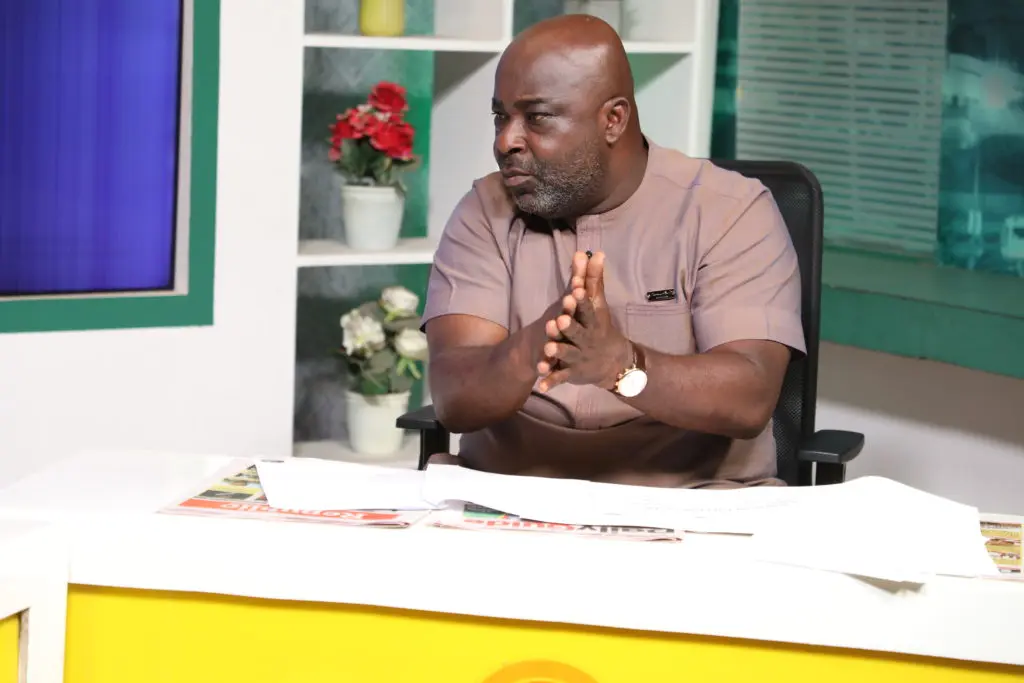
The Ranking Member on Parliament’s Trade and Industry Committee, Michael Okyere Baafi, has called on the government to apologize to Ghanaians over what he describes as a significant and unexplained change to the structure of the much-publicized 24-Hour Economy Policy.
According to the New Patriotic Party (NPP) Member of Parliament for New Juaben South, the policy that was heavily promoted by President John Dramani Mahama and the National Democratic Congress (NDC) during the election campaign appears to have been altered after the elections, leaving many citizens uncertain about its actual implementation.
Speaking during a media interview in Koforidua on Saturday, March 14, Mr. Okyere Baafi criticized the shift from the originally advertised “1-3-3” formula to what he now describes as a “4-1-9” framework.
“The policy was advertised by President Mahama and his team before the elections. Today, I put it to the head of the 24-Hour Economy Secretariat… They have to go back to the country and apologize to Ghanaians,” he said.
Questions Over Policy Direction
Mr. Okyere Baafi, who previously served as Deputy Minister for Trade and Industry, argued that the original presentation of the policy suggested direct job creation for individuals, but the revised structure appears to be a private-sector-driven programme supported by government incentives.
He noted that the shift raises concerns about whether the policy Ghanaians voted for is the same one currently being implemented.
“What sense do you get about the policy? It’s a private sector-led initiative with incentives that may include interest subsidies,” he remarked.
The MP further questioned how the government intends to generate employment under the new framework, stressing that investment attraction must become a key focus.
“Government needs to do more in the area of investment promotion. They want to create jobs, but how?” he asked.
Growing Public Confusion
Mr. Okyere Baafi warned that the government’s communication on the flagship policy has created uncertainty among the public, particularly regarding the incentives and structural framework needed to support a 24-hour production system.
“We are now waiting for the incentive policy. The point I’m trying to make is that we now understand a different 24-Hour Economy,” he said.
Commentary:
A Policy Under Scrutiny
The 24-Hour Economy Policy was one of the central promises during Ghana’s recent elections, marketed as a transformative economic strategy aimed at boosting productivity, creating jobs, and maximising national infrastructure by encouraging round-the-clock economic activity.
However, the growing debate over its structure highlights a broader issue in Ghanaian politics, the gap between campaign messaging and policy implementation.
For many observers, the controversy underscores the importance of policy transparency, stakeholder consultation, and clear communication, especially when dealing with a programme that could significantly reshape the country’s economic structure.
As the government prepares to release further details on incentives and operational mechanisms, business leaders, economists, and ordinary citizens alike are watching closely to see whether the 24-Hour Economy will deliver on its ambitious promise.
Boakye Stephen, Kumasi, Ghana | Reporting for Ghanaian News, Canada