

Iran’s Supreme Leader Ayatollah Ali Khamenei Reportedly Killed in U.S.–Israeli Strikes
Military offensive sparks historic escalation as reports emerge of Khamenei’s death and regional retaliation
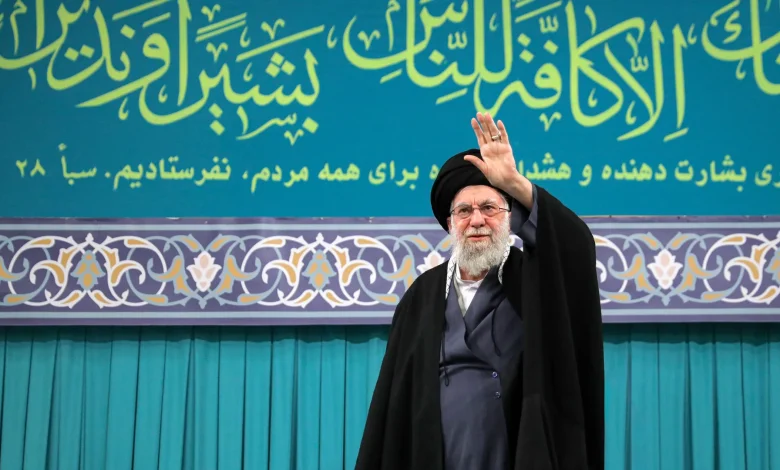
In a stunning and rapidly unfolding development in the Middle East, Iran’s Supreme Leader, Ayatollah Ali Khamenei, is reported to have been killed during coordinated military strikes by the United States and Israel on February 28, 2026, a claim made by senior Israeli officials and cited by international news agencies.

The strikes, which targeted key political and military leadership sites across Iran including the capital Tehran, represent an unprecedented escalation in hostilities between Iran and Western allies, ending decades of indirect conflict and proxy battles with direct action against Iran’s highest authority.
Joint U.S.–Israeli Offensive
The offensive described by military planners as a multi-phase operation struck numerous targets across Iran in the early hours of the morning, focusing on leadership compounds, military infrastructure, and strategic installations. Multiple Iranian Revolutionary Guard Corps commanders and senior officials were also reported killed in the bombardment, according to sources familiar with the aftermath.
Israeli Prime Minister Benjamin Netanyahu later said that there were “many signs” that Khamenei was dead after the strikes hit his residence and other government facilities, marking the first time in the modern era that Iran’s supreme leader has been directly targeted.
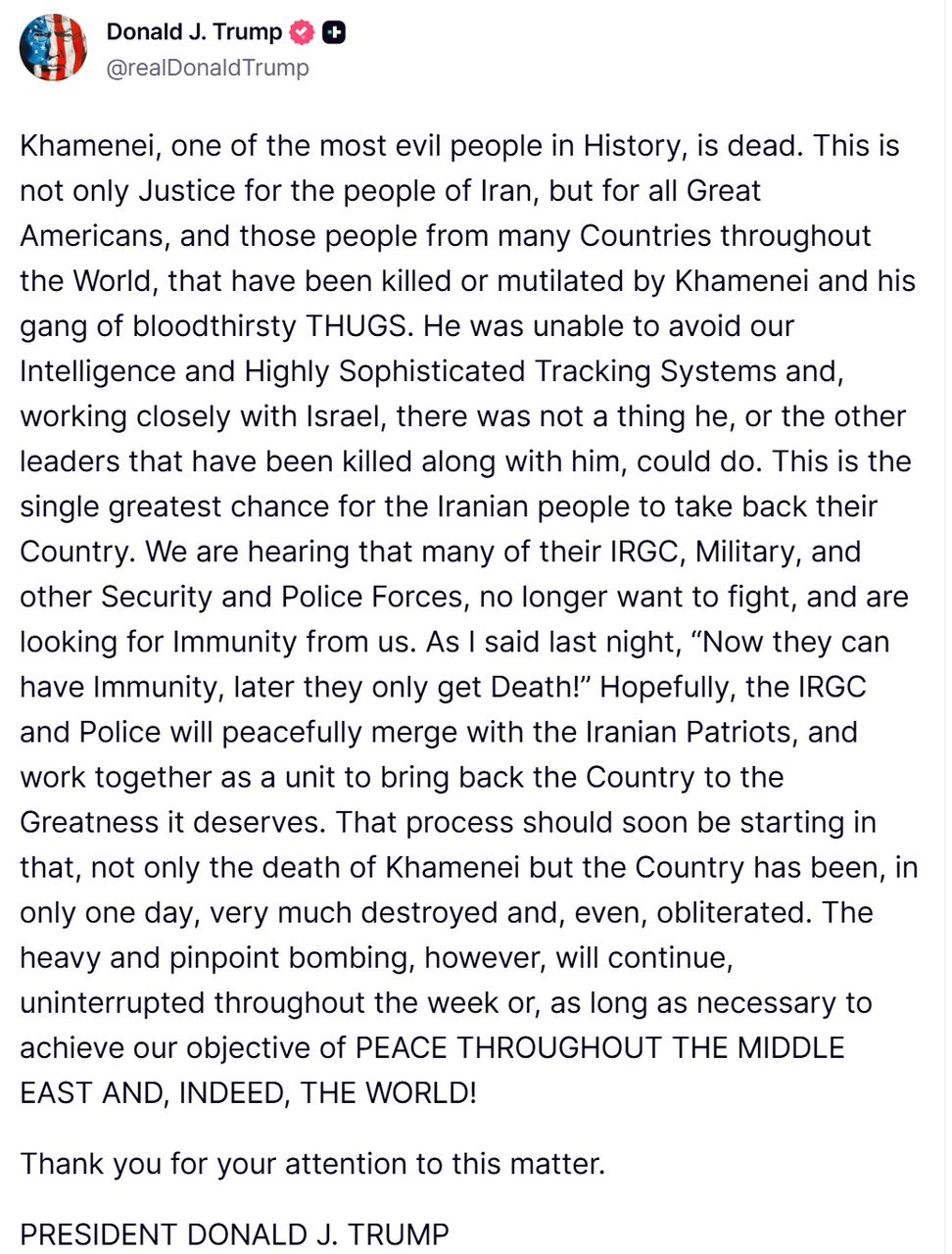
Conflicting Accounts and Unconfirmed Official Statements
As of this writing, Iranian authorities have not independently confirmed Khamenei’s death. Officials in Tehran have issued statements denying the claims, with Iranian Foreign Minister Abbas Araghchi telling international media that Khamenei and President Masoud Pezeshkian were alive “as far as I know”.
Because of the fog of war and the difficulty of independently verifying conditions inside Iran, major governments and news organizations are treating the reports with caution, even as multiple sources — including Reuters and Axios based on Israeli claims have reported the possible death of the supreme leader.
Regional Retaliation and Escalation
The strikes have triggered immediate retaliation by Iran, with waves of ballistic missiles and drone strikes launched toward Israel and U.S. military bases stationed across the Gulf region. Explosions were reported as far afield as Bahrain, Kuwait, Qatar, and the United Arab Emirates, heightening fears of full-scale regional war.
Iranian state media reported civilian casualties and disruptions in several cities, and the Iranian Red Crescent cited preliminary figures of hundreds killed and injured across 24 of Iran’s 31 provinces as a result of the strikes and counterattacks.
Historical Significance of Khamenei’s Leadership
Ayatollah Ali Khamenei, 86, had served as Iran’s supreme leader — the highest authority in the Islamic Republic — since succeeding Ayatollah Ruhollah Khomeini in 1989. Over his more than three decades in power, he shaped Iranian foreign and domestic policy, expanded influence across the Middle East, including support for militant groups such as Hamas and Hezbollah, and maintained strict control over political dissent.
Under his leadership, Iran’s relations with Western nations were deeply adversarial for much of the past decade, especially following the 2018 U.S. withdrawal from the 2015 nuclear deal and reimposition of sanctions.
Uncertain Future and Succession
If confirmed, Khamenei’s death could create a leadership vacuum in Iran’s political and religious hierarchy. Under Iran’s constitution, the Assembly of Experts — a clerical body — is responsible for selecting a successor, a process that could be contentious and geopolitically consequential.
Analysts warn that the rapid elimination of Iran’s top leader would have far-reaching implications for regional stability, global oil markets, and diplomatic efforts already underway to monitor Tehran’s nuclear program.
Global Response
World leaders have reacted with alarm, warning that the conflict threatens to escalate further. The United Nations Security Council convened an emergency session, while governments in Europe, the Middle East and Asia called for an immediate cessation of hostilities and renewed diplomatic efforts to de-escalate tensions.
As of now, the situation remains fluid, with competing claims about the supreme leader’s fate still emerging and officials on both sides poised for further military action.