


By: Ebenezer Adu-Gyamfi / Emmanuel Ayiku for GhanaianNewsCanada | July 3, 2026


Iran entered a defining moment in its modern history on Friday as millions of mourners gathered in Tehran to pay their final respects to Supreme Leader Ayatollah Ali Khamenei, whose death marks the end of more than three decades of religious and political leadership in the Islamic Republic.
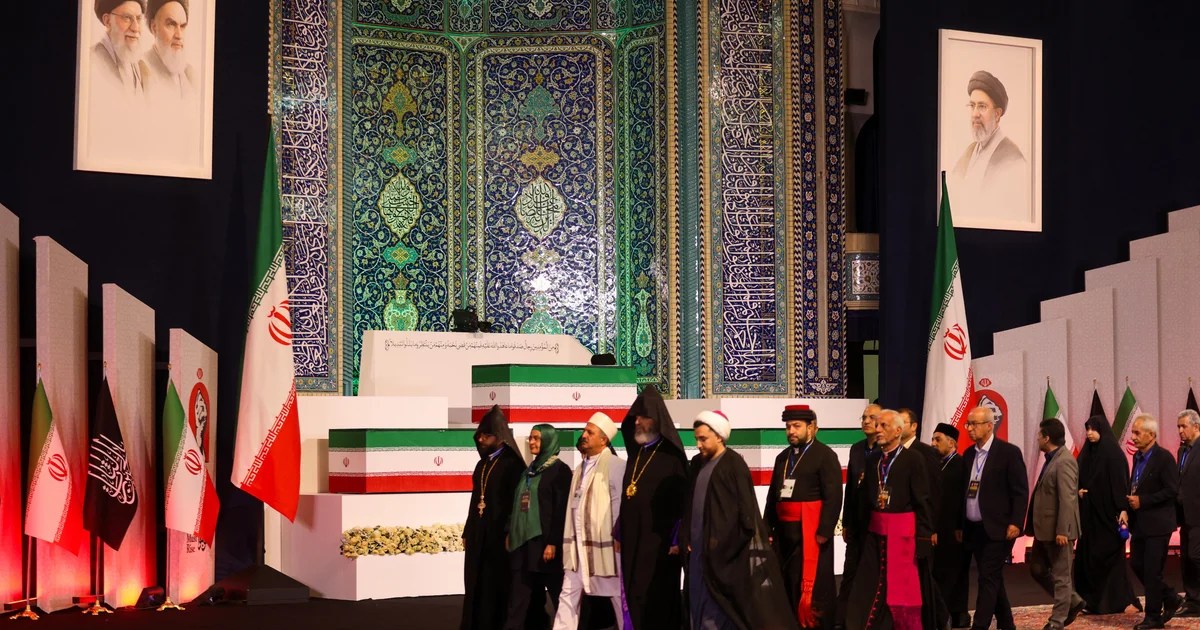
The state funeral, one of the largest public ceremonies held in Iran in recent decades, brought together senior government officials, military commanders, religious leaders and citizens from across the country. Streets surrounding central Tehran were filled with mourners carrying Iranian flags, portraits of the late leader and banners bearing religious messages as funeral processions moved through the capital.
Authorities implemented extensive security measures while state television provided continuous live coverage of the ceremonies, which are expected to continue with additional religious observances and burial events.
End of an Era
Khamenei became Iran’s Supreme Leader in 1989 following the death of Ayatollah Ruhollah Khomeini, the founder of the Islamic Republic. During his 37 years in office, he oversaw major political, economic and military developments that shaped both Iran’s domestic affairs and its role in the Middle East.
As Supreme Leader, he held ultimate authority over Iran’s armed forces, judiciary and key state institutions, making him the country’s highest-ranking political and religious figure.
His leadership coincided with periods of international sanctions, diplomatic negotiations over Iran’s nuclear programme, regional conflicts and evolving relations with both Western and neighbouring countries.
Nation in Mourning
Throughout Tehran, black flags and large memorial banners lined major roads and public squares as citizens gathered to participate in prayers and funeral processions.
Many mourners described Khamenei as a symbol of national resilience, while others reflected on the profound influence he had on generations of Iranians.
Religious leaders led prayers for the deceased as Quranic recitations echoed across the capital during the solemn ceremony.
Government offices, schools and many businesses observed periods of mourning, with official events across the country either postponed or dedicated to commemorating the late leader.
Global Attention Focuses on Tehran
The funeral has attracted international attention, with governments across the world closely watching developments in Iran during this sensitive period.
Foreign leaders and diplomatic representatives have extended condolences while analysts assess what Khamenei’s passing could mean for regional stability, Iran’s foreign policy and ongoing geopolitical tensions in the Middle East.
Observers note that the transition comes at a time when Iran continues to face significant economic challenges, regional security concerns and complex diplomatic relationships with several world powers.
Questions About the Future
Attention is now shifting toward Iran’s constitutional process for selecting a new Supreme Leader.
Under Iran’s political system, the Assembly of Experts, a body of senior Islamic scholars, is responsible for appointing the country’s next Supreme Leader.
Political analysts believe the choice will have far-reaching implications not only for Iran’s domestic governance but also for its future relations with neighbouring countries and the international community.

The transition is expected to be closely monitored by governments, investors and security analysts around the world.
A Legacy That Will Shape Iran’s Future
Supporters remember Ayatollah Ali Khamenei as a leader who defended Iran’s sovereignty and guided the country through decades of regional and international challenges.
Critics, however, viewed his tenure as a period marked by political restrictions, economic hardship linked to sanctions and strained relations with Western nations.
Regardless of differing perspectives, historians agree that Khamenei was one of the most influential figures in the Middle East over the past four decades.
His death closes a significant chapter in Iran’s history while opening another whose direction will be determined by the country’s next generation of political and religious leadership.
As the funeral ceremonies conclude, the world now watches closely to see how Iran navigates one of the most consequential leadership transitions since the Islamic Revolution.
