


By Boakye Stephen, Kumasi, Ghana | Reporting for Ghanaian News, Canada | May 4, 2026


Ghana’s efforts to curb illegal gold trade are beginning to show strong results, with authorities reporting a significant shift from informal smuggling networks to regulated export channels. The development is being credited with boosting the country’s foreign exchange inflows and strengthening its economic position.
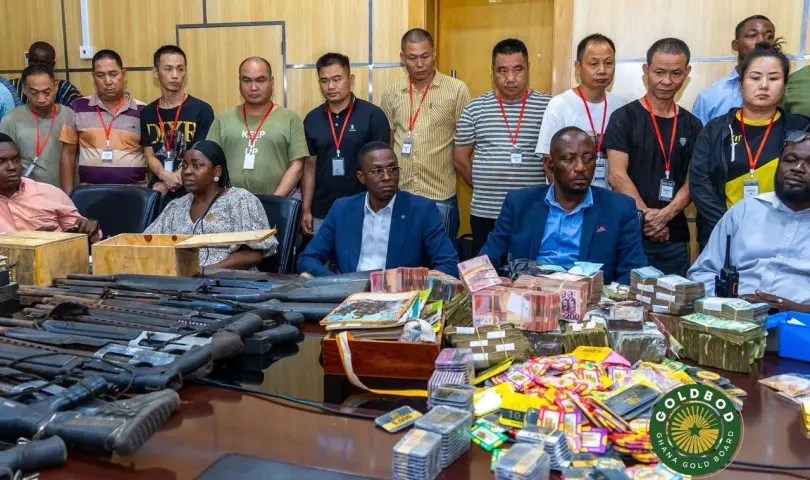
The Ghana Gold Board (GoldBod) says its anti-smuggling task force has played a central role in tightening control over the sector, particularly within artisanal and small-scale mining (ASM). According to officials, nearly all ASM gold exports are now being processed through official systems, marking a major turnaround from previous years.

This transition has had a direct impact on export performance. Ghana’s gold exports rose sharply to an estimated US$20 billion in 2025, nearly doubling from US$10.3 billion in 2024. The increase highlights the scale of revenue that had previously been lost through unregulated trade.
Officials say small-scale mining alone contributed significantly to this growth.
“ASM gold exports alone reached 104 metric tonnes valued at US$10.8 billion…”
The task force responsible for enforcing these measures operated at a reported cost of GH₵14.29 million in 2025, a figure that many analysts say is justified given the scale of revenue gains and economic impact.
For years, illegal gold exports have been a major challenge for Ghana, with large quantities of gold leaving the country through unofficial routes. This not only deprived the state of revenue but also distorted official export data and weakened foreign exchange reserves.
By tightening monitoring systems and enforcing compliance, authorities have been able to bring more of the gold trade under formal oversight. This ensures that export earnings are captured within the financial system, contributing to currency stability and national development.
Economists note that gold remains one of Ghana’s most important export commodities, making the formalisation of the sector a critical component of economic policy. Increased forex inflows from gold can help stabilize the cedi, support government spending, and improve investor confidence.
However, some experts caution that sustaining these gains will require continuous enforcement, improved regulation, and support for small-scale miners to operate within legal frameworks. Without long-term consistency, there is a risk that illegal networks could re-emerge.
The latest figures suggest Ghana is beginning to regain control over one of its most valuable natural resources. But the challenge now is maintaining that control while ensuring the sector remains transparent, efficient, and beneficial to the broader economy.
𝘼𝙗𝙤𝙪𝙩 𝙊𝙪𝙧 𝙍𝙚𝙥𝙤𝙧𝙩𝙞𝙣𝙜 𝙎𝙩𝘼𝙉𝘿𝘼𝙍𝘿𝙎
𝘛𝘩𝘪𝘴 𝘴𝘵𝘰𝘳𝘺 𝘸𝘢𝘴 𝘱𝘳𝘦𝘱𝘢𝘳𝘦𝘥 𝘶𝘴𝘪𝘯𝘨 𝘷𝘦𝘳𝘪𝘧𝘪𝘦𝘥 𝘱𝘶𝘣𝘭𝘪𝘤 𝘪𝘯𝘧𝘰𝘳𝘮𝘢𝘵𝘪𝘰𝘯, 𝘦𝘥𝘪𝘵𝘰𝘳𝘪𝘢𝘭 𝘳𝘦𝘴𝘦𝘢𝘳𝘤𝘩, 𝘢𝘯𝘥 𝘧𝘢𝘤𝘵-𝘤𝘩𝘦𝘤𝘬𝘪𝘯𝘨. 𝘖𝘶𝘳 𝘨𝘰𝘢𝘭 𝘪𝘴 𝘵𝘰 𝘥𝘦𝘭𝘪𝘷𝘦𝘳 𝘢𝘤𝘤𝘶𝘳𝘢𝘵𝘦, 𝘣𝘢𝘭𝘢𝘯𝘤𝘦𝘥, 𝘢𝘯𝘥 𝘵𝘳𝘶𝘴𝘵𝘸𝘰𝘳𝘵𝘩𝘺 𝘯𝘦𝘸𝘴 𝘧𝘰𝘳 𝘰𝘶𝘳 𝘳𝘦𝘢𝘥𝘦𝘳𝘴.
