


By: Ebenezer Adu-Gyamfi / Emmanuel Ayiku For GhanaianNewsCanada | May 29, 2026 | Accra / Toronto
ACCRA / TORONTO — Ghana’s Parliament has passed the Promotion of Proper Human Sexual Rights and Ghanaian Family Values Bill — legislation that criminalises same-sex conduct, LGBTQ+ advocacy, and related funding. The bill passed on Friday May 29, 2026, with strong bipartisan support from both NDC and NPP members of Parliament, completing a legislative process that was aggressively fast-tracked this week to align with a major African anti-LGBTQ conference Ghana is hosting in Accra from June 3-6.
The passage of the bill marks a significant moment in Ghana’s legislative and social history — one that will generate intense debate both within Ghana and among the international community, Ghana’s Western donor partners, and the large Ghanaian diaspora in Canada and beyond. The bill now proceeds to President John Dramani Mahama for assent. Whether and how quickly the President signs it into law is now the central question in Ghanaian political discourse.
What the Bill Contains — The Key Provisions
The bill, formally titled the Promotion of Proper Human Sexual Rights and Ghanaian Family Values Bill, is one of the most far-reaching pieces of legislation addressing sexual orientation and gender identity in West Africa. Its key provisions include:
Three-year imprisonment for individuals who engage in same-sex conduct.
Up to five years in prison for anyone found guilty of willful promotion, sponsorship, or financial support of LGBTQ+ activities.
Criminalisation of LGBTQ+ advocacy, public organisation, and any activity deemed to promote same-sex relationships.
The bill was reintroduced in the current Parliament as a private member’s bill after an earlier version was passed in February 2024 but lapsed when the Eighth Parliament dissolved ahead of the December 2024 general election. Former President Nana Akufo-Addo declined to sign the first version into law, citing pending Supreme Court challenges to its constitutionality. The current version has been fast-tracked through the Constitutional and Legal Affairs Committee, which presented its report recommending full passage on Thursday May 28.
Why the Rush? — The June 3 African Conference
The speed of this week’s legislative process was openly linked to a specific upcoming event. Ghana’s Parliament is due to host the 4th African Inter-Parliamentary Conference on Family Values and Sovereignty in Accra from June 3-6, 2026 — a gathering of legislators from across the African continent united around opposition to LGBTQ+ rights. Majority Chief Whip Rockson Nelson Dafeamekpor was explicit about the timeline, telling Joy News: “We can pass it by Friday.” And they did.
Human rights organisations have described the June conference as an anti-rights gathering with ties to US-based far-right advocacy groups, noting that previous editions featured speakers who promoted Uganda’s controversial Anti-Homosexuality Act as a legislative model for other African countries. The deliberate timing of Ghana’s bill passage to coincide with the conference’s opening has been widely noted as a signal: Ghana intends to arrive at the conference as a country that has delivered on its anti-LGBTQ+ legislative commitments.
Bipartisan Support — NDC and NPP Lawmakers United
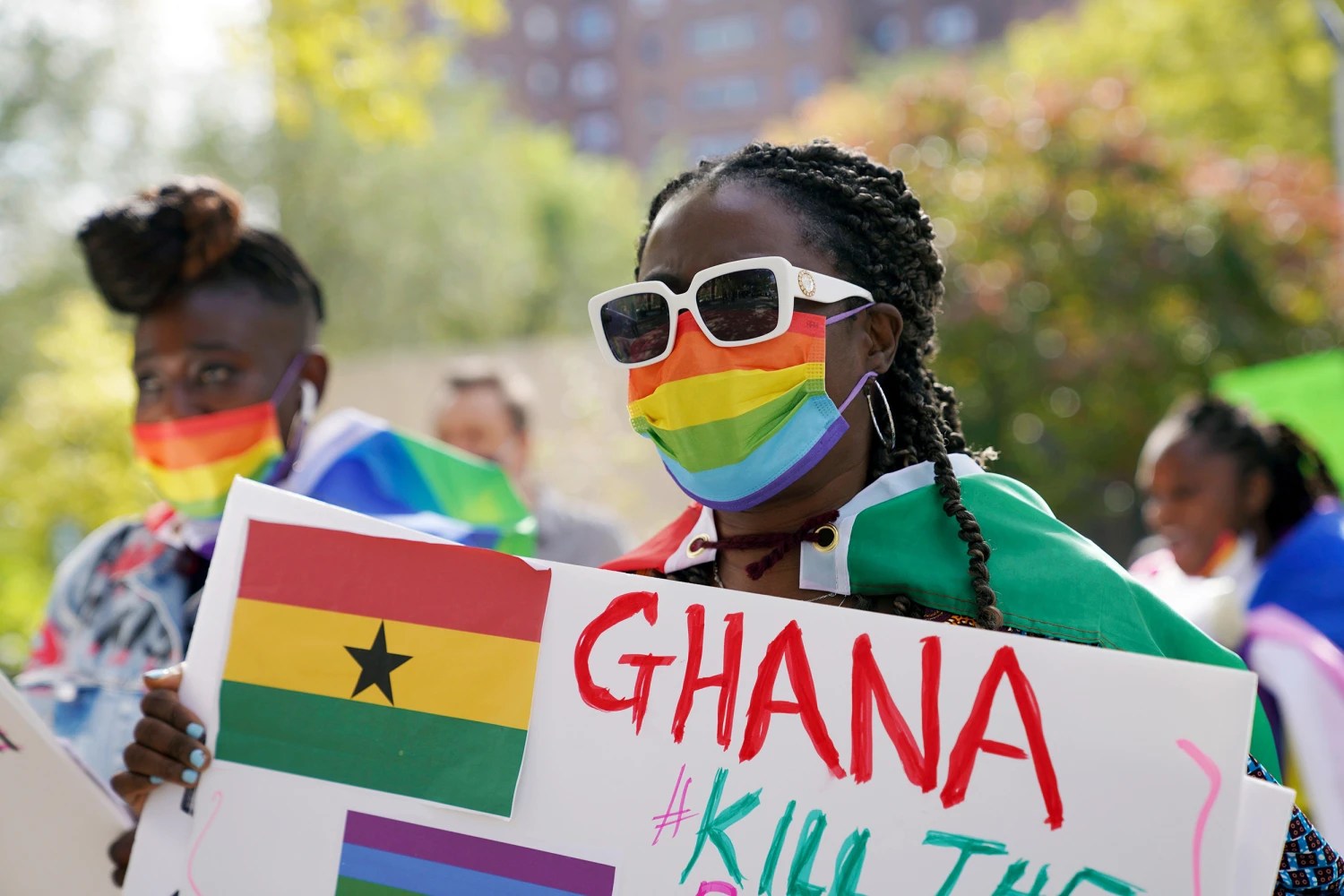
In a Parliament where NDC and NPP members rarely agree on anything, the anti-LGBTQ+ bill has achieved something unusual: genuine bipartisan unity. Lawmakers from both sides of the aisle have publicly supported the bill, with multiple members urging its immediate passage under a certificate of urgency. The MP for Bosome Freho, Nana Asafo-Adjei Ayeh, was among those calling for the fastest possible adoption to “safeguard the nation’s cultural and family structures.”
The cross-party support reflects the broad social conservatism on LGBTQ+ issues that polls consistently show among Ghanaian adults. Multiple surveys have indicated that large majorities of Ghanaians — across regions, religions, and political affiliations — oppose same-sex relationships and support legal restrictions on LGBTQ+ activities. Parliamentarians are therefore largely reflecting the views of their constituents, however uncomfortable that reality may be for international human rights observers.
The Voices of Opposition — Human Rights, the Constitution, and Cardinal Turkson
Opposition to the bill has not been absent — but it has been limited in its political effectiveness. Ghana’s Commission on Human Rights and Administrative Justice (CHRAJ) has formally warned Parliament that the bill infringes on fundamental rights of Ghanaian citizens enshrined in the Constitution — specifically the rights to equality, non-discrimination, freedom of expression, freedom of association, and privacy.
Cardinal Peter Turkson — one of Ghana’s most respected Catholic leaders and a figure of global significance in the Catholic Church — has called for dialogue and inclusion rather than criminalisation. Prominent politician Samia Nkrumah has taken a similar position. Legal academics and constitutional lawyers have warned that key provisions of the bill are likely to face serious challenges before the Supreme Court for the same reasons that the 2024 version was challenged.
Human Rights Watch has described the bill as “draconian” and warned that even before passage, the introduction of the legislation had already produced measurable harm — with Amnesty International documenting more than 70 human rights attacks against LGBTQ+ people in Ghana between January and September 2023. Civil society groups warn that formal passage will accelerate that pattern.
Now It Goes to Mahama — Will He Sign It?
The most consequential question now is what President John Dramani Mahama will do. The bill requires presidential assent to become law. Mahama’s predecessor, Akufo-Addo, declined to sign the previous version — citing pending Supreme Court cases challenging its constitutionality — effectively leaving the bill in legal limbo until Parliament dissolved.
Mahama and the NDC have historically maintained a more socially conservative public position on LGBTQ+ issues than their international critics would prefer, but the President will also be acutely aware of the international implications of signing. Ghana’s major Western development partners — including the United States, the United Kingdom, the European Union, and Canada — have all signalled previously that anti-LGBTQ+ legislation carries consequences for aid, diplomatic relations, and investment. President Biden’s administration had specifically warned Ghana in 2024 that passage would have consequences. The Trump administration’s current posture on LGBTQ+ issues domestically complicates that calculus.
