By Boakye Stephen, Kumasi, Ghana | Reporting for Ghanaian News, Canada


Ghana is taking a major step toward transforming its emergency healthcare system with plans to establish a National Command Centre that will coordinate real-time patient redirection across hospitals.
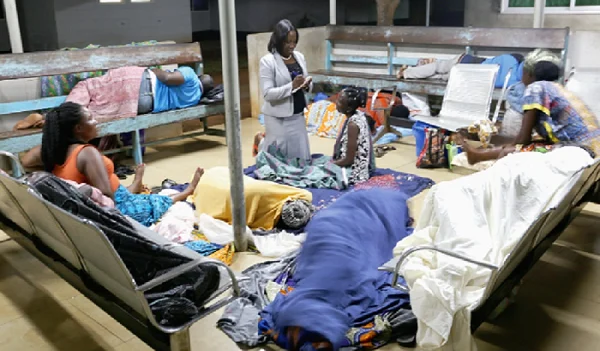
This initiative, revealed by the Board Chairman of Korle Bu Teaching Hospital, Prof. Titus Beyuo, comes at a time when public frustration over overcrowded hospitals, especially the persistent “no bed syndrome”, continues to rise.
Speaking on Joy Super Morning Show, Prof. Beyuo explained that the system will allow medical professionals to digitally assess and redirect emergency cases to hospitals with available beds before patients are transported.
“We need the ambulance service to relocate their call centre to this national command centre… and redirect patients based on real-time availability,” he stated.
Under this proposed system, ambulances will no longer default to major facilities like Korle Bu or Komfo Anokye without confirming capacity. Instead, data-driven decisions will determine where patients are sent, potentially saving lives lost due to delays and congestion.
However, implementation remains a challenge.
Prof. Beyuo noted that for the system to work effectively nationwide, all of Ghana’s 200+ ambulances must be integrated, alongside extensive staff training and coordination across multiple agencies.
Despite the urgency, no timeline has been provided, highlighting the complexity of deploying such a system.
Commentary: A Good Vision, But Ghana Must Move Beyond Promises
This initiative is not just commendable; it is long overdue.
For years, Ghanaians have watched loved ones suffer or even die, not necessarily because treatment was impossible, but because the system itself failed them. The “no bed syndrome” is not merely a hospital issue, it is a national systems failure rooted in poor coordination, underinvestment, and weak data infrastructure.
Let’s be honest:
Ghana does not lack hospitals entirely
Ghana does not lack professionals entirely
Ghana lacks coordination, urgency, and execution
This command centre, if properly implemented, could mark a turning point, introducing intelligence, structure, and efficiency into emergency care.
But here is the hard truth:
Ghana has a history of beautiful policies that collapse at implementation.
Without:
Strict accountability
Proper funding
Continuous training
And technological reliability
This project risks becoming just another headline without impact.
Even more concerning is the absence of a timeline. In a system where lives are lost daily due to delays, time is not a luxury, it is a moral responsibility.
The Deeper Issue
The real crisis goes beyond bed availability:
A hospital bed ratio of 0.9 per 1,000 people (below WHO standards)
Overburdened referral hospitals
Weak emergency response coordination
Limited digital health infrastructure
Until these structural issues are addressed alongside the command centre, the problem may be reduced, but not eliminated.
Final Thought
If executed with seriousness, this initiative could:
Reduce preventable deaths
Restore public confidence in the health system
Ease pressure on major hospitals
Introduce a modern, data-driven healthcare approach
But if mishandled, it will simply join the long list of “good ideas that failed Ghana.”
The difference between success and failure will not be the plan, but the discipline to execute it.