By Boakye Stephen | Kumasi, Ghana – Reporting for Ghanaian News, Canada

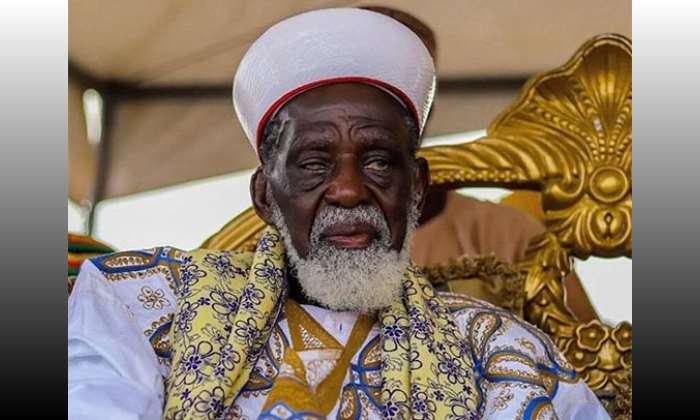
As Muslims across Ghana and the world mark Eid-Al-Fitr 2026, the National Chief Imam, Shaikh Dr Osman Nuhu Sharubutu, has delivered a message that goes far beyond celebration, calling for a transformation of character, discipline, and national responsibility.
In a statement released on March 19, His Eminence congratulated the Muslim community for successfully completing the holy month of Ramadan, but cautioned that the end of fasting must not signal a return to преж habits. Instead, he urged that celebrations remain firmly “within the bounds of decency, modesty, and legality.”
From Ritual to Reality
The Chief Imam emphasized that fasting is not merely a religious ritual but a spiritual process designed to produce visible moral change.
Quoting the essence of Quranic teaching, he explained that the value of Ramadan lies not in abstinence alone, but in the character it builds after the fast is over.
“The quantity of spiritual cleansing acquired… is meaningless unless it guarantees the quality of attitudinal transformation,” he stated.
This statement strikes at the heart of a broader societal issue, not just within religious communities, but across Ghana as a whole:
The gap between what people profess and how they actually live.
A Message to the Nation, Not Just Muslims
While directed at Muslims, the Imam’s message carries a universal warning.
He called on all Ghanaians, regardless of religion, to embrace:
Patriotism
Humanitarianism
Collectivism
These values, he noted, are essential for sustaining Ghana’s identity as a peaceful, diverse, and secular state.
Deep Analysis: Religion and Responsibility in Modern Ghana
At a time when Ghana is grappling with economic pressures, political tension, and social challenges, this message is both timely and necessary.
Religious seasons often produce temporary discipline, people fast, pray, give, and reflect.
But once the season passes, many return to:
Corruption
Indiscipline
Social irresponsibility
The Chief Imam’s warning is clear:
If religion does not transform behaviour, then it becomes ceremonial rather than meaningful.
A Subtle but Powerful National Challenge
Though delivered in a calm and spiritual tone, the message carries a deeper national implication:
Ghana’s development is not only dependent on policies and leadership, it is equally dependent on the moral integrity of its citizens.
No amount of:
Government reforms
Economic policies
National strategies
Can succeed in a society where personal discipline collapses after moments of religious reflection.
Global Consciousness and Leadership
In his concluding prayers, the Chief Imam extended concern beyond Ghana, calling for:
Justice across the world
Peace in the Middle East
Stability in Africa
Prosperity for Ghana
This reflects a leadership perspective that sees faith not as isolated practice, but as a force connected to global peace and human dignity.
Final Reflection: The Test After the Fast
Eid marks the end of fasting, but, as the Chief Imam implies, it is also the beginning of the real test.
The true question is no longer:
“Did you fast?”
But rather:
“Has your life changed?”
Until that question is answered through action, not words, the purpose of Ramadan, and indeed all religious discipline, remains incomplete.
Boakye Stephen | Kumasi, Ghana – Reporting for Ghanaian News, Canada