National | Governance & Labour
By Boakye Stephen | Kumasi, reporting for Ghanaian News, Canada
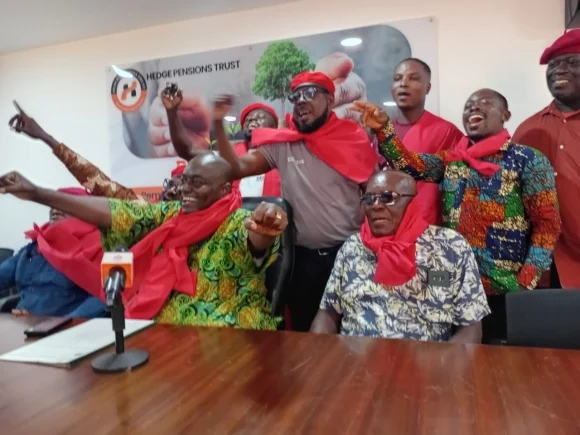
Former President John Agyekum Kufuor has renewed calls for a stronger separation of powers among Ghana’s three arms of government, at a time when the country is grappling with a nationwide strike by the Civil and Local Government Staff Association of Ghana (CLOGSAG).
Speaking during an interview on JoyNews’ AM Show, Mr. Kufuor emphasized that Ghana’s democratic system would function more effectively if the executive, legislature, and judiciary operate independently while strictly respecting their constitutional mandates.
According to the former president, the executive branch should primarily focus on designing policies and programmes aimed at national development.
However, he stressed that such policies must first receive approval from the legislature, which he described as the people’s representative body responsible for holding the executive accountable.
He further highlighted the importance of a truly independent judiciary, noting that the courts must remain free from interference and continue to serve as the final authority in interpreting the Constitution.
Mr. Kufuor also acknowledged the growing importance of the media, describing it as the “fourth estate” that strengthens democratic governance by informing the public, exposing wrongdoing, and amplifying citizens’ voices.
Government Urges CLOGSAG to Suspend Strike
Meanwhile, the Minister for Labour, Jobs and Employment, Abdul-Rashid Hassan Pelpuo, has appealed to CLOGSAG to suspend its ongoing nationwide strike and return to the negotiating table.
The minister revealed that he has already engaged both the Fair Wages and Salaries Commission and the leadership of CLOGSAG to better understand the concerns that triggered the industrial action.
He also indicated that discussions with Finance Minister Dr. Cassiel Ato Forson have produced assurances that government is prepared to address the issues raised by the union.
However, CLOGSAG Executive Secretary Isaac Bampoe Addo confirmed that a recent meeting between the union and the Fair Wages and Salaries Commission did not lead to a clear agreement.
As a result, the union’s National Executive Council has not yet called off the strike.
The strike has disrupted work in several government institutions across the country, raising concerns about delays in administrative services and the broader impact on public sector operations.
Analysis
The situation reflects a broader challenge within Ghana’s governance structure, where tensions between labour unions and government institutions frequently emerge over policy implementation and working conditions.
Kufuor’s call for stronger institutional independence and accountability highlights the need for a governance framework capable of addressing such disputes efficiently while protecting democratic principles.
As negotiations continue, many observers believe that resolving the CLOGSAG strike will require not only dialogue but also a clear commitment from government authorities to strengthen transparency and institutional trust.
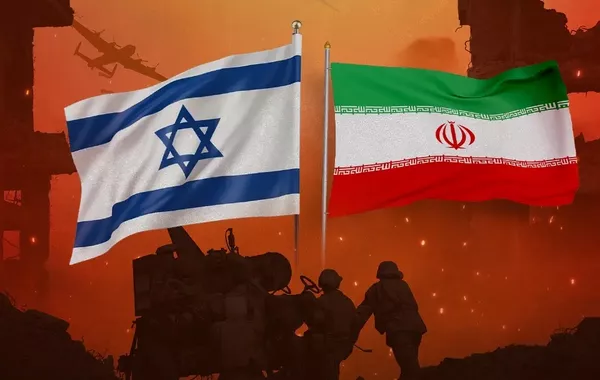
The war between Iran and the US-Israel alliance is escalating rapidly, with both sides issuing strong threats and intensifying military operations.
Iran’s Islamic Revolutionary Guard Corps (IRGC) has rejected claims by the United States that its missile programme has been destroyed.
Iranian officials say they are now deploying missiles in greater numbers, some reportedly carrying warheads weighing more than one tonne.
Meanwhile, US Defence Secretary Pete Hegseth warned that Tuesday could witness the most intense wave of strikes against Iran since the war began.
Washington claims its forces have made significant progress targeting Iran’s missile systems, drone factories, naval assets, and military infrastructure.
According to US Air Force General Dan Caine, American forces have destroyed more than 50 Iranian naval vessels in the first ten days of the conflict, particularly targeting ships suspected of laying naval mines.
Rising Tensions Over Oil and Global Trade
The United States has also warned Tehran against disrupting the Strait of Hormuz, a strategic waterway through which a significant portion of the world’s oil supply passes. Hegseth cautioned that Iran would be “hit harder than ever” if it attempts to block oil shipments.
Such a move could trigger global energy shocks, with analysts already warning that fuel prices in countries like Ghana could rise sharply if the crisis continues.
Iran Rejects US Threats
Iranian officials have dismissed Washington’s warnings.
Ali Larijani, secretary of Iran’s Supreme National Security Council, responded directly to US President Donald Trump, saying the Iranian people do not fear American threats and warning that those who tried to defeat Iran in the past have failed.
Civilian Concerns and Regional Fallout
The conflict is already spreading across the region.
Israeli air strikes have hit Lebanon, damaging buildings and displacing civilians.
A stadium in the country has reportedly been converted into a temporary shelter for people fleeing the attacks.
Human Rights Watch has also accused Israel of using white phosphorus munitions in southern Lebanon, a claim the Israeli military says it cannot confirm.
Calls for a Plan to End the War
International concern is growing.
Germany’s Chancellor has expressed worry about the lack of a coordinated diplomatic strategy to end the conflict, raising fears that the war could expand into a broader regional confrontation.
Trump Leaves Door
Open for Talks
Despite the escalating violence, President Trump said in a media interview that negotiations with Iran remain possible, depending on the terms offered by Tehran.
Analysis
A War With Global Consequences
The current conflict is no longer a regional dispute but a confrontation with serious global implications.
If Iran blocks the Strait of Hormuz or attacks oil infrastructure, the ripple effects will be felt across Africa, Europe, and Asia, especially in fuel-dependent economies like Ghana.
Beyond economics, the war also risks drawing in Russia, Hezbollah, and other regional actors, potentially transforming the crisis into a much wider international conflict.
For many countries observing from afar, the most urgent question remains: How long can this war continue before diplomacy replaces missiles?
#IranWar
#USIsraelIranConflict
#MiddleEastCrisis
#GlobalOilCrisis
#GhanaianNewsCanada
#BoakyeStephen