
Canada and Allies Urge Palestinian Authority to Reverse Election Postponement
Anita Anand and foreign ministers from three allied countries say delaying elections until 2027 threatens democratic confidence and undermines commitments to reform
By: Ebenezer Adugyamfi for GhanaianNewsCanada
13 OCTOBER 2026
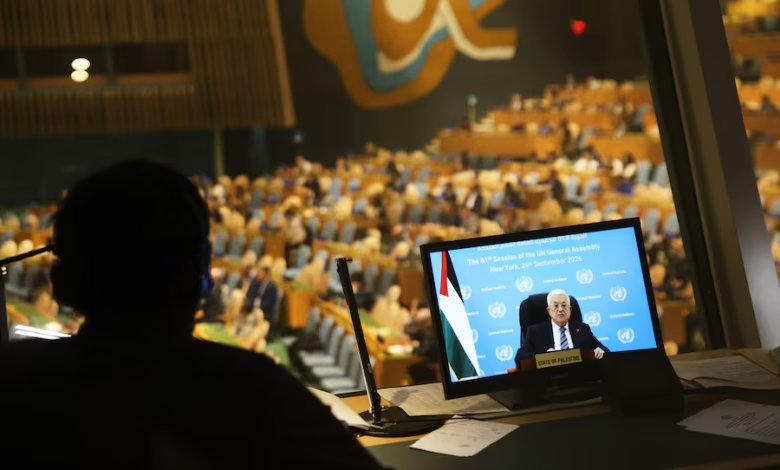
Canada has joined the United Kingdom, France and Australia in urging Palestinian President Mahmoud Abbas to reconsider his decision to postpone legislative and presidential elections until September 2027, warning that the delay will further undermine public confidence in democratic institutions.
In a joint statement released on Tuesday, October 13, the four countries expressed deep regret over the postponement, which means Palestinians will have to wait longer to elect their representatives.
The statement was issued by Canadian Foreign Affairs Minister Anita Anand and her counterparts from the three allied countries.
The governments argued that credible elections are essential to strengthening accountability, advancing political reforms and building the institutional foundations necessary for a lasting peace between Israel and Palestine.
The call comes after Abbas announced that the elections, originally expected in November 2026, would instead take place on September 11, 2027.
Why Canada is concerned about the delay
Canada and its allies say the postponement is particularly concerning because Palestinians have gone nearly two decades without legislative elections.
The last Palestinian legislative elections took place in 2006, when Hamas won a majority of seats in the Palestinian Legislative Council. The subsequent political conflict led to a division in governance between Hamas-controlled Gaza and the Palestinian Authority, which administers parts of the occupied West Bank.
The four foreign ministers noted that an entire generation of Palestinians had reached adulthood without the opportunity to choose their elected representatives.
They warned that the latest delay would further erode public confidence in democratic institutions and disappoint Palestinians who had expected the elections to proceed.
The governments called on the Palestinian Authority to reconsider its decision and take the necessary steps to organise legislative and presidential elections without further delay.
They also acknowledged that significant practical and political obstacles had affected preparations for a vote that meets international standards and allows all eligible Palestinians to participate.
What led Mahmoud Abbas to postpone the elections?
Abbas has cited worsening security and political conditions across the Palestinian territories as reasons for postponing the elections.
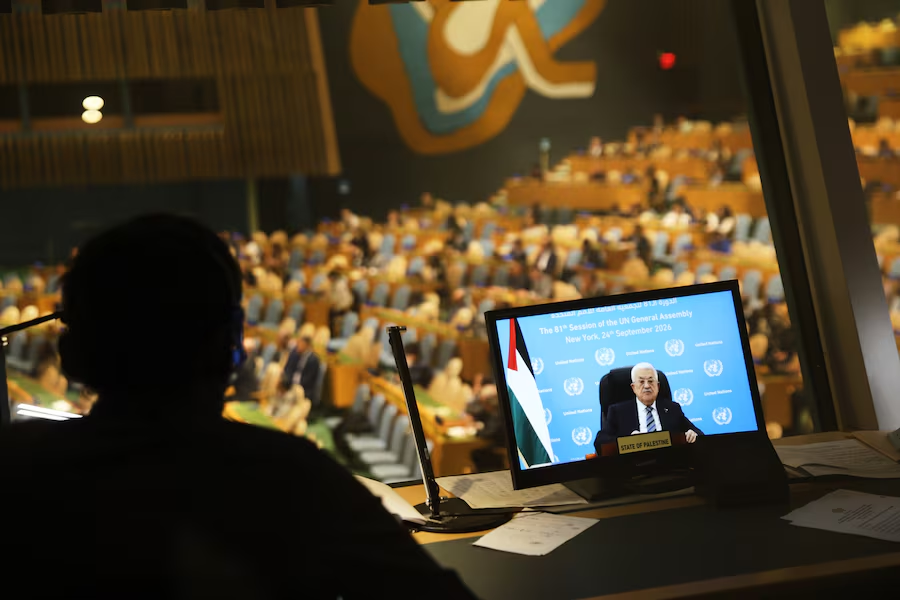
In announcing the delay, the Palestinian leadership pointed to Israeli military operations, settlement expansion, settler violence and movement restrictions in the West Bank, including East Jerusalem.
The authorities also cited the humanitarian situation in Gaza, restrictions affecting election preparations and difficulties ensuring that eligible voters could participate freely.
Israel has rejected the Palestinian leadership’s claims that it is responsible for obstructing the electoral process.
The postponement therefore comes amid continuing disagreements over the practical conditions necessary to conduct credible elections across Gaza, the West Bank and East Jerusalem.
The four allied governments acknowledged that these obstacles are significant, but maintained that elections remain an important part of the Palestinian Authority’s commitments to democratic renewal and accountable governance.
How the decision relates to Canada’s recognition of Palestine
The dispute is also important to Canada’s foreign policy under Prime Minister Mark Carney.
Canada recognised the State of Palestine on September 21, 2025, as part of an international effort to preserve the possibility of a two-state solution.
The Canadian government said its decision was predicated on commitments by the Palestinian Authority to implement reforms, strengthen governance and hold general elections in 2026 in which Hamas would have no role.
The postponement therefore raises questions about the implementation of those commitments and the pace of political reforms expected by Canada and its international partners.
Ottawa has continued to support the establishment of an independent, sovereign and viable Palestinian state living alongside Israel in peace and security.
However, the Canadian government has emphasised that credible institutions, accountability and democratic governance are important components of a sustainable political settlement.
Allies also urge Israel not to obstruct elections
While calling on the Palestinian Authority to reconsider the postponement, Canada, France, the United Kingdom and Australia also urged Israel to refrain from actions that could prevent elections from taking place.
The countries specifically highlighted the practical arrangements necessary to ensure that all eligible Palestinians can participate in the electoral process.
Their statement reflects the view that conducting credible elections requires both political commitments from Palestinian leaders and conditions that allow voters, election officials and observers to participate.
The four governments also reiterated their position that Hamas should have no role in the future governance of Palestine.
Canada designates Hamas as a terrorist organisation.
Why the elections matter for the future of Palestine
The postponement has renewed attention on the longstanding political divisions within the Palestinian territories and the question of democratic legitimacy.
Abbas has served as Palestinian president since 2005, while the Palestinian Legislative Council has not held an election since 2006.
The absence of regular national elections has contributed to concerns about accountability and public representation, while disagreements between Palestinian political factions have complicated efforts to establish a unified governing structure.
For Canada and its allies, renewed elections would form part of efforts to strengthen Palestinian institutions and support the broader objective of a negotiated two-state solution.
However, the practical challenges remain substantial, particularly in Gaza, where war-related destruction and security restrictions have complicated preparations for political and administrative activities.
What happens next?
Canada and its allies have urged the Palestinian Authority to reconsider the decision and take the necessary steps to hold both legislative and presidential elections without further delay.
The governments have also pledged to continue supporting efforts to deliver credible elections and called on Israel to avoid actions that could impede the process.
Whether Abbas will revise the timetable remains uncertain.
For now, the postponement has created a fresh diplomatic challenge for Canada and its partners as they seek to advance Palestinian political reforms while supporting a negotiated settlement that guarantees lasting peace and security for both Palestinians and Israelis.

