By Boakye Stephen, Kumasi, Ghana | Reporting for Ghanaian News, Canada March 28, 2026


Former Vice President Mahamudu Bawumia has cautioned that Africa risks being left behind in the next wave of global transformation if it fails to act decisively on artificial intelligence and digitalisation.
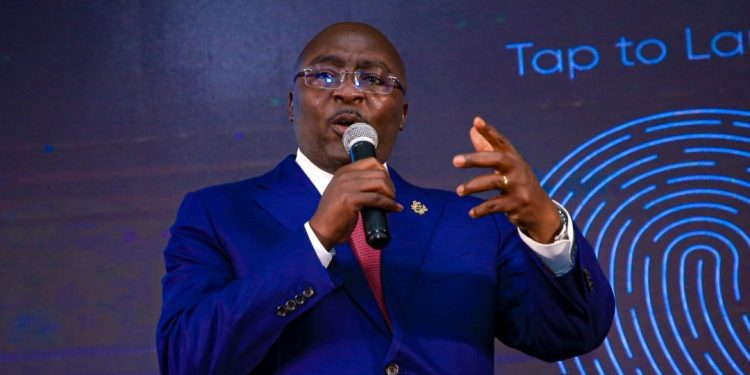
Speaking at the LSE Africa Summit, Bawumia said the world is already deep into a new technological era, where digital systems are no longer optional but central to economic and social development.
“We are in the midst of a global digital revolution… Digitalisation is no longer at the periphery,” he stated.
He emphasized that Africa’s challenge is not a lack of human capital, but rather insufficient strategic execution and investment.
“Africa does not lack talent. What we lack is deliberateness, leadership and investment…” he added.
Bawumia warned that failure to act could have long-term consequences for the continent’s competitiveness and independence in an increasingly technology-driven world.
“We cannot afford to be left behind this time,” he cautioned.
His remarks come amid growing global focus on artificial intelligence, automation, and digital infrastructure, which are rapidly reshaping industries and redefining economic power. Experts say countries that fail to adopt and integrate such technologies risk widening development gaps and increasing reliance on external systems.
Observers note that Africa has historically lagged in previous industrial revolutions, often adopting technologies developed elsewhere rather than shaping them. Bawumia’s call highlights the urgency for policymakers to prioritize digital transformation as a core component of national and continental development strategies.
Commentary (Boakye Stephen):
Africa’s challenge has rarely been a deficit of intelligence—it has been a deficit of execution.
Each industrial revolution rewards preparedness and punishes delay. The artificial intelligence era is no different. If Africa fails to position itself strategically, the consequences will extend beyond economic lag—it may deepen technological dependence on external powers.
The stakes are higher than innovation alone. Technology has become a defining force of modern civilization, influencing governance, security, education, and economic sovereignty.
To remain competitive, Africa must shift from passive adoption to active creation—investing in talent, infrastructure, and policy frameworks that enable it to shape, rather than merely consume, the digital future.